
Early corrosion detection using specialist canine
Early, non-invasive corrosion detection for industrial assets
Corrosion under insulation (CUI) develops long before it becomes visible, creating hidden risks across industrial assets, pipelines and infrastructure.
Our detection dogs provide a fast, non-invasive method to identify early-stage corrosion activity — even beneath insulation, coatings, or in inaccessible areas. By detecting volatile compounds released during the earliest stages of metal oxidation, we enable earlier intervention, reduce inspection costs and minimise disruption to operations.
- Early corrosion identification
- Non-invasive inspection
- Reduced inspection costs
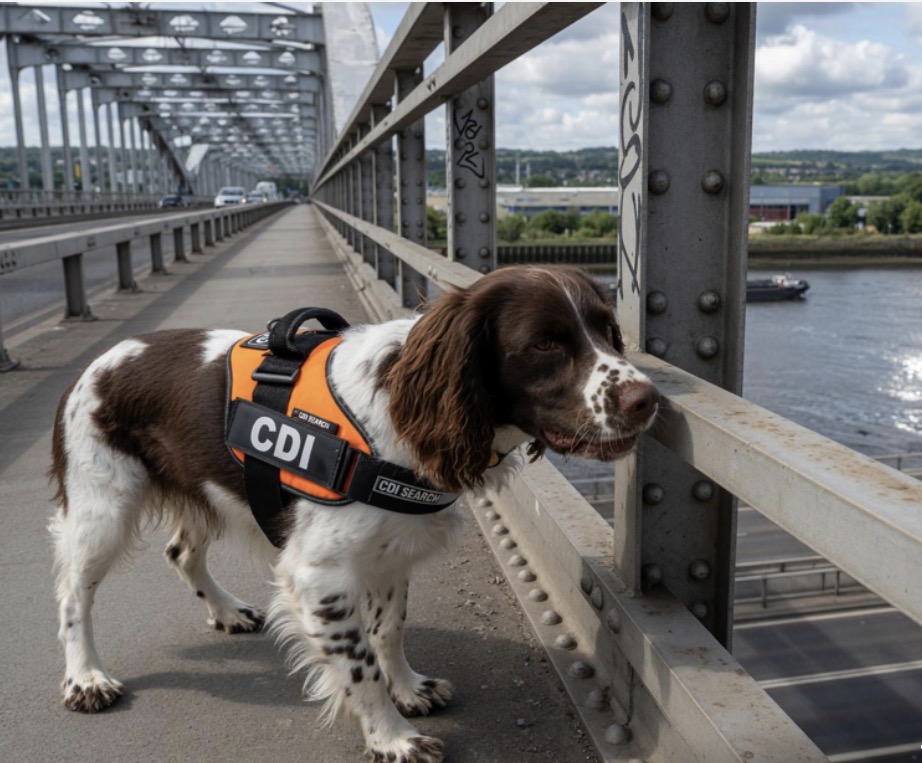
Why detection dogs over traditional surveys
Traditional surveys
- Visual or surface-level only
- Miss early-stage corrosion
- Requires insulation removal
- Time-consuming and disruptive
Detection dogs
- Detect early-stage corrosion (VOC-based)
- Non-invasive inspection
- Works on insulated and inaccessible areas
- Faster coverage across large assets
How it works
Site assessment
We review your asset and define the inspection scope based on risk areas and operational constraints.
Detection sweep
Trained dogs carry out a controlled inspection, detecting early-stage corrosion through VOCs.
Marking & identification
All detections are clearly marked and recorded for accurate mapping and follow-up inspection.
Report
You receive a clear report with findings, risk areas and practical next steps for action.
CDI
Smarter detection. Earlier insight. Better decisions.
Across Ireland, hidden risks undermine projects, budgets and long-term asset performance.
Corrosion and Japanese knotweed rarely reveal themselves early. They grow exponentially until damage is costly, hazardous, disruptive and increasingly difficult to control. Our specialist detection dogs identify risks at the earliest possible stage, giving you clarity long before traditional methods are able to confirm a problem.
Frequently asked questions
How does canine corrosion detection work?
Detection dogs are trained to identify volatile organic compounds (VOCs) released during the earliest stages of metal oxidation. This allows corrosion to be detected before it becomes visible or measurable using traditional methods.
Can corrosion be detected without removing insulation?
Yes. Canine detection is completely non-invasive and can identify corrosion activity beneath insulation, coatings, and in inaccessible areas without the need for strip-and-look inspection.
How accurate is canine corrosion detection?
Field trials have demonstrated high sensitivity in identifying early-stage corrosion activity. Detection results can be used to guide targeted follow-up inspections and verification where required.
What types of assets can be inspected?
This method is effective across a wide range of assets, including insulated pipework, flanged connections, structural components, and industrial infrastructure.
How does this compare to traditional inspection methods?
Traditional methods often rely on visual indicators or periodic inspection cycles, which can miss early-stage corrosion. Canine detection provides earlier insight, enabling faster, more targeted intervention and reducing unnecessary inspection work.
Can this method be used on live operational sites?
Yes. Inspections are non-intrusive and can be carried out without disrupting ongoing operations, making it suitable for active industrial environments.
What happens after corrosion is detected?
All detections are clearly marked and documented, allowing engineering teams to carry out targeted verification and implement appropriate maintenance or remediation strategies.
Get in touch - we’re here to help.
If you’d like to discuss a project, have a question, request a presentation or CPD training for your team – don’t hesitate to let us know.