
Japanese knotweed detection dogs for fast, accurate surveys
Early, non-invasive knotweed detection for property and land
Japanese knotweed can spread extensively beneath the surface long before any visible signs appear, creating serious risks for property transactions, development projects and land management.
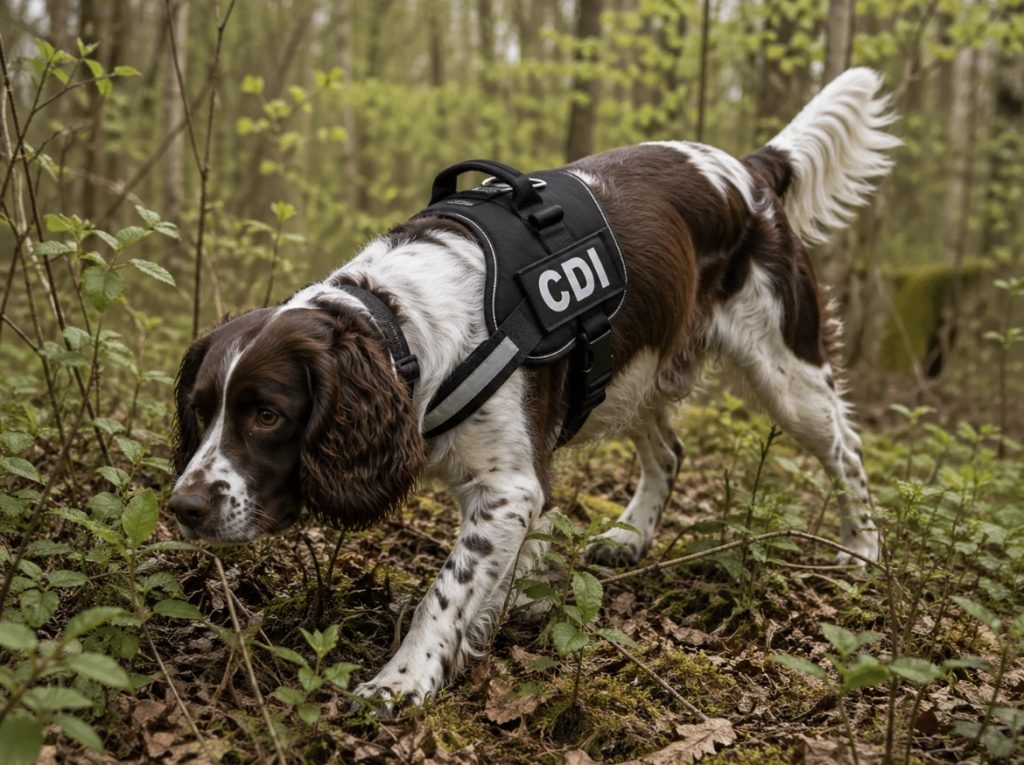
Our detection dogs offer a fast, non-invasive and highly accurate way to identify knotweed at its earliest stages, including underground, dormant, or concealed growth that traditional surveys often miss. By detecting infestations early and reliably throughout the year, we help homeowners, developers and surveyors make informed decisions, reduce costly delays and manage invasive species risk with confidence.
- Smarter detection
- Early risk identification
- Better project decisions
Why detection dogs over traditional surveys
Traditional surveys
- Visual only
- Miss underground growth
- Seasonal limitations
Detection dogs
- Detect underground & dormant growth
- Non-invasive
- Works year-round
- Faster coverage
How it works
Site assessment
We review your site and define the survey scope based on your needs.
Detection sweep
Trained dogs carry out a controlled search across the area.
Marking & identification
Any detections are clearly marked for accuracy and mapping.
Report
You receive a clear report with findings and next steps.
CDI
Smarter detection. Earlier insight. Better decisions.
Across Ireland, hidden risks undermine projects, budgets and long-term asset performance.
Corrosion and Japanese knotweed rarely reveal themselves early. They grow exponentially until damage is costly, hazardous, disruptive and increasingly difficult to control. Our specialist detection dogs identify risks at the earliest possible stage, giving you clarity long before traditional methods are able to confirm a problem.
Frequently asked questions
Can detection dogs find Japanese knotweed underground?
Yes. Detection dogs are trained to identify the scent of Japanese knotweed, allowing them to locate underground, dormant or concealed growth that may not be visible during a traditional survey.
How accurate are Japanese knotweed detection dogs?
When handled by trained professionals, detection dogs offer a highly accurate method of early identification. They are particularly effective in locating hidden growth that visual inspections may miss, helping reduce uncertainty during site assessments.
Is detection by dogs better than a traditional survey?
Detection dogs complement and often outperform traditional surveys when it comes to early-stage identification. While visual surveys rely on visible growth, detection dogs can identify knotweed before it emerges, allowing for earlier and more informed decisions.
Can detection dogs work all year round?
Yes. Unlike visual inspections, detection dogs are not limited by season or vegetation cover. They can operate effectively throughout the year, including when knotweed is dormant.
How long does a detection survey take?
The duration depends on the size and complexity of the site. However, detection dogs can cover large areas much faster than manual inspections, making the process efficient even for extensive sites.
Will the survey damage my property or land?
No. Detection surveys are completely non-invasive. The process does not involve digging or disturbing the ground, making it ideal for sensitive or active sites.
What happens if knotweed is detected?
If knotweed is identified, the locations are clearly marked and included in your report. You will also receive recommendations for next steps, which may include further investigation, monitoring or remediation planning.
Get in touch - we’re here to help.
If you’d like to discuss a project, have a question, request a presentation or CPD training for your team – don’t hesitate to let us know.