CUI inspection without removing insulation is increasingly important for industrial sites that need better information about corrosion risk without committing immediately to widespread strip-out. On large process plants, utilities and ageing infrastructure, removing insulation simply to determine whether corrosion might be present can create significant cost, access requirements, material waste and operational disruption. The challenge is finding inspection methods that provide useful information through, around or outside the insulation system while still recognising when direct access to the metal will eventually be necessary.
Several non-invasive and non-intrusive CUI inspection options are available, but they do not all answer the same question. Infrared thermography can help identify moisture or thermal anomalies within insulation. Radiographic methods can reveal wall loss or changes in pipe profile through the insulation. Pulsed eddy current can screen ferromagnetic steel for changes in average wall thickness, while early-stage corrosion screening can help identify active oxidation before teams decide where intrusive verification should be concentrated. Industry guidance therefore treats inspection without insulation removal as a collection of complementary techniques rather than a single substitute for direct inspection.
For asset managers and integrity teams, that distinction matters. The best method depends on whether the objective is to find wet insulation, identify likely corrosion activity, estimate wall loss, screen a long pipe run or confirm the condition of a specific component. CDI’s early corrosion detection service provides one additional screening option for facilities that want to narrow the inspection footprint before removing insulation or undertaking detailed NDT.
Can CUI really be inspected without removing insulation?
Yes, several forms of CUI screening and inspection can be carried out without completely removing the insulation. However, the phrase “without removing insulation” needs to be understood carefully. Some techniques are genuinely applied through intact insulation and jacketing, while others substantially reduce insulation removal but may still require a small access point, local surface preparation or follow-up verification once a suspect area has been identified.
The key question is therefore not simply whether a technique is non-invasive. Plant teams need to ask what information the method provides and whether that information is sufficient for the engineering decision being made. A method that identifies wet insulation, for example, can highlight an area with increased CUI potential but does not by itself confirm the amount of metal loss underneath. Similarly, a screening method that indicates active corrosion may provide an excellent reason to investigate one location while still requiring conventional NDT when remaining wall thickness needs to be established.
API RP 583 specifically addresses the advantages and limitations of different nondestructive examination methods used for CUI and places those methods within a wider risk-assessment and integrity-management approach. AMPP also recognises inspection strategies both with and without insulation removal. This makes the most effective strategy a layered one, where broader screening identifies priority areas and more detailed inspection is used where engineering confirmation is required.
Why plants want to reduce insulation removal
Removing insulation can appear straightforward when considering a single inspection point, but the impact becomes much greater across hundreds or thousands of metres of insulated pipework. Insulation may need to be stripped, contained, disposed of or temporarily stored, and then reinstated correctly after inspection. Scaffolding or other access arrangements may also be required, while sensitive operating areas can introduce additional safety and scheduling constraints.
There is another practical consideration. Every time a weatherproof insulation system is opened and reinstated, the quality of the reinstatement becomes important. Poorly resealed jacketing, penetrations or terminations can create future moisture-entry points. Inspection therefore needs to provide enough value to justify disturbing the insulation rather than treating strip-out as the automatic first step for every potentially vulnerable location.
This is why many integrity teams are moving towards screening and risk-based inspection. CDI’s wider corrosion inspection resources cover early corrosion identification and the role of targeted inspection, providing useful background for teams looking at the problem beyond a simple strip-versus-no-strip choice.
Visual inspection of the insulation system
The simplest non-invasive stage is still an external inspection of the insulation system itself. Experienced teams can look for damaged jacketing, loose seams, failed weather seals, staining, bulging, missing bands, damaged penetrations and signs that the insulation has repeatedly been opened or repaired. These observations can provide useful evidence about where moisture is more likely to have entered the system.
The limitation is obvious but important. Visual inspection is examining the outside of the insulation rather than the metal hidden beneath it. An external defect increases concern but does not prove that significant CUI exists underneath. Conversely, an apparently intact jacket cannot guarantee that the underlying insulation is dry or that corrosion has not developed following previous moisture ingress.
External walkdowns are therefore best used as a risk-screening layer rather than a final integrity assessment. They can help identify where more sophisticated non-invasive CUI inspection should be considered and provide information about the condition of the weatherproofing system. AMPP specifically identifies moisture, staining and damaged jacketing as useful visual indicators that should trigger closer attention.
Infrared thermography for detecting wet insulation
Infrared thermography is one of the better-known options for screening insulated assets without removing the insulation. A thermal camera identifies differences in surface temperature, which can reveal areas where wet insulation is transferring or retaining heat differently from surrounding dry material. On suitable systems, this allows large areas to be screened quickly and without physically contacting the asset.
This can be valuable because moisture is a major driver of CUI. Identifying wet insulation can help teams locate areas where corrosion conditions are more likely to exist and prioritise them for further investigation. Thermography can also be useful where direct physical access is difficult because the inspection is carried out from outside the insulation system.
However, the result must be interpreted correctly. Thermography primarily identifies thermal anomalies and potentially wet insulation; it does not directly measure the amount of corrosion underneath. Weather conditions, operating temperature, insulation construction, emissivity and line of sight can also affect the usefulness of the survey. The UK Health and Safety Executive notes that thermography can indicate wet insulation and potential CUI conditions, while also recognising that it only detects defects or conditions that create a measurable heat-flow or surface-temperature difference.
Profile and digital radiography through insulation
Radiographic inspection can provide significantly more information about the underlying pipe than an external visual or thermal survey. X-ray or gamma-ray techniques can be used to create an image of insulated pipework and identify changes associated with wall loss, corrosion product or changes in pipe profile without first stripping the insulation from the inspected section.
Profile radiography is particularly useful on suitable pipe diameters and geometries because the resulting image allows inspectors to assess the pipe wall while the insulation remains in place. An Irish NDT provider, for example, describes using profile radiography on insulated pipework specifically to investigate CUI without removing insulation. Modern digital radiographic systems can also be used for rapid screening and produce images that can be retained for comparison and engineering review.
Radiography is not automatically the best answer for every asset. Pipe diameter, geometry, insulation thickness, access, radiation exclusion requirements and the type of damage being investigated all influence its suitability. The method also requires appropriately qualified personnel and site controls. For the right application, however, it can provide valuable information while avoiding broad insulation strip-out.
Pulsed eddy current inspection

Pulsed eddy current, commonly referred to as PEC, is another important option when the objective is to investigate carbon steel or other suitable ferromagnetic components through insulation. The probe can be positioned on the outside of the insulation system, allowing electromagnetic response to be used to estimate average remaining wall thickness without direct contact with the steel surface.
This makes PEC particularly useful for screening insulated piping, vessels and other carbon-steel assets where widespread insulation removal would otherwise be required. ISO 20669 specifically covers PEC thickness measurement on ferromagnetic metallic components with coatings, insulation and weather sheeting present, confirming its use as a recognised through-insulation inspection technique.
The word “average” is important. PEC measures wall condition over a footprint rather than providing the same highly local measurement that conventional ultrasonic thickness testing can provide directly on exposed metal. Very localised pitting, geometry and material limitations can therefore affect what the technique can resolve. PEC works best as a screening or semi-quantitative tool that helps locate areas requiring more detailed examination rather than as a universal replacement for direct NDT.
For teams considering how different early-stage and through-insulation methods can fit into one programme, CDI’s early corrosion detection approach explains how screening information can be used to direct targeted intrusive testing rather than automatically opening the entire insulated asset.
Guided wave ultrasonic testing can reduce strip-out
Guided wave ultrasonic testing is another method frequently considered when long sections of piping need to be screened. Unlike conventional ultrasonic thickness measurement, guided waves can travel along a pipe from a test location and identify areas where changes in cross-sectional area may indicate corrosion or other anomalies further along the line.
The advantage is coverage. A relatively long section of pipe can potentially be screened from a much smaller number of test locations, making the method attractive for pipelines, difficult-to-access sections and areas where removing insulation continuously along the asset would be impractical.
However, guided wave testing should not always be described as a completely zero-removal technique. Depending on the equipment and configuration, local insulation removal may be required where the transducer ring is installed around the pipe. TÜV Rheinland distinguishes methods such as PEC and digital radiography as non-intrusive through-insulation options, while noting that guided-wave and conventional ultrasonic techniques can require local access to the pipe. The benefit is therefore substantial reduction in strip-out rather than necessarily eliminating insulation removal altogether.
Moisture detection is useful, but moisture is not the same as corrosion
Several inspection approaches focus on identifying water within insulation because wet insulation substantially increases the likelihood of CUI. Infrared thermography is one option, while other programmes may incorporate moisture sensors or specialised techniques designed to identify changes within the insulation system.
This information can be valuable for risk prioritisation because a wet location deserves more attention than an equivalent dry area when other conditions are similar. It can also help maintenance teams investigate failed weatherproofing and identify insulation that may need replacement before the underlying corrosion problem becomes worse.
The limitation is that wet insulation is a risk indicator rather than proof of metal loss. A recently wetted area may not yet have developed meaningful corrosion, while an area that has dried can still contain significant historical damage. Inspection programmes therefore need to avoid treating moisture detection and corrosion detection as interchangeable measurements. API guidance on infrared screening makes the same distinction, noting that detecting water does not necessarily mean CUI is occurring.
Canine VOC detection for early corrosion screening
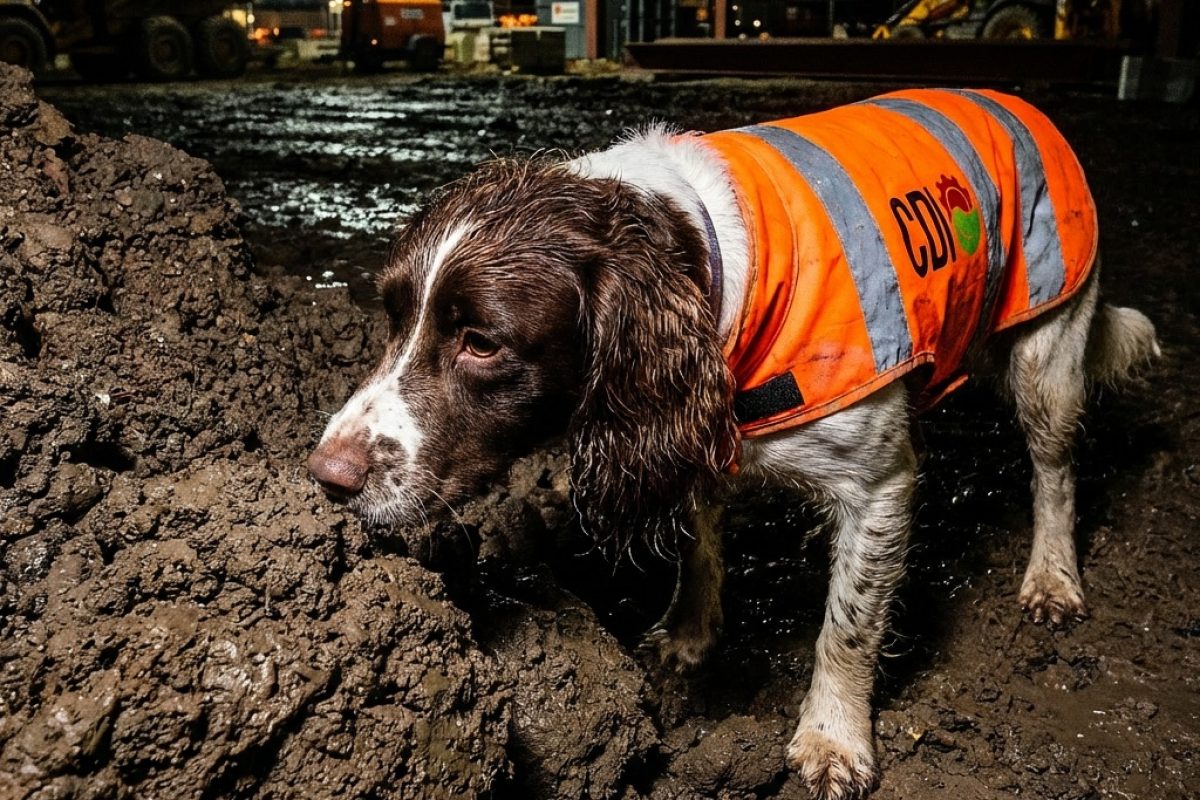
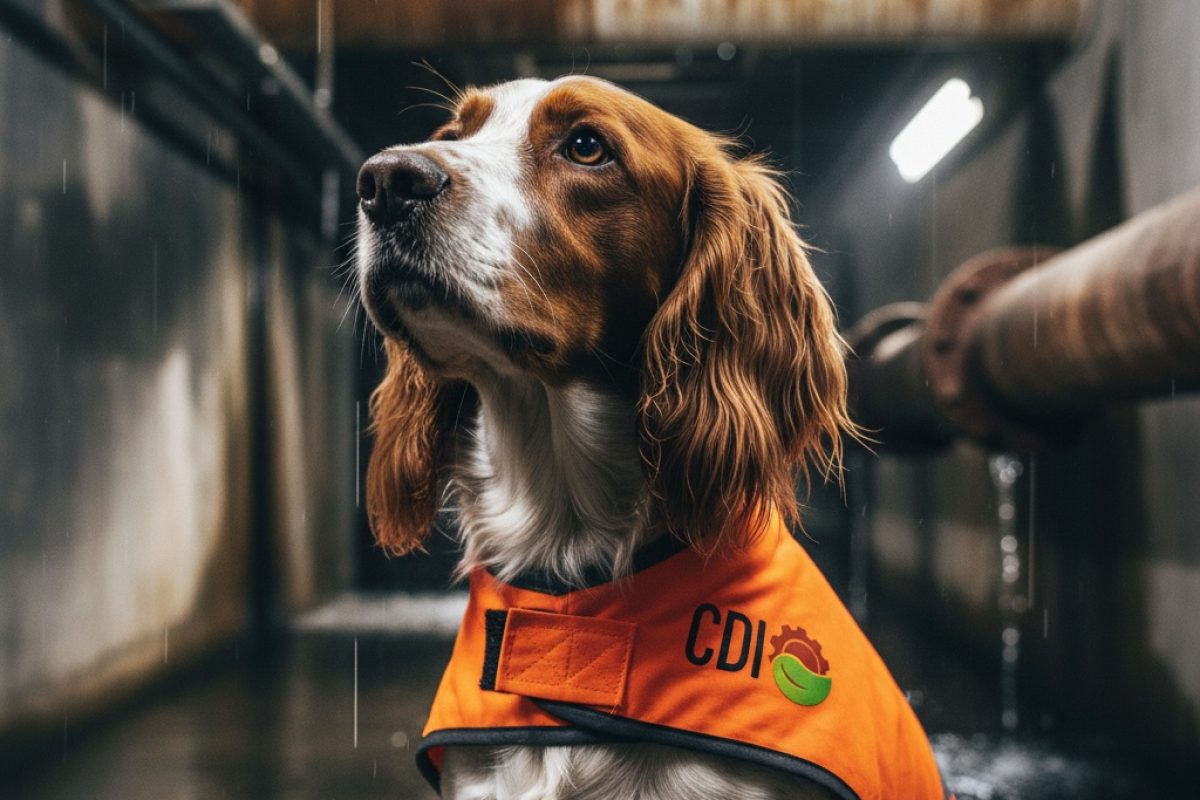
CDI uses specialist canine detection as another non-invasive option for corrosion screening. Rather than measuring wall thickness or looking for thermal differences, the method is based on detecting volatile compounds associated with early metal oxidation. The inspection can therefore be carried out around insulated, coated and difficult-to-access assets without stripping insulation simply to conduct the initial screening.
Its role is different from PEC, radiography or ultrasonic thickness testing. Canine detection does not provide a remaining wall-thickness measurement and should not be used as a substitute when an engineer needs to quantify metal loss. Its value lies earlier in the inspection pathway, helping identify locations showing corrosion activity so that intrusive verification or detailed NDT can be directed more selectively.
This can be particularly useful on extensive assets where the central challenge is deciding where detailed inspection should begin. CDI’s detection capability and expertise includes both on-site VOC detection and off-site analysis for situations where hidden or inaccessible risks need to be screened with minimal disruption.
What does non-invasive CUI screening actually tell you?
The phrase “CUI inspection” can hide an important distinction between screening, detection and measurement. A thermal survey may indicate where insulation is wet. A canine VOC survey can indicate where corrosion activity is present. PEC can identify changes in average wall thickness on suitable ferromagnetic steel. Radiography can provide an image of pipe profile and wall-loss indications. These methods are all useful, but their outputs are not interchangeable.
This is why the inspection objective should be defined before selecting the technique. If the question is “Where might moisture have entered?”, thermography may be useful. If the question is “Which parts of this large insulated system show evidence of active corrosion?”, early-stage detection can help narrow the field. If the engineering team needs to understand average wall loss through insulation, PEC may be appropriate. If the team needs an image showing the pipe profile, radiography may provide more useful evidence.
The mistake is expecting one non-invasive method to answer every integrity question. API RP 583 specifically recognises both advantages and limitations across CUI NDE techniques, which is why combining screening methods with targeted verification generally provides a stronger basis for decisions than relying on a single technology.
When should more than one inspection method be used?
On complex facilities, the most effective strategy is often sequential. The first stage identifies higher-risk assets using process conditions, insulation condition, maintenance history, operating temperature and previous CUI findings. A broader non-invasive method can then be used to screen those assets and reduce the number of locations requiring detailed intrusive examination.
A second method can be selected according to the type of information required. For example, early corrosion detection may identify a small number of locations within a large insulated network. PEC, radiography or targeted insulation removal followed by ultrasonic thickness measurement can then be used where engineers need to understand the physical condition of the metal. This avoids using expensive or disruptive methods across areas where there is little evidence that closer investigation is required.
This staged approach is consistent with risk-based inspection principles. AMPP recommends focusing resources on high-priority CUI areas rather than treating every insulated asset equally. For larger sites, this can significantly change the economics of inspection because detailed NDT is being applied to a smaller, better-defined population.
How CDI applied non-intrusive screening to operational pipework
CDI’s CUI detection case study includes an operational process plant where an ageing insulated pipework network required a more targeted approach to CUI risk. The operator needed useful information about where investigation should be concentrated without committing immediately to widespread strip-out across the full system.
The survey process combined asset information and risk mapping with non-intrusive canine screening. Areas of interest were then documented so that follow-up activity could be directed towards defined locations rather than applying the same intrusive inspection effort across the entire network. The important point is not that canine screening replaces engineering NDT, but that it can help determine where those detailed methods should be deployed.
That distinction is central to effective CUI management. The value of a screening method is often measured not only by what it finds, but by how effectively it reduces uncertainty across the much larger part of the asset population that would otherwise require investigation.
What reducing strip-out can mean in practice
The operational effect of reducing insulation removal becomes clearer on sites where access and disruption are particularly sensitive. CDI’s pharmaceutical facility CUI project involved a facility seeking clearer information about potential CUI while avoiding unnecessary disturbance to insulated structures.
According to the project case study, non-intrusive early-stage screening contributed to a 69% reduction in insulation removal while still identifying corrosion indicators that required attention. The significance of this is not simply the percentage reduction. It illustrates how the inspection footprint can change when broad strip-out is replaced by screening followed by targeted verification.
For plants with sensitive production environments, difficult access or significant insulation reinstatement costs, this is often the real commercial question behind searches for CUI inspection without removing insulation. The aim is not to avoid opening insulation forever. It is to avoid opening it where there is insufficient reason to do so.
When insulation still needs to be removed
Non-invasive CUI inspection has clear advantages, but there are situations where insulation removal remains necessary. If an inspection team needs direct visual confirmation of the metal surface, detailed pit measurements, coating assessment, highly localised thickness verification or repair access, the insulation may need to be opened.
A non-invasive indication can also create the justification for targeted strip-out. If screening identifies a suspect area, removing insulation locally allows the integrity team to clean and examine the surface, perform suitable NDT and determine whether repair, monitoring or further investigation is required. In this situation, the non-invasive method has still created value because it has helped select the location rather than forcing widespread removal across the whole asset.
This is why “inspection without removing insulation” should not be interpreted as a goal to eliminate intrusive inspection entirely. The stronger objective is to minimise unnecessary disturbance while preserving the engineering evidence needed to make safe integrity decisions.
How to choose the right CUI inspection option
The right method begins with the question the site needs answered. A facility trying to locate wet insulation has a different requirement from one trying to measure wall thinning on carbon steel. A plant with kilometres of insulated piping may first need high-coverage screening, while a known high-risk location may justify a more focused quantitative technique immediately.
Asset material is also important. PEC, for example, is specifically suited to ferromagnetic materials such as carbon and low-alloy steel. Geometry, insulation thickness, jacketing type, surface temperature and access can also influence which methods are technically practical. Radiographic methods introduce their own site-control requirements, while thermal methods rely on suitable temperature differences and environmental conditions.
Operational constraints should be considered at the same time. If the asset needs to remain live, the selected inspection method must be suitable for in-service application. If scaffolding or insulation removal would create major disruption, broader screening may provide a more economical first stage. The best programme is therefore rarely built around whichever inspection technology is newest. It is built around the specific asset, risk and engineering decision.
How non-invasive inspection supports risk-based CUI programmes
Risk-based inspection becomes particularly important when the population of insulated assets is too large for comprehensive intrusive inspection. Instead of assuming every pipe and vessel has the same probability of CUI, the integrity team can prioritise assets according to moisture exposure, temperature, age, insulation condition, operating history and consequence of failure.
Non-invasive CUI inspection can then add another layer of evidence to that prioritisation. Areas that already rank highly because of process or condition data can be screened more closely, while findings can be used to determine where detailed inspection should occur during the next maintenance window or turnaround.
This also creates better information for future planning. Results from screening and verification can be fed back into the facility’s CUI programme, helping the team understand which asset groups and physical features are actually producing corrosion on that particular site. Teams wanting examples of how targeted early detection has been integrated into real projects can review CDI’s industrial case studies.
What about difficult-to-access and live operational areas?
Access is often one of the hidden costs of CUI inspection. A small suspect pipe section can require a disproportionately large amount of scaffolding, isolation planning or working-at-height controls before a traditional inspection can even begin. On live sites, the inspection method also needs to fit around production, personnel movements and existing permit systems.
This is where non-contact and non-intrusive options can become particularly valuable. Thermography can be performed from a distance where line of sight is available. Some radiographic and PEC techniques can operate through insulation while equipment remains in service, subject to the method’s normal operating and safety limitations. Canine VOC screening can also be carried out without disturbing the insulation system itself.
CDI’s non-intrusive corrosion screening service is designed for this early prioritisation stage, including insulated and difficult-to-access assets. Screening findings can then be incorporated into the site’s existing integrity process so that access and intrusive verification are organised for the areas where they are most justified.
How CDI fits into a wider CUI inspection programme
CDI’s role is best understood as part of a wider inspection strategy rather than an alternative to every existing NDT method. Specialist canine detection provides an early-stage screening layer by identifying volatile compounds associated with metal oxidation. The locations identified can be documented and used by integrity teams to plan more targeted follow-up investigation.
This means the service can sit before PEC, radiography, local insulation removal or conventional ultrasonic verification where those methods are appropriate. On a large insulated network, this can help reduce the number of areas that need expensive access or direct metal examination while preserving engineering verification at the locations that require it.
The approach is particularly relevant for facilities where broad strip-and-look programmes are difficult to justify economically or operationally. Screening can help answer the first question, “Where should we look more closely?”, while engineering NDT answers the later questions about the extent, depth and significance of any confirmed deterioration.
Final thoughts
CUI inspection without removing insulation is possible, but there is no single method that provides every piece of information an integrity team may need. Infrared thermography can identify wet or thermally abnormal insulation. Radiography can reveal pipe profile and wall-loss indications. Pulsed eddy current can screen suitable ferromagnetic components for average wall-thickness changes, while guided-wave techniques can reduce the amount of insulation that needs to be opened across long pipe runs.
Early-stage corrosion screening adds another option when the first priority is identifying where active corrosion may be occurring before committing to detailed inspection. The strongest programmes use these methods according to what they actually measure rather than expecting one technology to replace all others. Screening identifies and prioritises risk, while targeted engineering inspection verifies and quantifies the condition where necessary.
For plants trying to reduce unnecessary strip-out, downtime and disruption across extensive insulated assets, the practical objective should therefore be targeted insulation removal rather than indiscriminate insulation removal. If you want to assess whether early-stage screening could be incorporated into an existing CUI inspection programme, you can contact CDI about a corrosion survey to discuss the assets, site constraints and inspection objectives.
Frequently asked questions
Can CUI be detected without removing insulation?
Yes. Several CUI screening and inspection methods can be used while insulation remains in place, including infrared thermography, radiographic techniques and pulsed eddy current on suitable assets. Early-stage VOC detection can also be used to screen insulated equipment for indications of active corrosion.
The correct method depends on what the inspection needs to establish. Some techniques identify moisture or corrosion activity, while others provide information about wall loss. Where detailed confirmation or metal measurement is required, local insulation removal or another follow-up NDT method may still be necessary.
What is the best non-invasive CUI inspection method?
There is no single best method for every CUI inspection. The appropriate technique depends on the asset material, geometry, insulation system, operating temperature, access and the information required by the integrity team.
Thermography is useful for identifying thermal anomalies and wet insulation, while PEC can assess average wall-thickness changes on suitable ferromagnetic steel. Radiography can provide images of the pipe profile, and early corrosion screening can help identify areas showing corrosion activity before detailed verification is planned.
Can pulsed eddy current detect corrosion through insulation?
Yes. Pulsed eddy current can be used to assess suitable ferromagnetic components through insulation and weather sheeting. ISO 20669 specifically covers PEC thickness measurement with coatings, insulation and weather sheeting present.
PEC measures average wall condition across the probe footprint, so it should not automatically be treated as equivalent to a highly local ultrasonic thickness reading on exposed metal. Its main value in CUI programmes is rapid screening and identification of areas that may require further investigation.
Can infrared thermography confirm CUI?
Infrared thermography can identify thermal patterns associated with wet insulation and therefore highlight locations where CUI conditions may be more likely. It is fast, non-contacting and can screen areas without removing insulation.
However, thermography does not directly prove that the metal underneath is corroded. Moisture is a risk factor rather than a measurement of metal loss, so suspicious locations may still require another inspection technique or direct verification.
Can radiography inspect CUI through insulation?
Yes. Profile and digital radiographic methods can inspect suitable insulated pipework without first removing the insulation. They can provide information about the pipe profile and potential wall loss, which makes them useful for targeted CUI investigation.
Their suitability depends on factors such as pipe diameter, geometry, access and the site’s radiation-control requirements. The technique should therefore be selected by appropriately qualified inspection personnel for the specific application.
Does guided wave testing require insulation removal?
Guided wave ultrasonic testing can substantially reduce insulation removal because a long section of pipe can be screened from a relatively small number of test locations. However, depending on the system, a local section of insulation may need to be opened where the transducer equipment is installed.
For that reason, guided waves are better described as a way to minimise strip-out rather than a universally zero-removal CUI inspection method.
Can corrosion detection dogs measure wall thickness?
No. Canine corrosion detection is a screening and detection method rather than a wall-thickness measurement technique. The dogs are trained to identify volatile compounds associated with early metal oxidation, helping locate areas showing corrosion activity.
Where wall thickness, pit depth or remaining metal condition must be quantified, appropriate engineering NDT is still required. The benefit of early screening is that it can help determine where those more detailed inspections should be concentrated.
Is insulation removal still necessary after non-invasive CUI inspection?
Sometimes. If non-invasive screening identifies a location of concern, engineers may choose to remove insulation locally for direct visual examination, ultrasonic thickness testing, coating assessment or other detailed verification.
The advantage is that removal becomes targeted rather than speculative. Instead of opening large sections of insulation simply to search for corrosion, the site can concentrate intrusive work around areas where risk assessment and screening provide a stronger reason for investigation.
How can a plant reduce the amount of insulation removed during CUI inspection?
Start by applying a risk-based strategy rather than treating every insulated asset equally. Use asset history, operating conditions, insulation condition and known CUI risk factors to identify priority systems, then apply suitable non-invasive screening methods to narrow the inspection footprint further.
Detailed NDT and insulation removal can then be directed towards the areas where the evidence justifies it. This layered approach does not eliminate engineering verification, but it can substantially reduce unnecessary strip-out, access work and reinstatement across lower-priority areas.