
Japanese knotweed can create serious concerns for people buying or selling a house in Ireland, particularly when the plant is discovered during a property survey or when a mortgage lender requests further information about a suspected infestation. Although finding Japanese knotweed does not automatically make a property unmortgageable or prevent a sale, it can introduce additional questions about the condition of the land, the extent of the infestation, potential treatment requirements and the property’s long-term value. For buyers, these uncertainties can make an otherwise straightforward purchase feel risky. For sellers, they can lead to additional surveys, negotiations or delays at an important stage of the transaction. The difficulty is that Japanese knotweed does not always remain visible above ground, and an infestation may extend beyond the area where the plant can be seen. Understanding how Japanese knotweed can affect mortgage decisions in Ireland, what evidence may be requested and when specialist detection is appropriate can help both buyers and sellers approach the situation with greater confidence.
Can Japanese knotweed affect a mortgage in Ireland?
Yes, Japanese knotweed can affect a mortgage application in Ireland, although the outcome depends on the lender, the property’s circumstances and the information available about the infestation. Mortgage lenders generally need confidence that the property provides suitable security for the loan. If Japanese knotweed is identified during a valuation or survey, the lender may want additional information before deciding whether to proceed with the application.
The presence of Japanese knotweed does not necessarily mean that a mortgage application will be rejected. Some situations may be relatively straightforward, particularly where the infestation is limited, professionally assessed and supported by appropriate management documentation. Other cases may require further investigation, especially when the full extent of the plant is uncertain or when previous treatment has not been adequately documented.
A common difficulty is that the visible growth may not represent the entire infestation. Japanese knotweed develops an underground rhizome system capable of surviving when the plant appears dormant or has been cut back. Consequently, a surveyor may identify visible knotweed in one area without being able to determine whether underground material extends elsewhere on the property.
This uncertainty matters because mortgage decisions are often made within an established transaction timeline. If concerns arise late in the process, buyers may need to commission additional surveys while sellers attempt to provide evidence about previous treatment or the current condition of the land.
A professional Japanese knotweed detection survey can help investigate potential infestation areas and provide information that buyers, sellers and their professional advisers may use when deciding what further action is necessary. However, only the lender can confirm whether the available documentation satisfies its mortgage requirements.
Why do mortgage lenders consider Japanese knotweed a property risk?
Mortgage lenders assess a property partly because it represents security for the money being borrowed. If circumstances arise that could affect the property’s condition, value, marketability or future maintenance requirements, the lender may want those matters investigated before proceeding.
Japanese knotweed can raise these concerns because it is an invasive plant capable of spreading through underground rhizomes and viable plant fragments. Where an infestation is established, professional management may be needed to prevent further spread and address the risks associated with the affected ground.
The potential consequences are not limited to the appearance of the garden. Japanese knotweed may complicate landscaping, excavation, drainage installation and other activities that involve disturbing soil. In some circumstances, an infestation can also affect adjoining land or areas where future building work is planned.
From a lender’s perspective, uncertainty about the extent of the infestation may be as important as the visible plant itself. A property with a clearly documented infestation and an appropriate management strategy may present a different situation from one where suspected knotweed has been cut down and no reliable records are available.
Another consideration is how easily the property could be sold in the future. If Japanese knotweed becomes a concern during one transaction, similar questions could arise when the next owner eventually sells. A lender may therefore want evidence that the situation has been appropriately assessed rather than relying on assurances that the plant is no longer visible.
It is important not to assume that all Irish mortgage providers apply identical rules. Requirements can vary, and an issue raised by one lender may not be handled in exactly the same way by another. Buyers should ask their mortgage adviser or lender what documentation is required for the particular property.
What happens if Japanese knotweed is discovered during a mortgage valuation?
When a property is being purchased with mortgage finance, the lender normally arranges or requires a valuation to assess whether the property provides suitable security for the proposed loan. This is different from a detailed structural survey or a specialist Japanese knotweed investigation.
A mortgage valuation may draw attention to Japanese knotweed if the plant is visible or if the valuer becomes aware of an existing concern. However, the purpose of a valuation is not to carry out an extensive botanical investigation or establish the underground extent of an infestation. Consequently, a valuation that does not mention Japanese knotweed should not automatically be interpreted as proof that the property is unaffected.
If suspected knotweed is reported, the lender may request clarification before issuing or finalising its mortgage offer. Depending on the circumstances, this could involve further specialist assessment, evidence of previous treatment or confirmation of the management arrangements in place.
The buyer may then need to discuss the issue with the seller, solicitor and surveyor to establish what information is already available. If the plant has previously been treated, historical records may help explain the situation. If no investigation has been undertaken, a professional survey may be the most appropriate next step.
The important point is that a Japanese knotweed concern does not always produce an immediate decision. It may instead trigger a process of gathering evidence so the lender can evaluate the property’s circumstances more accurately.
For buyers who have already paid for valuations, surveys and legal work, this additional stage can be frustrating. Investigating suspected knotweed early in the transaction can reduce the risk of important questions emerging shortly before contracts are signed.
Is Japanese knotweed an automatic reason for mortgage rejection?
Japanese knotweed is not automatically a reason for every mortgage lender in Ireland to reject an application. Whether finance is available depends on the individual lender’s criteria, the condition of the property, the nature of the infestation and any supporting professional documentation.
A property with a confirmed infestation that is being appropriately managed may be considered differently from one where Japanese knotweed is suspected but its extent remains unknown. Likewise, an infestation near a distant garden boundary may raise different questions from suspected plant material in an area where substantial ground disturbance or construction work is planned.
Buyers should avoid assuming that a single discovery makes the property impossible to purchase. Equally, they should not assume that the problem can be resolved simply by cutting back visible stems or obtaining an informal statement that the vegetation has been removed.
Where a lender raises concerns, the most practical approach is to establish exactly what information is required. A professional detection survey may help clarify the possible extent of knotweed activity, while a qualified treatment specialist may need to advise on management measures if an infestation is confirmed.
These services serve different purposes. Detection investigates where Japanese knotweed may be present, while treatment planning determines how an identified infestation should be managed. Depending on the circumstances, the lender may require information from one or more relevant professionals.
The final mortgage decision remains with the lender. Professional surveys can support that decision by providing evidence, but they cannot guarantee that mortgage finance will be approved.
How can Japanese knotweed affect the sale of a house in Ireland?
Japanese knotweed can affect a house sale by creating uncertainty at a stage when buyers are already assessing financial commitments, property condition and future maintenance costs. If the plant is discovered during a survey or raised through a seller’s records, the buyer may want further information before proceeding.
One possible consequence is a delay while the infestation is investigated. The buyer may need to commission a specialist survey, the seller may have to locate previous treatment records, and the lender may need additional documentation before confirming its position. These steps can introduce further costs and create difficulties where both parties are working to a particular completion date.
Japanese knotweed may also influence negotiations. A buyer who discovers a confirmed infestation could seek professional advice about potential treatment and monitoring costs before deciding whether the agreed purchase price remains appropriate. This does not mean the property necessarily loses a fixed percentage of its value, as the circumstances vary considerably.
For sellers, uncertainty can be particularly damaging because a buyer may become concerned when there is little reliable information about the plant. A property that has been professionally assessed may be easier to discuss than one where suspected Japanese knotweed has repeatedly been cut back without any records of investigation.
Where possible, sellers should investigate known concerns before the property reaches an advanced stage of the transaction. Understanding the condition of the land and having relevant documentation available can make discussions more productive.
The objective should be to provide accurate information rather than attempt to minimise the concern. Buyers need to understand what has been identified, what remains uncertain and whether further investigation or treatment is recommended.
Do sellers have to disclose Japanese knotweed in Ireland?
Sellers should not assume that Japanese knotweed can be ignored simply because it is not visible during a viewing. However, the precise legal disclosure obligations involved in an Irish property sale depend on the transaction, the questions asked, the contractual documentation and the advice provided by the seller’s solicitor.
A seller may be asked to provide information about known property issues, previous works, disputes or other matters relevant to the transaction. Where Japanese knotweed is known to be present or has previously been treated, it is important to discuss that information with the solicitor handling the sale and respond accurately to relevant enquiries.
It would be misleading to suggest that every Irish property sale is governed by one universal Japanese knotweed disclosure form or that a seller automatically commits a particular legal offence whenever an infestation is not mentioned. The position can depend on the facts and the representations made during the transaction.
Nevertheless, concealing known information can create significant difficulties if the issue emerges later. A buyer who discovers evidence of previous treatment or longstanding infestation may have questions about what was disclosed and whether information provided during the transaction was accurate.
Sellers should retain treatment records, professional survey reports and correspondence relating to known Japanese knotweed. These documents may help explain what was identified, what action was taken and whether the property has undergone further investigation.
Where the history is unclear, arranging a specialist assessment can help provide a more accurate understanding of the current situation. Sellers should then discuss the findings with their solicitor rather than making unsupported claims that the property is completely free from Japanese knotweed.
Should buyers arrange a Japanese knotweed survey before purchasing?
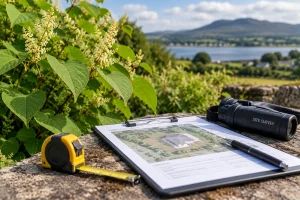
A professional Japanese knotweed survey is worth considering when there is credible evidence of an infestation on the property, previous treatment history or suspected growth on neighbouring land. It may also be appropriate when a building surveyor identifies vegetation that requires further investigation.
Buying a house is a substantial financial commitment, and buyers often concentrate on the building itself. However, the condition of the surrounding land can affect future plans, particularly where extensions, drainage improvements, garden redevelopment or other groundworks are anticipated.
Japanese knotweed is especially important in this context because the absence of visible growth does not necessarily prove that underground rhizomes are absent. The plant may be dormant, previously treated or concealed beneath other vegetation. A buyer relying only on a brief property viewing may therefore have limited information about a potentially relevant issue.
A specialist survey can help investigate the areas where Japanese knotweed is suspected and identify locations that may require additional assessment. This information can support discussions with the seller, surveyor, solicitor and lender before the transaction becomes legally binding.
It is also important to understand the limitations of the inspection. A detection survey provides evidence within its agreed scope and conditions, but it cannot guarantee that every part of a property is free from all underground rhizome material.
Buyers can learn more about the initial stages of an investigation in CDI’s article on knotweed found during property surveys. The earlier a genuine concern is investigated, the more opportunity buyers have to understand the findings and decide whether they are comfortable proceeding.
What if Japanese knotweed has already been treated?
Previous Japanese knotweed treatment can be relevant during a mortgage application or property sale, but the existence of a treatment record does not automatically establish that an infestation has been completely eradicated.
Japanese knotweed can survive through its underground rhizome system, and treatment programmes may involve repeated applications or monitoring over an extended period. The visible plant may disappear before every viable underground structure has been eliminated.
For this reason, buyers should try to establish what treatment was carried out, when it began, whether the programme was completed and whether any monitoring or follow-up work remains necessary. The treatment provider may be able to supply relevant documentation, including the areas managed and the methods used.
The buyer’s lender may also have particular requirements concerning treatment evidence or ongoing management arrangements. Those requirements should be confirmed directly rather than assumed.
A specialist detection survey may be useful where the treatment history is incomplete or where there is uncertainty about concealed growth beyond the area that was originally managed. CDI’s article on detection before treatment planning explains why understanding potential infestation locations is important when planning appropriate management.
The presence of a treatment plan should therefore be considered as part of the wider evidence. Buyers need to understand what the documentation demonstrates, what remains uncertain and whether additional professional assessment is recommended.
Can Japanese knotweed affect property value in Ireland?
Japanese knotweed can affect how buyers perceive a property’s value, particularly when the extent of an infestation, its treatment requirements or its implications for future land use remain uncertain. However, there is no reliable fixed percentage reduction that applies to every affected property in Ireland.
The impact depends on the circumstances. A limited, professionally managed infestation may create a different level of concern from widespread knotweed affecting areas scheduled for excavation or redevelopment. The location of the plant, its management history and the quality of available documentation can all influence how prospective purchasers assess the situation.
Buyers may take account of expected treatment costs, ongoing monitoring, possible restrictions on future groundworks and the practical inconvenience associated with managing affected land. Some may also be concerned about how the issue could affect a later resale or mortgage application.
These concerns can influence negotiations even when the infestation does not pose an immediate threat to the building. A buyer considering a property with little available information may be more cautious than one who has received a clear professional assessment.
For sellers, obtaining reliable information before marketing a property can therefore be useful. Understanding the possible extent of the problem allows for more informed discussions and reduces the likelihood of responding to unexpected questions without supporting evidence.
A Japanese knotweed detection survey is not a property valuation and cannot determine the amount by which an infestation might affect market value. It can, however, provide information about the potential presence and location of knotweed, which may help the appropriate professionals evaluate the wider implications.
What if Japanese knotweed is growing on neighbouring property?
Japanese knotweed growing on neighbouring land can create concerns during a house purchase or sale, particularly when it is close to the boundary of the property being considered. The visible plant may belong to one landowner, but its underground rhizome system does not necessarily follow legal ownership boundaries.
This means that a property may require investigation even when the main stand of Japanese knotweed appears to be outside its boundary. The potential risk is particularly relevant where the buyer plans to install fencing, excavate near the boundary, extend the building or undertake substantial landscaping.
A general property survey may identify the neighbouring infestation but may not establish whether concealed rhizomes are present within the property being purchased. In some circumstances, a specialist detection survey can provide additional information about accessible areas on the buyer’s side of the boundary.
The presence of Japanese knotweed next door does not automatically mean the property being purchased is affected. Buyers should avoid assuming that underground spread has occurred without evidence, while also recognising that visible vegetation may not reveal the complete situation.
Sellers may face similar concerns if potential purchasers notice suspicious growth beyond a fence or adjoining wall. Providing appropriate information about any investigation undertaken can help explain what is known and what remains uncertain.
CDI’s guide to Japanese knotweed on neighbouring land discusses boundary risks and the importance of checking suspected infestations before disturbing nearby ground.
Can Japanese knotweed remain hidden during a property survey?
Yes, Japanese knotweed can remain difficult to identify during a conventional property survey, especially when the plant is dormant, previously treated or concealed by other vegetation. The above-ground appearance of the plant changes throughout the year, and underground rhizomes may remain present even when no fresh shoots are visible.
During spring and summer, Japanese knotweed usually develops recognisable shoots, stems and leaves. However, these characteristics become less apparent during autumn and winter as the plant dies back above ground. Where previous growth has been cleared, even the old stems that might otherwise indicate an infestation may be missing.
A general building surveyor may raise concerns about suspicious vegetation or visible evidence of previous knotweed activity, but a standard property survey is not necessarily designed to establish the full underground extent of an infestation.
This distinction matters for mortgage applications because the absence of a visible plant does not provide absolute assurance that concealed knotweed material is absent. It also matters where a seller states that the plant has been removed but cannot provide clear evidence about the extent or effectiveness of previous treatment.
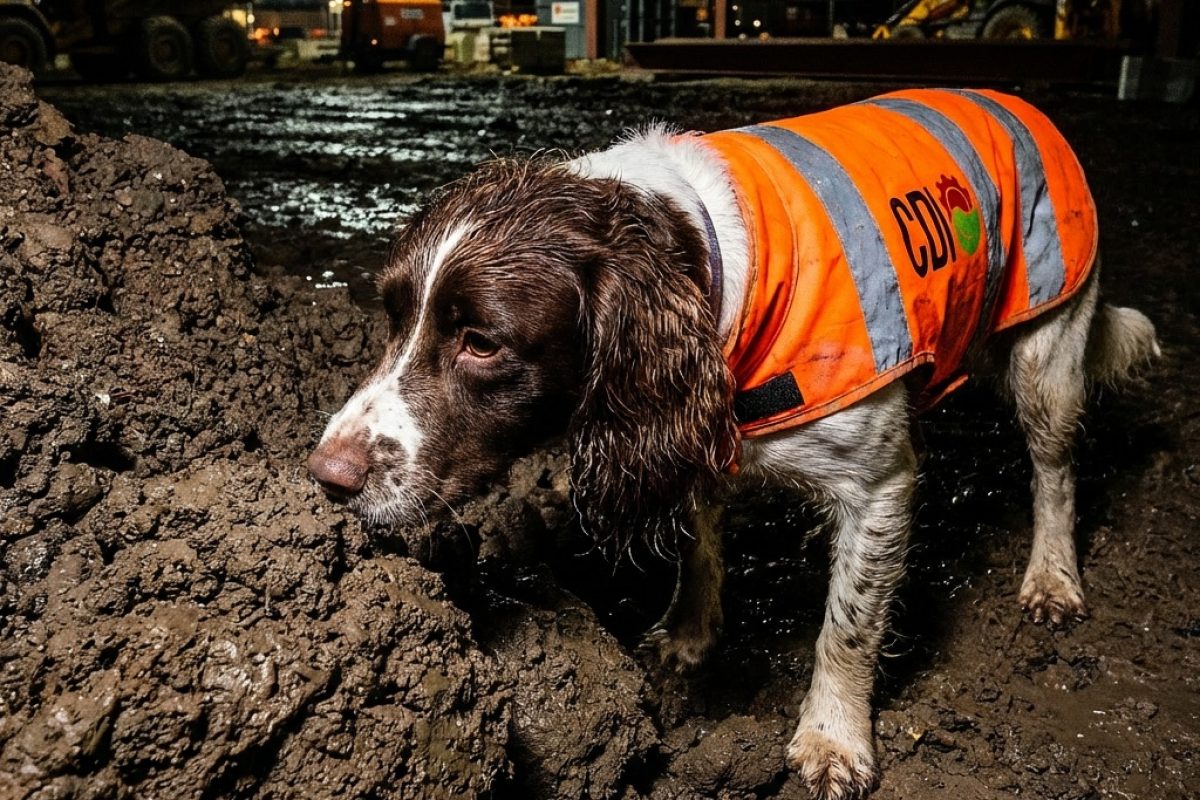
Specialist scent detection dogs can investigate areas where Japanese knotweed may be concealed, including situations where the plant is dormant or underground. CDI uses trained detection dogs to support investigations in conditions where conventional visual assessment may provide incomplete information.
A specialist survey should still be understood as a defined investigation rather than a guarantee. Its usefulness depends on suitable site access, the agreed inspection area, environmental conditions and appropriate interpretation of the findings.
How can early detection help prevent delays during a house sale?
Early investigation can help buyers and sellers address potential Japanese knotweed concerns before they become urgent issues affecting the transaction timetable. This is particularly valuable because property purchases already involve valuations, legal checks, financing arrangements and communication between several parties.
If Japanese knotweed is discovered shortly before contracts are due to be signed, the buyer may need additional advice and the lender may request further evidence. The seller may then have to arrange an inspection or locate historical treatment records while the transaction is already progressing.
Although these steps may be manageable, the uncertainty can create frustration for both parties. Buyers may become concerned about the property’s condition or future costs, while sellers may worry about the transaction being delayed or renegotiated.
Where suspected Japanese knotweed is investigated earlier, there is more opportunity to establish the facts and consider any appropriate next steps. A professional detection survey can help identify locations of potential concern, while treatment specialists and other advisers can provide further guidance where necessary.
For sellers, early detection can also support more accurate communication. Instead of relying on assumptions about whether old growth has disappeared permanently, they can explain what has been professionally investigated and what the findings indicate.
For buyers, obtaining reliable information before committing substantial additional expenses can help them decide whether the property remains suitable for their plans. No survey can eliminate every risk or guarantee that a transaction will progress without delay, but early investigation can reduce uncertainty at an important stage.
What documents might a mortgage lender request?
The documentation requested when Japanese knotweed is identified will depend on the lender and the individual property. A lender may want clarification about whether the plant has been confirmed, where it is located, whether treatment has taken place and what professional advice has been obtained.
Where Japanese knotweed has previously been managed, relevant treatment records and monitoring information may help explain the history. Where the extent of the infestation is uncertain, a specialist survey may be useful for identifying areas requiring further investigation.
If treatment is necessary, the lender may ask for evidence of an appropriate management arrangement. The exact documents, qualifications or assurances required should be confirmed directly with the lender or mortgage adviser, because these requirements are not necessarily uniform across the Irish mortgage market.
It is also important to distinguish between documents prepared for different purposes. A Japanese knotweed detection report provides information about the survey findings and potential areas of concern. A treatment plan addresses how an identified infestation will be managed. A building survey concerns the condition of the property, while a mortgage valuation serves the lender’s assessment of the security.
One document should not automatically be assumed to replace another. Where a lender requests specific evidence, the buyer should clarify exactly what must be provided before commissioning work.
CDI can support the detection stage by investigating suspected Japanese knotweed, including concealed or underground growth. Where additional verification, treatment or legal documentation is required, those matters should be addressed by the relevant professionals.
What should buyers do if Japanese knotweed is suspected before signing contracts?
If Japanese knotweed is suspected during a property purchase, the buyer should establish the nature of the concern before making a final commitment. This involves understanding whether the plant has been positively identified, where it appears to be growing and whether there is any history of treatment or previous investigation.
A suspicion raised during a viewing or survey should not automatically be treated as proof of a major infestation. Other plants can sometimes resemble Japanese knotweed, and the extent of underground growth cannot always be determined from what is visible.
However, buyers should not dismiss a credible concern simply because the plant has been cut back or appears dormant. Where the potential risk could affect the purchase, a specialist assessment may provide useful information.
The buyer should discuss any findings with the solicitor, surveyor and mortgage lender as appropriate. If a professional detection survey identifies areas of concern, further advice may be needed to understand the implications for treatment, future landscaping or planned building work.
The timing of this investigation is important. Buyers generally have more flexibility to seek clarification and consider their options before entering binding contractual commitments. Once the purchase has progressed, discovering an unresolved issue can be more difficult and costly to address.
A considered approach based on professional evidence can help buyers distinguish between a manageable property issue and one that requires more substantial investigation before they are comfortable proceeding.
What should sellers do if Japanese knotweed is found before listing?
For homeowners preparing to sell, identifying suspected Japanese knotweed before the property is placed on the market provides an opportunity to understand the situation without the immediate pressure of a buyer’s transaction timetable.
The first consideration is whether the vegetation has been correctly identified. Japanese knotweed can resemble certain other plants, particularly at different stages of growth. If the identification is uncertain, professional assessment may prevent unnecessary concern or inappropriate treatment.
Where Japanese knotweed is confirmed or there is credible evidence of a previous infestation, the seller should establish what is known about its location and management history. Historical photographs, treatment reports and relevant correspondence can be useful when explaining the situation to prospective purchasers or professional advisers.
If the potential extent of the infestation is unclear, a specialist detection survey may help identify areas requiring additional investigation. The findings can inform discussions about appropriate management and provide more accurate information about the property’s condition.
Sellers should also speak with their solicitor about relevant disclosure obligations and how known Japanese knotweed information should be addressed during the transaction. Providing accurate responses to enquiries is preferable to making unsupported assurances that the problem has been permanently removed.
Although early investigation cannot guarantee that every buyer or lender will accept the property’s condition, it can reduce uncertainty and place the seller in a better position to respond to questions with appropriate evidence.
Why is professional Japanese knotweed detection important for property transactions?
A professional Japanese knotweed detection survey can provide valuable information when a property transaction is affected by uncertainty about the presence or location of an infestation. Unlike a casual inspection, the objective is to investigate defined areas and identify potential knotweed activity using an appropriate specialist method.
This becomes important when visible evidence is incomplete. Japanese knotweed may have been cut back, treated, concealed by vegetation or affected by seasonal dormancy. In these circumstances, a buyer or seller may be unable to establish the actual situation simply by looking at the garden.
CDI specialises in canine scent detection, using trained dogs to investigate Japanese knotweed risks that may not be apparent during a conventional visual assessment. This approach can be useful where concealed or underground rhizomes are suspected and where property decisions depend on understanding potential infestation areas.
For buyers, the findings can help determine whether further investigation or specialist treatment advice is appropriate before completing a purchase. For sellers, they can provide information that supports more accurate discussions about known concerns.
The distinction between detection and treatment is important. CDI’s role is to help investigate where Japanese knotweed may be present. Where an infestation is confirmed, separate management or remediation advice may be necessary. The lender and relevant professional advisers then determine whether the available evidence is sufficient for the transaction. By identifying potential risks earlier, specialist detection can help property buyers and sellers move away from unsupported assumptions and make decisions based on clearer information.
Why choose CDI for Japanese knotweed detection in Ireland?
CDI provides specialist Japanese knotweed detection services using professionally trained scent detection dogs. Its work is particularly relevant for properties where the plant may be hidden, dormant, previously treated or present beneath the ground without obvious visible signs.
For residential buyers and sellers, these conditions can create uncertainty when a surveyor raises concerns or a lender requests additional information. CDI’s approach helps investigate potential infestation areas and provides findings that can support further professional assessment.
Canine detection is non-invasive and does not ordinarily require excavation during the initial inspection. This can be beneficial for established gardens, landscaped properties and areas where disturbing the soil could create unnecessary complications.
CDI’s services are also relevant where Japanese knotweed is suspected close to a property boundary, particularly when adjoining land contains known growth. The objective is to help determine whether additional investigation may be needed on the property being bought or sold.
Importantly, CDI does not determine mortgage eligibility or guarantee that a lender will accept a property. Its specialist contribution is the detection of Japanese knotweed risks, helping buyers, sellers and their advisers obtain better information before deciding what further steps are appropriate. For clients facing uncertainty during a property transaction, investigating potential hidden knotweed can be an important part of making an informed decision.
Request a Japanese knotweed detection survey before buying or selling
Japanese knotweed does not automatically prevent a house from being bought, sold or mortgaged in Ireland. However, it can create additional questions that are best addressed before important financial and contractual decisions are made.
If a property survey has identified suspicious vegetation, Japanese knotweed has previously been treated or an infestation is known to exist nearby, obtaining a suitable professional assessment can help clarify the situation. The findings may support further discussions with the surveyor, solicitor, mortgage adviser or treatment specialist.
CDI provides professional Japanese knotweed detection services across Ireland, using trained scent detection dogs to investigate potential visible and concealed infestations. The service can be particularly useful when the current condition of the land cannot be established through visual inspection alone.
If you are preparing to buy or sell a property and need to investigate possible Japanese knotweed, contact CDI for detection advice to discuss the property and request a site-specific quotation.
Frequently asked questions
Can you get a mortgage on a house with Japanese knotweed in Ireland?
It may be possible to obtain a mortgage on a property affected by Japanese knotweed, but the decision depends on the individual lender, the property’s circumstances and the available professional evidence. Some lenders may request additional surveys, treatment records or management documentation before deciding whether to proceed. The presence of Japanese knotweed does not automatically mean that every mortgage application will be rejected.
Will Japanese knotweed stop me from selling my house?
Japanese knotweed does not automatically prevent a house from being sold in Ireland. However, it can raise concerns for buyers, surveyors and lenders, particularly where the extent of the infestation or previous treatment history is unclear. Obtaining appropriate professional information before the sale progresses can help address these concerns and support more informed discussions between the parties.
Do I have to tell a buyer about Japanese knotweed in Ireland?
The specific legal obligations involved depend on the property transaction and the questions or declarations required. Sellers should discuss known infestations, previous treatment and relevant documentation with their solicitor and respond accurately to enquiries. It is not advisable to conceal known information or claim that an infestation has been eliminated without reliable evidence.
Can a mortgage be refused because of Japanese knotweed next door?
Japanese knotweed on neighbouring land may raise concerns if the lender or surveyor believes the property being purchased could be affected. However, neighbouring growth does not automatically mean the property itself contains an infestation or that finance will be refused. A specialist assessment may help investigate potential boundary risks, while the lender determines what evidence is required.
Does Japanese knotweed always reduce property value?
No fixed reduction applies to every property affected by Japanese knotweed. Any impact on value depends on factors such as the extent of the infestation, its location, treatment requirements, available documentation and buyer confidence. A professional detection survey can provide information about potential infestation areas, but a qualified property valuer would need to assess any effect on market value.
Can Japanese knotweed return after treatment?
Japanese knotweed can regrow if viable underground rhizome material remains after treatment. Visible growth may disappear before the entire underground system has been successfully managed, which is why treatment records and appropriate monitoring can be important. Where uncertainty remains, specialist detection may help identify locations that warrant further investigation.
Can Japanese knotweed be detected during winter before buying a house?
Yes. Japanese knotweed can be investigated during winter even when above-ground growth is dormant. Specialist scent detection dogs can provide an additional method of identifying potential concealed or underground plant material. The suitability of a particular survey depends on the site conditions, access and scope of investigation.
Is a Japanese knotweed survey different from a mortgage valuation?
Yes. A mortgage valuation is primarily intended to help the lender assess the property as security for the loan. A Japanese knotweed survey investigates potential infestation risks. A standard valuation may mention visible knotweed, but it is not designed to establish the full underground extent of the plant. Specialist detection may therefore be appropriate when a concern requires further investigation.
Can detection dogs confirm that a property is free from Japanese knotweed?
Detection dogs can provide useful evidence about potential Japanese knotweed presence within an agreed inspection area. However, no survey should be interpreted as an absolute guarantee that every underground rhizome is absent. Findings depend on site accessibility, environmental conditions, the detection method and the scope of the inspection. Any additional verification requirements should be considered according to the circumstances.
Who pays for a Japanese knotweed survey when buying a house?
Responsibility for arranging and paying for an additional specialist survey depends on the circumstances and what the buyer and seller agree. A buyer may commission an inspection as part of due diligence, while a seller may choose to investigate a known issue before marketing the property. The parties should clarify arrangements through their respective professional advisers.
How long does a Japanese knotweed issue delay a mortgage application?
There is no standard delay that applies to every mortgage application involving Japanese knotweed. The time required depends on the information requested by the lender, the availability of existing records, whether additional surveys are necessary and how quickly the relevant professionals can review the findings. Investigating concerns early may help reduce avoidable delays.
How can I arrange a Japanese knotweed survey with CDI?
You can contact CDI through its website and provide information about the property’s location, suspected Japanese knotweed activity, previous treatment and the reason for requesting a survey. CDI can review the circumstances, discuss an appropriate detection scope and provide a quotation for the investigation.