When it comes to managing corrosion risk on infrastructure, industrial assets, or large buildings in Ireland, choosing the right inspection method can make a significant difference to both cost and outcome. Traditional inspection techniques have been the industry standard for many years and remain widely used. However, detection dogs trained to identify early-stage corrosion are now offering a genuinely different approach that is worth understanding before deciding on the best strategy for any given site or asset.
What traditional corrosion inspections involve
Traditional corrosion inspections rely on a combination of visual examination, physical testing, and equipment-based measurement. The most common methods include visual inspection by a trained engineer, ultrasonic thickness testing, radiographic testing, magnetic particle inspection, and eddy current testing. Each of these has specific applications and levels of sensitivity, and they are often used together as part of a comprehensive inspection programme.
Visual inspection forms the foundation of most corrosion surveys. Engineers look for signs of surface degradation, discolouration, coating breakdown, and other indicators that corrosion may be present or developing. While this is a practical and cost-effective starting point, it is inherently limited by what can actually be seen. Corrosion beneath coatings, inside enclosed sections, or behind insulation is simply not detectable through visual means.
Equipment-based methods such as ultrasonic testing address some of these limitations by measuring wall thickness and identifying areas of material loss that have not yet broken through the surface. These approaches are effective when applied to specific locations but require physical access to the surface being tested. On large or complex structures, achieving full coverage through equipment-based methods alone is rarely practical.
Where traditional methods fall short
The main limitation of traditional corrosion inspection methods is their dependence on access and visibility. Areas that are insulated, coated, enclosed, buried, or simply difficult to reach present genuine challenges for conventional inspection. In many industrial and infrastructure settings, a significant proportion of an asset’s surface area falls into one of these categories.
There is also the issue of time and cost. Carrying out a thorough traditional inspection of a large site can take a considerable amount of time, require scaffolding or other access equipment, and involve disruption to operations. The cost of this kind of work can be substantial, and in some cases it may not be practically possible to achieve the level of coverage required within an acceptable timeframe or budget.
How detection dogs approach the same problem
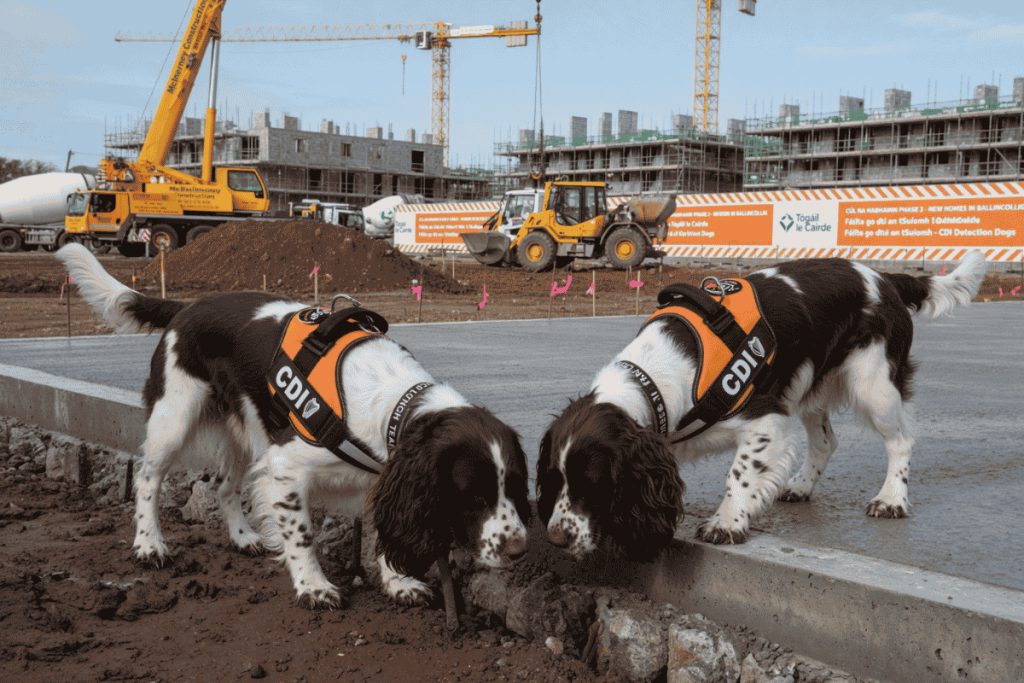
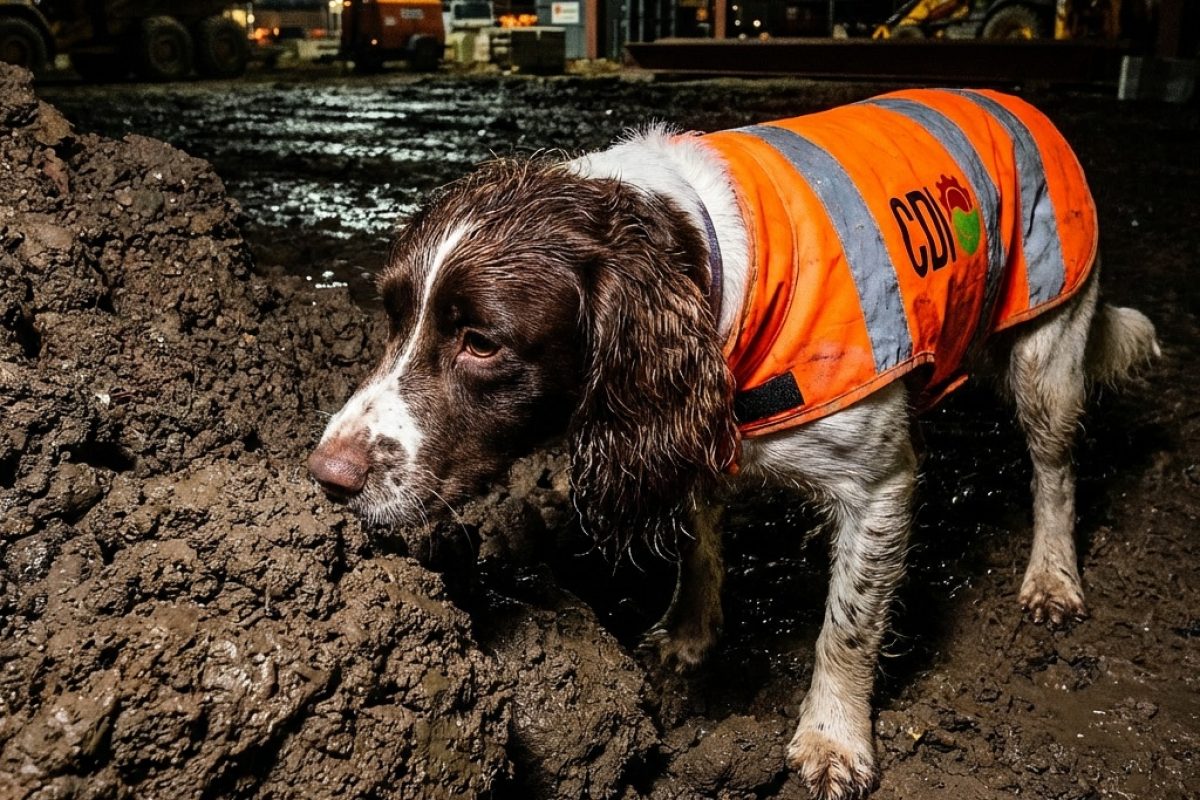
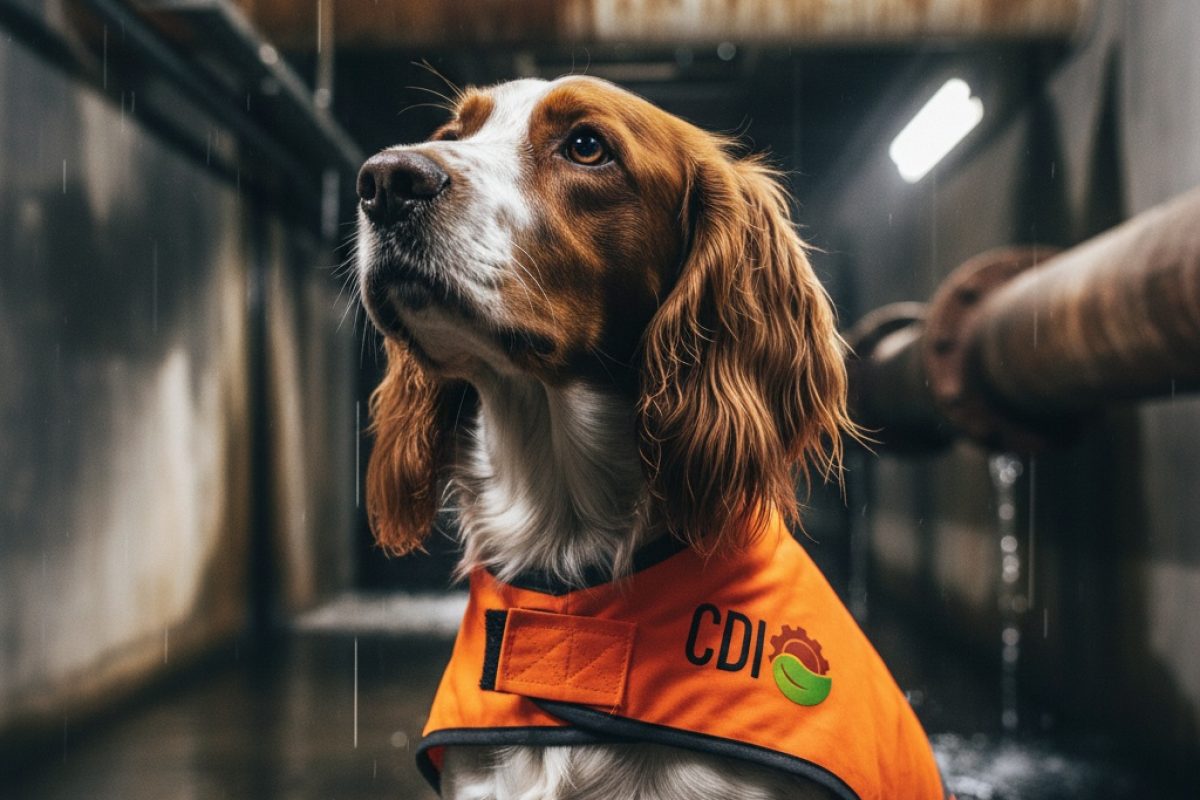
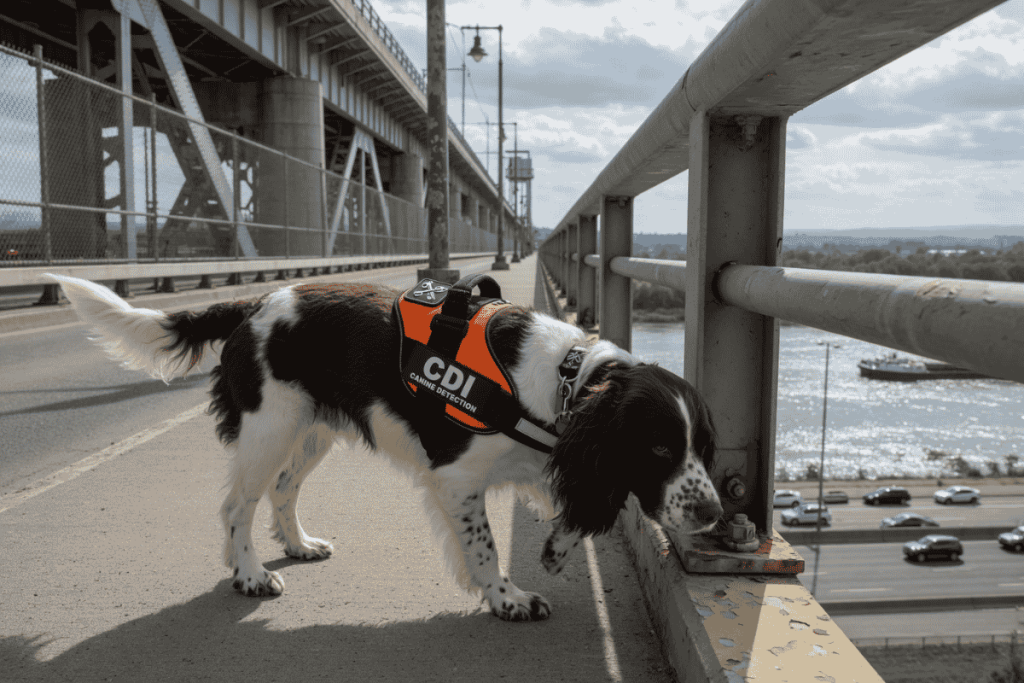
Trained corrosion detection dogs work by identifying the specific volatile compounds produced when metal begins to oxidise and corrode. These scent compounds are present even in the very early stages of corrosion and can travel through insulation, coating layers, and structural cavities. This means a dog can detect corrosion that is entirely hidden from view and that would not register on most equipment-based surveys until it had progressed further. You can learn more about how this works on the CDI early corrosion detection dogs page.
The speed advantage of detection dogs is significant. A dog and handler can cover large areas quickly, identifying locations where corrosion scent is present without needing to carry out detailed point-by-point measurement across an entire structure. This makes initial screening far more efficient than a comparable traditional survey and allows resources to be focused where they are most needed.
Accuracy and reliability compared
Both traditional methods and detection dogs have strong track records when used appropriately, but they offer different types of accuracy. Ultrasonic and radiographic testing can provide precise quantitative measurements of material loss in specific locations. This level of precision is important when you need to determine the exact extent of corrosion damage and plan a specific repair intervention.
Detection dogs offer a different kind of reliability: the ability to locate areas of concern across a wide area with a very high degree of sensitivity, even when those areas show no surface signs of a problem. The dog is not providing a measurement of material loss; it is indicating that corrosion chemistry is occurring at a given location. This is invaluable for prioritising where detailed technical investigation should be directed.
Cost comparison in real-world scenarios
The relative cost of the two approaches depends heavily on the size and complexity of the asset being inspected. For a small, easily accessible structure, traditional methods may be fully adequate and cost-effective. However, for large or complex sites where full coverage using equipment-based methods would require extensive access work, the cost advantage of detection dogs becomes clear.
By using detection dogs for wide-area screening first and then directing detailed technical inspection to the locations identified as priorities, organisations can achieve better overall coverage at a lower total cost. This combined approach is one of the most effective strategies available for managing corrosion risk on complex assets. The CDI case studies provide examples of how this has been applied across different site types in Ireland.
Understanding the limitations of each approach before committing
Before commissioning any corrosion inspection, it is worth taking time to understand not just what each method can do, but where each one has genuine limitations. Traditional methods are well established and widely accepted by regulators, insurers, and asset managers, but they depend heavily on the experience of the individual carrying out the inspection and the quality of access available on the day. Two engineers inspecting the same structure can reach meaningfully different conclusions depending on their background and the conditions they encounter. Detection dogs, meanwhile, are highly sensitive but are trained to indicate the presence of corrosion rather than quantify it. A dog survey tells you where to look in detail; it does not replace the detailed measurement work needed to plan a repair. Understanding this distinction is important for setting realistic expectations and getting the most value from each method. The best outcomes consistently come from clients who treat detection dogs and traditional inspection as complementary tools rather than direct alternatives, using each one at the stage of the process where it delivers the greatest practical benefit. Planning your inspection strategy with this in mind from the outset will save time, reduce cost, and improve the reliability of your overall results.
Which method is right for your situation
The answer depends on what you need to achieve. If you are carrying out a targeted inspection of a specific area where you already have reason to suspect corrosion, traditional equipment-based methods are likely to be the most appropriate choice. They will give you precise measurements and allow you to make informed decisions about treatment and repair.
If you are carrying out a baseline survey of a large asset, screening a site before purchase or lease, or trying to identify hidden corrosion across a wide area without a clear idea of where to start, detection dogs offer clear advantages. They are faster, more sensitive to early-stage hidden corrosion, and able to cover ground that traditional methods cannot reach practically.
The case for using both together
For most serious corrosion management programmes, the most effective approach is to use both methods in a complementary way. Detection dogs provide rapid, sensitive wide-area screening that identifies priority locations, while traditional technical methods provide the detailed quantitative data needed for repair planning and compliance reporting. Together they offer a level of coverage and reliability that neither approach can achieve independently. If you would like to find out how this could work for your assets in Ireland, contact CDI to discuss the options available.