Corrosion is one of the most expensive and dangerous problems facing infrastructure, industry, and property owners across Ireland. The real difficulty is that the most damaging corrosion is rarely visible until it has already caused serious harm. By the time you can see rust or degradation on a surface, the underlying metal may have been compromised for a long time. This is why early detection is so critical, and it is why
Corrosion is one of the most expensive and dangerous problems facing infrastructure, industry, and property owners across Ireland. The real difficulty is that the most damaging corrosion is rarely visible until it has already caused serious harm. By the time you can see rust or degradation on a surface, the underlying metal may have been compromised for a long time. This is why early detection is so critical, and it is why detection dogs trained to locate early-stage corrosion are becoming an increasingly important tool for engineers, facility managers, and surveyors who need reliable results quickly.
Why hidden corrosion is such a significant risk
Corrosion that develops beneath coatings, insulation, cladding, or behind structural elements is known as hidden or concealed corrosion. It often builds up slowly over months or years without any visible indication at the surface. This type of corrosion is particularly common in pipelines, industrial plant equipment, bridges, offshore structures, and large commercial buildings where certain areas are difficult to access or inspect regularly.
The consequences of missing hidden corrosion can be severe. Structural failures, unplanned shutdowns, costly emergency repairs, and in some cases serious safety incidents can all result from corrosion that was not identified early enough. In Ireland, where coastal environments and variable weather accelerate the corrosion process, the risk to infrastructure is particularly high. Acting before visible signs appear is not just practical; it is often essential for maintaining safety and operational continuity.
How traditional corrosion inspection methods work
Conventional inspection methods for corrosion include visual examination, ultrasonic testing, radiographic testing, and various forms of non-destructive evaluation. These approaches can be highly effective when applied correctly, but they all carry limitations when it comes to identifying corrosion that is concealed or in its earliest stages.
Visual inspection is only useful when corrosion has already become apparent at the surface. Ultrasonic and radiographic methods are more sensitive but require skilled operators, specialist equipment, and sufficient access to the area being tested. On large or complex structures this can mean significant time and cost, and some locations simply cannot be reached through conventional means. When corrosion is spread across a wide area or is developing in multiple hidden locations simultaneously, these methods can struggle to deliver a comprehensive picture quickly.
What makes detection dogs different
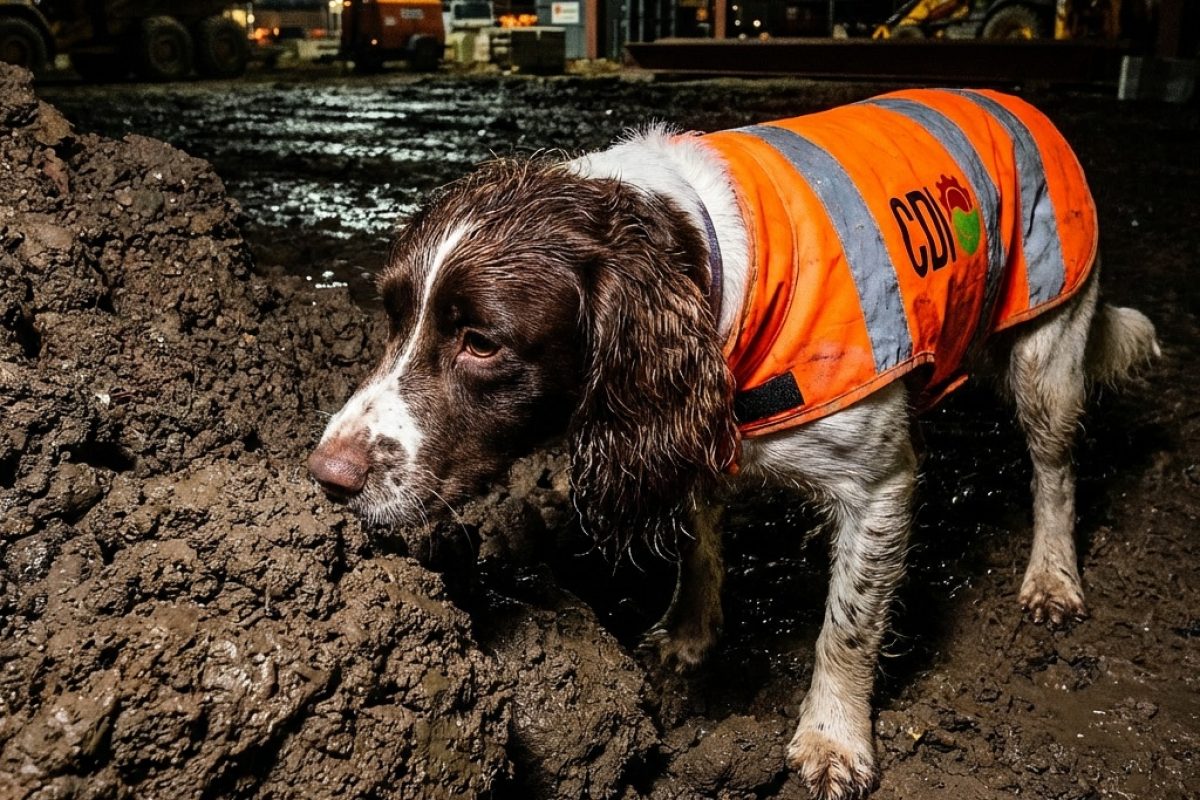
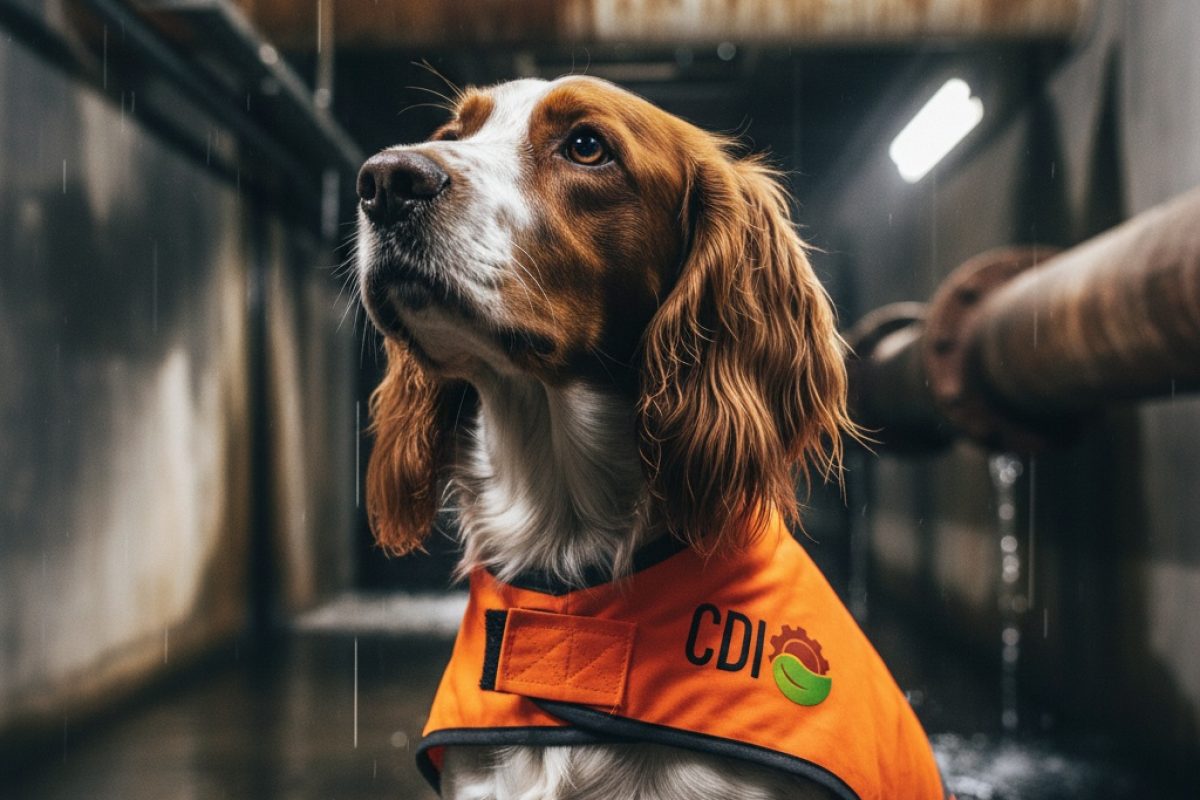
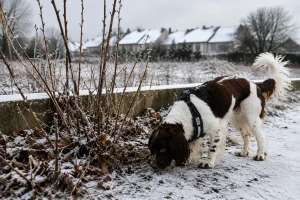
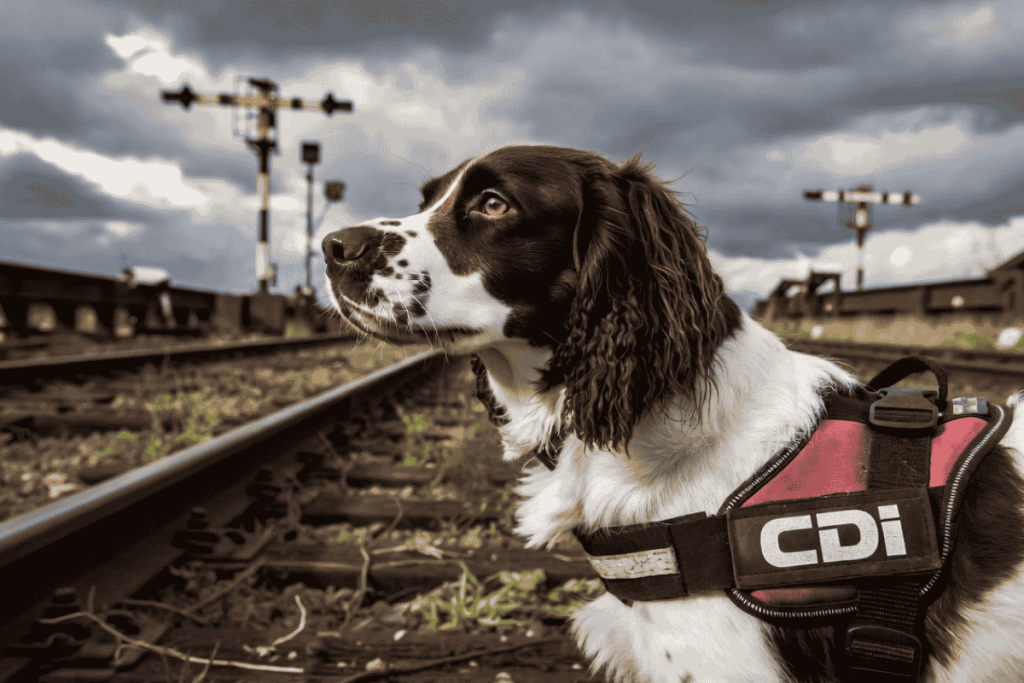
Detection dogs work in a fundamentally different way to equipment-based inspection methods. These dogs are trained to identify the specific scent compounds produced during the early stages of metal oxidation and corrosion. Because scent can travel through insulation, coating layers, and even structural cavities, a trained dog can locate corrosion that would be completely invisible to the human eye or undetectable by conventional scanning methods at that stage. You can read more about this approach on the early corrosion detection dogs service page.
The dogs work quickly and can cover large areas in a fraction of the time it would take to carry out equivalent equipment-based inspections. This makes them particularly well suited to large industrial sites, extensive pipeline networks, bridges, and commercial buildings where a full traditional survey would be both time-consuming and expensive. Their ability to indicate the precise location of hidden corrosion also means that intrusive investigation can be targeted, reducing unnecessary disruption and keeping costs under control.
What the detection process looks like in practice
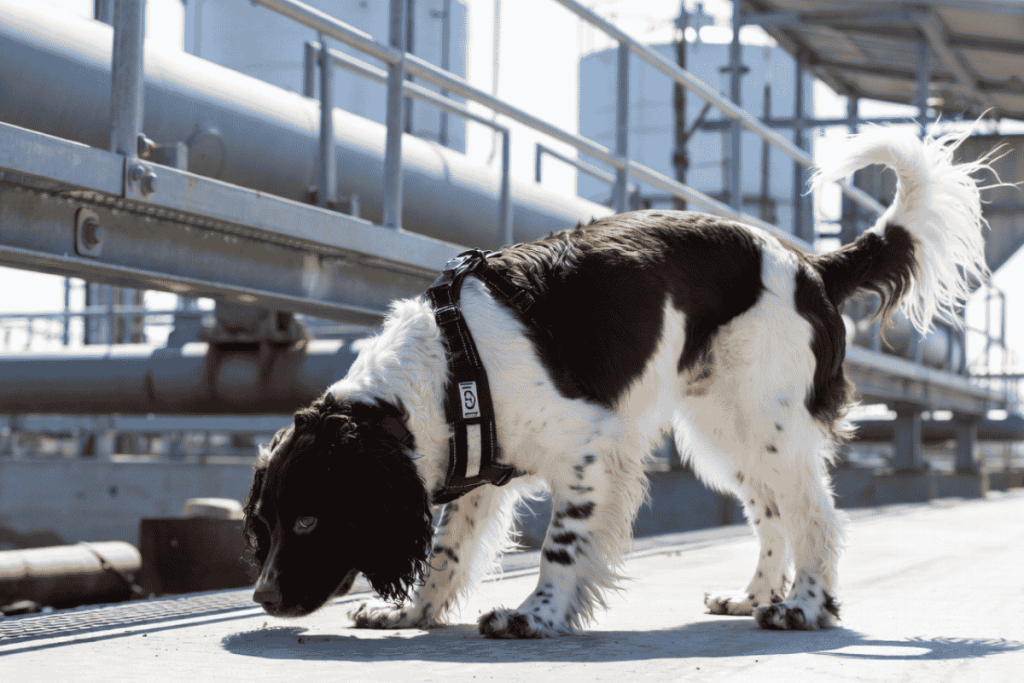
A corrosion detection survey using trained dogs typically begins with an initial assessment of the site and the structures to be inspected. The handler and dog work methodically across the area, with the dog indicating whenever it detects the scent signature associated with early corrosion. These indications are recorded and mapped so that a clear picture of where corrosion may be present can be built up across the site.
Once the survey is complete, the findings are reviewed and the identified locations can be prioritised for further investigation or treatment. Because the dog has already done the work of narrowing down the areas of concern, any follow-up inspection is far more targeted than a conventional sweep would be. This approach can significantly reduce the overall cost and duration of a corrosion survey while also improving confidence in the results.
Where detection dogs are most commonly used in Ireland
In Ireland, detection dogs for corrosion are used across a range of industries and asset types. Oil and gas infrastructure, water treatment facilities, industrial plant, ports, and large commercial properties are among the most common applications. Bridges and civil infrastructure are also an important area, particularly given Ireland’s coastal geography and the accelerated corrosion rates that come with exposure to salt air and moisture.
The method is also valuable for pre-purchase or pre-lease surveys where buyers or tenants want assurance about the condition of a structure before committing to a transaction. In these situations, having an independent and highly sensitive inspection carried out by a trained detection dog can provide significant peace of mind and help avoid costly surprises after the fact.
How early detection saves money in the long run
The financial case for early corrosion detection is straightforward. Treating corrosion in its early stages is almost always significantly less expensive than addressing it once it has progressed. Early-stage treatment might involve targeted coating repairs or localised maintenance, whereas advanced corrosion often requires component replacement, structural remediation, or extended shutdowns that carry far greater costs.
There is also the question of liability and safety compliance. Industries operating under strict maintenance standards and safety regulations need to be able to demonstrate that they are actively managing corrosion risk. Documented surveys using certified detection methods provide a clear record of due diligence, which is valuable both for regulatory purposes and for insurance.
The role of the handler in a successful survey
A detection dog’s effectiveness is closely tied to the skill and experience of its handler. The handler is responsible for reading the dog’s behaviour accurately, managing the search pattern across a site, and ensuring that every indication is recorded and communicated clearly to the client. A well-trained handler will also understand the limitations of any given survey, including environmental factors such as wind direction, temperature, and ventilation conditions that can affect how scent travels through a structure. On complex industrial sites, the handler works closely with site engineers and safety personnel to ensure the survey is carried out safely and that findings are contextualised correctly within the broader asset management picture. This combination of canine sensitivity and handler expertise is what makes detection dog surveys genuinely reliable rather than simply novel. When choosing a provider for corrosion detection work, it is worth asking about the training background of both the dog and the handler, the certification standards they work to, and how their findings are documented and reported. The quality of the survey depends as much on the team behind the dog as on the dog itself.
Combining detection dogs with a broader inspection strategy
Detection dogs work best as part of a broader approach to corrosion management rather than as a standalone solution. By using dogs to carry out rapid, wide-area screening, organisations can identify priority areas and then direct more detailed investigation using appropriate technical methods. This layered approach makes the overall inspection process more efficient and more effective. You can see how this has worked in practice by reviewing the case studies on the CDI website.
If you are responsible for maintaining infrastructure or industrial assets in Ireland and you want to understand how detection dogs could improve your corrosion management programme, get in touch with the CDI team to discuss your specific requirements. Early detection is the most effective tool available for protecting the long-term value and safety of your assets.