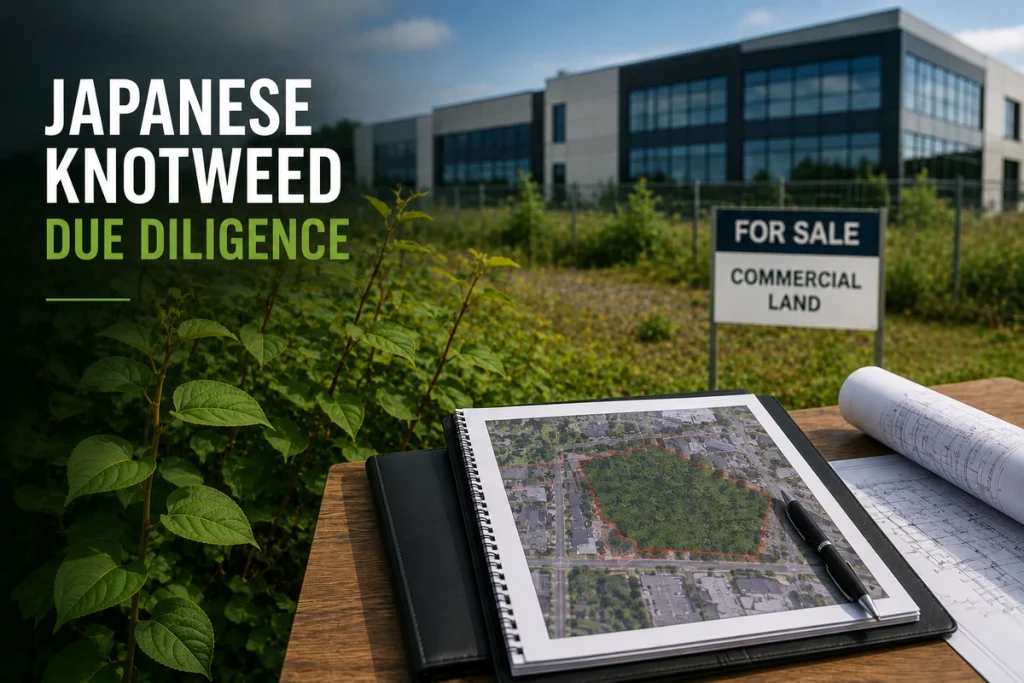
Buying commercial land in Ireland can involve many checks, but Japanese knotweed is one risk that should not be left until after contracts are signed or groundworks begin. A site may look suitable for development, investment or future use, but hidden Japanese knotweed can affect timelines, budgets, soil movement, lender confidence and the wider value of the land.
The problem is that Japanese knotweed is not always obvious during a standard viewing. Visible growth may be limited, recently cut back, hidden along boundaries, dormant in winter or concealed within disturbed ground. The above-ground plant may only show part of the issue, while the underground rhizome system can create a much wider risk for future excavation, construction or site clearance.
For commercial buyers, developers, investors, surveyors and landowners, proper due diligence should answer one important question before decisions are finalised: could Japanese knotweed affect the land, the transaction or the planned use of the site? If the answer is uncertain, a professional detection survey can help identify risk before it becomes a more expensive problem.
Why Japanese knotweed matters in commercial land purchases

Japanese knotweed can affect commercial land because it is not only a vegetation issue. It can become a legal, financial, environmental and construction planning issue if it is not identified early.
For a buyer, the presence or suspected presence of Japanese knotweed can influence the value of the land and the level of risk attached to the purchase. For a developer, it can affect the feasibility of the project, especially if excavation, drainage, foundations, access roads or service routes are planned. For a lender, it may raise questions about future remediation costs and site risk. For a contractor, it can change how soil is handled, moved or stored.
This is why Japanese knotweed due diligence should happen before the transaction is complete, not after the site has been acquired. If the problem is discovered after purchase, the buyer may have fewer options, less negotiating power and a more urgent need to manage the issue before work can proceed.
Commercial land is often more complex than a private garden or residential boundary. It may include rough ground, previous industrial use, derelict areas, stockpiles, watercourses, unmanaged boundaries or neighbouring sites with unknown maintenance histories. These conditions can make Japanese knotweed harder to identify through a simple visual check.
Why visual inspection may not be enough
A visual inspection can be useful, especially during the growing season when Japanese knotweed is actively producing leaves and stems. However, visual inspection has limits. Those limits become more important when the decision involves commercial land, development funding or planned construction.
Japanese knotweed may have been cut back before marketing. It may have died back during winter. It may be growing beyond a boundary but spreading underground toward the site. It may be mixed with other vegetation or concealed in areas that are difficult to access. It may also be present in soil that has already been moved, disturbed or stockpiled.
This means a site can appear clean during a viewing while still carrying hidden risk below the surface.
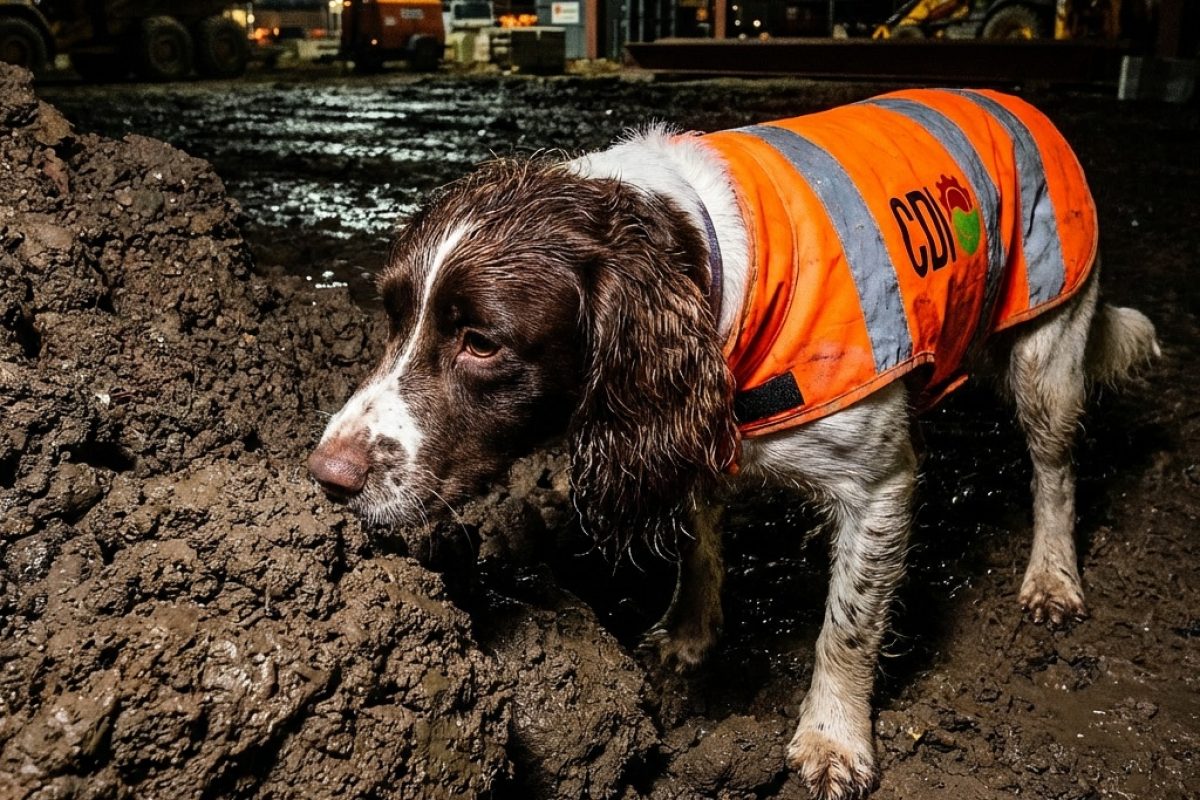
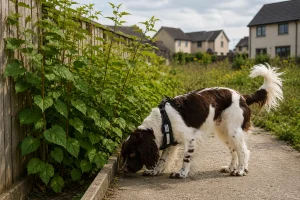
CDI’s Japanese knotweed detection service is designed to help identify underground, dormant or concealed growth that may not be visible during a traditional inspection. For commercial due diligence, this can be valuable because it supports earlier decision-making before the buyer commits to a site, a budget or a programme.
The aim is not to replace every professional involved in the transaction. The aim is to provide clearer information where visual evidence alone may not be enough.
What commercial land buyers need to know before purchase
Before buying commercial land, the buyer should understand whether Japanese knotweed is known, suspected or likely to affect the site. This is especially important where the land will be developed, cleared, excavated or resold.
A buyer should consider the site history, the condition of boundaries, the presence of rough or unmanaged ground, any previous clearance, neighbouring land conditions and whether there are areas where soil has been disturbed. These details matter because Japanese knotweed risk is not always limited to the most visible area.
If there are old canes, suspicious regrowth, dense vegetation, cleared patches, inaccessible corners or nearby infestations, the risk should be checked before purchase decisions are finalised. Waiting until after completion can reduce flexibility and may leave the buyer responsible for further investigation, treatment planning or remediation costs.
A professional knotweed land survey can help clarify whether Japanese knotweed detection should form part of the due diligence process. For higher-value commercial land, the cost of early detection can be small compared with the potential cost of discovering the problem later.
How knotweed can affect development plans
Japanese knotweed can affect development plans because construction activity often involves soil disturbance. Excavation, grading, piling, drainage, trenching, access routes and landscaping can all interact with areas where rhizomes may be present.
If the risk is not identified before these activities begin, the project can face delays while the affected area is assessed and managed. Contractors may need to stop work in certain zones. Soil movement may need to be reviewed. Additional specialist advice may be required before the programme can continue.
This is why developers should not treat Japanese knotweed as a minor vegetation problem. It can become a project sequencing issue.
A site with hidden knotweed risk may require different planning than a site where the risk has been checked early. If affected areas are identified before work begins, the project team can make more informed decisions about access, staging, remediation advice, soil handling and construction timing.
CDI’s article on construction site knotweed explains why identifying the issue before groundworks is so important. For commercial land buyers, the same principle applies before acquisition. The earlier the risk is understood, the easier it is to plan around it.
Why soil movement is a major concern
One of the biggest commercial risks linked to Japanese knotweed is soil movement. The plant can spread through rhizome material, and this makes disturbed soil a serious concern on development and commercial sites.
If contaminated soil is excavated, moved, stockpiled or transported without proper understanding, the problem can spread across the site or into areas that were not previously affected. This can increase costs, complicate remediation and create further responsibility for the landowner or project team.
Commercial sites often involve large volumes of soil movement. Even early enabling works can disturb ground before the full construction phase begins. If Japanese knotweed is found only after soil has been moved, the issue may become more difficult to contain and more expensive to resolve.
This is where early detection supports better decision-making. A detection survey can help identify whether hidden knotweed risk may need to be considered before soil is disturbed.
For more detail on this risk, CDI’s guidance on contaminated soil movement is a useful supporting resource.
The role of Japanese knotweed in commercial due diligence
Due diligence is about understanding risk before committing to a transaction. Japanese knotweed should be part of that process when there is any reason to suspect the site could be affected.
For commercial buyers, this is not just about whether knotweed is present today. It is about what that presence could mean for the future use of the land. A site may be purchased for redevelopment, storage, industrial use, utilities, infrastructure, housing, retail, hospitality or long-term investment. Each intended use may create different levels of exposure.
If the land will remain largely undisturbed, the management approach may be different from a site that will be excavated and rebuilt. If the purchase depends on fast development, hidden knotweed may become a more urgent issue. If the buyer intends to resell the land, unresolved uncertainty may affect future buyer confidence.
A detection survey can help the buyer move from assumption to evidence. It can support conversations with solicitors, surveyors, engineers, environmental consultants and treatment specialists where needed. It can also help the buyer decide whether further investigation or negotiation is required before completing the purchase.
Boundary and neighbouring land concerns
Japanese knotweed due diligence should not stop at the visible centre of the site. Boundary areas are often where risk first becomes complicated.
Commercial land may border unmanaged sites, roads, railway corridors, watercourses, industrial yards, derelict land, utility land or private properties. If Japanese knotweed is growing near a boundary, the underground risk may need to be considered even if the main visible growth appears to be outside the site.
A fence, wall or ownership line does not automatically remove the concern. Rhizomes can spread below ground, and site works near the boundary can disturb material if the risk is not understood.
If neighbouring land is suspected of having Japanese knotweed, a buyer should avoid relying only on what can be seen from the site visit. A detection survey can help assess whether the buyer’s side of the boundary may require further investigation.
CDI’s article on neighbouring land risk is especially relevant where commercial land borders unmanaged or affected property.
Winter and off-season land purchases
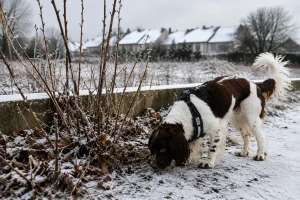
Commercial land transactions do not always happen during the growing season. A site may be viewed in winter, when Japanese knotweed has died back above ground and is harder to identify visually.
This can create a false sense of confidence. A site may look clear because there are no fresh leaves or upright green stems, but that does not mean the underground rhizome system is absent. Old canes may be missed, cut back or hidden beneath other vegetation.
If a purchase, planning decision or development programme cannot wait until spring, a professional detection survey may still be useful. CDI’s winter knotweed detection guidance explains why the plant can remain a concern even when visible growth is limited.
For commercial buyers, winter should not be treated as a reason to skip checks. It should be treated as a reason to choose the right detection method before decisions are made.
What happens if knotweed is discovered after purchase?
If Japanese knotweed is discovered after purchase, the buyer may need to take action quickly, especially if development or site clearance is planned. The next steps may involve further investigation, specialist treatment advice, remediation planning, changes to soil handling and communication with contractors or project partners.
The issue may also affect budgets. Costs can increase if the problem was not allowed for during acquisition. Timelines can change if work has to pause. Negotiation opportunities may be limited if the transaction has already completed.
This is why pre-purchase detection can be valuable. It gives the buyer the chance to understand the risk before they own the problem. It may support price discussions, contract conditions, further due diligence or a decision to delay completion until more information is available.
For developers and commercial investors, knowledge before purchase is usually more useful than discovery after purchase.
How CDI supports commercial buyers and developers
CDI supports commercial buyers and developers by helping identify hidden Japanese knotweed risk before major decisions are made. The value of the service is not only in locating suspected knotweed. It is in reducing uncertainty at the point where uncertainty can become expensive.
A buyer may need clarity before completing a purchase. A developer may need to know whether a site can move into groundworks. A contractor may need to understand whether certain areas require caution before soil is disturbed. A landowner may need evidence before commissioning treatment or remediation advice.
CDI’s work is especially useful when visual signs are limited, when a site is complex, when growth may be concealed or when the cost of getting the decision wrong is high.
The commercial redevelopment case study shows why early detection matters on real commercial sites. When risks are identified at the earliest possible stage, project teams have more time to plan, respond and avoid unnecessary disruption.
What a sensible due diligence process looks like
A sensible due diligence process begins by recognising that Japanese knotweed risk may not be obvious. The buyer or adviser should consider the site context, visible signs, boundary conditions, previous land use, season, planned works and whether soil movement is expected.
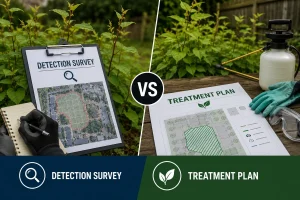
If there is any uncertainty, the next step should be a professional detection survey before the transaction or development plan moves too far forward. The findings can then inform the wider due diligence process and help the buyer decide whether more specialist input is needed.
This approach helps avoid two common mistakes. The first is assuming the site is clear because no visible knotweed was noticed during a viewing. The second is jumping straight into treatment planning without first understanding where the hidden risk may be.
For commercial land, both mistakes can be expensive.
Detection gives the buyer a clearer starting point. It helps the project team decide whether the site needs further investigation, whether costs should be allowed for, whether contractors should be briefed, and whether the transaction needs additional conditions or advice.
Why this matters for conversion and decision-making
Someone searching for Japanese knotweed due diligence before buying commercial land is usually not looking for general plant information. They are likely close to a decision. They may be reviewing a site, preparing an offer, managing a transaction, advising a client or planning development works.
That makes this a high-intent moment.
The reader does not only need to know what Japanese knotweed is. They need to know whether they should act before committing money, signing documents, starting groundworks or accepting responsibility for the land.
The answer is clear. If Japanese knotweed is known, suspected or uncertain, it should be checked before the purchase or project moves forward.
A CDI detection survey helps turn a vague concern into practical information. It gives the buyer, developer or adviser a clearer view of whether hidden knotweed risk may affect the site and what should happen next.
Final thoughts
Japanese knotweed due diligence should be taken seriously before buying commercial land in Ireland. A site may look suitable on the surface, but hidden knotweed risk can affect value, development plans, soil movement, funding confidence and future site management.
The most important time to identify the issue is before the purchase is complete and before groundworks begin. Once contracts are signed or soil is disturbed, the options can become more limited and the costs can become harder to control.
If you are buying, selling, developing or advising on commercial land where Japanese knotweed is known, suspected or uncertain, CDI can carry out a professional detection survey to help identify hidden risk before decisions are finalised.
Contact CDI before purchase, clearance or excavation so the site can be checked at the right stage.
FAQs
Why is Japanese knotweed due diligence important before buying commercial land?
Japanese knotweed due diligence is important because hidden growth can affect land value, development plans, soil movement, remediation costs and project timelines. Checking before purchase gives the buyer better information before they take responsibility for the site.
Can commercial land be developed if Japanese knotweed is present?
Commercial land may still be developed, but the knotweed risk needs to be properly assessed and managed before work begins. The right approach depends on the extent of the issue, the planned works and whether soil will be disturbed.
Is a visual inspection enough for commercial land?
A visual inspection may not be enough if the plant has been cut back, is dormant, is hidden by vegetation or may be present underground. A detection survey can help identify concealed risk that may not be obvious during a standard viewing.
Should buyers arrange a knotweed survey before completing the purchase?
Yes, if Japanese knotweed is known, suspected or uncertain, buyers should consider arranging a survey before completion. This can support negotiations, due diligence, risk planning and future development decisions.
Can Japanese knotweed affect funding or investment decisions?
It can. If knotweed creates uncertainty around site value, remediation costs or development timelines, lenders and investors may want more information before committing. Early detection can help reduce that uncertainty.
What if Japanese knotweed is only on neighbouring land?
Neighbouring knotweed can still be relevant if it is close to the site boundary or if underground spread is possible. A boundary-focused detection survey can help assess whether the commercial land itself may be affected.
Can Japanese knotweed be missed in winter?
Yes, Japanese knotweed can be harder to identify in winter because the visible plant dies back. The underground rhizome system may still remain, so winter purchases may require more careful assessment.
When should CDI be contacted?
CDI should be contacted before purchase, site clearance, excavation, development planning or soil movement where Japanese knotweed is known, suspected or uncertain. Early detection helps support better commercial decisions.