Japanese knotweed can be much harder to identify during the winter months because the visible plant often dies back above ground. The fresh green leaves, upright stems and dense growth that usually make it easier to recognise in spring and summer may no longer be present. For homeowners, buyers, sellers, developers, contractors and commercial landowners in Ireland, this can create uncertainty when a site needs to be assessed before purchase, sale, clearance, excavation or construction work.
A winter site may look inactive or even clear, but that does not always mean the Japanese knotweed risk has disappeared. The underground rhizome system can remain present below the surface even when there are no fresh leaves or visible shoots. If that hidden material is disturbed during soil movement or groundworks, the issue can become more difficult and expensive to manage. This is why a professional winter detection survey can still be important when Japanese knotweed is known, suspected or has previously been recorded on or near the site.
Can Japanese knotweed still be found in winter?
Yes, Japanese knotweed can still be detected in winter, but it is not always easy to confirm through a basic visual inspection alone.
During spring and summer, Japanese knotweed is usually easier to recognise because the plant produces visible stems, leaves and dense above-ground growth. In winter, the plant naturally dies back. The leaves disappear, the stems become dry and brown, and the site can look much less active than it did earlier in the year.
That does not mean the risk has gone.
The real concern with Japanese knotweed is often below the surface. The underground rhizome system can remain present even when the visible plant has died back. This is why winter can be a risky time for property owners, developers, contractors and land managers who rely only on what they can see above ground.
If a site looks clear in winter, it may still contain hidden Japanese knotweed rhizomes underground.
Why winter makes visual identification harder
A visual inspection often depends on clear above-ground signs. In the growing season, those signs may include new shoots, shield-shaped leaves, bamboo-like stems and dense areas of growth. In winter, many of those signs are either gone or much harder to read.
By the colder months, Japanese knotweed can appear as dry brown canes, broken stems, old plant material or bare-looking ground. In some cases, previous cutting, clearance or weather damage can make the area look even less obvious.
This creates a false sense of security. A homeowner may think the plant has died. A buyer may assume the land is clear. A contractor may begin work without realising there is still an invasive plant risk beneath the surface.
The issue is not only whether the plant is visible. The issue is whether viable rhizome material remains on site.
The underground risk does not disappear in winter
Japanese knotweed spreads mainly through its underground rhizome system. These rhizomes can remain below the surface and produce new growth when conditions are suitable again.
This is why winter detection matters.
A site may have no visible leafy growth in December, January or February, but still contain rhizome material capable of causing problems later. If soil is moved, excavated, stockpiled or transported without understanding the risk, the issue can become harder and more expensive to manage.
This is especially important on development sites, commercial land, infrastructure corridors, utility routes, property boundaries, riverbanks and any site where Japanese knotweed has previously been recorded or suspected.
Winter can hide the plant from view, but it does not remove the underlying risk.
Can detection dogs help find Japanese knotweed in winter?
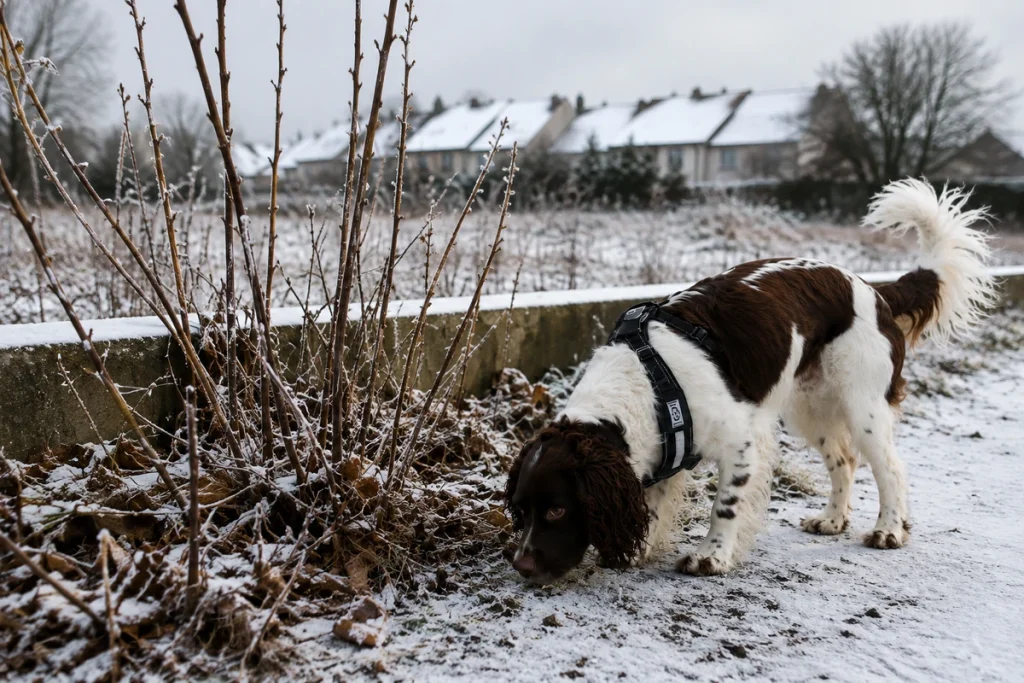
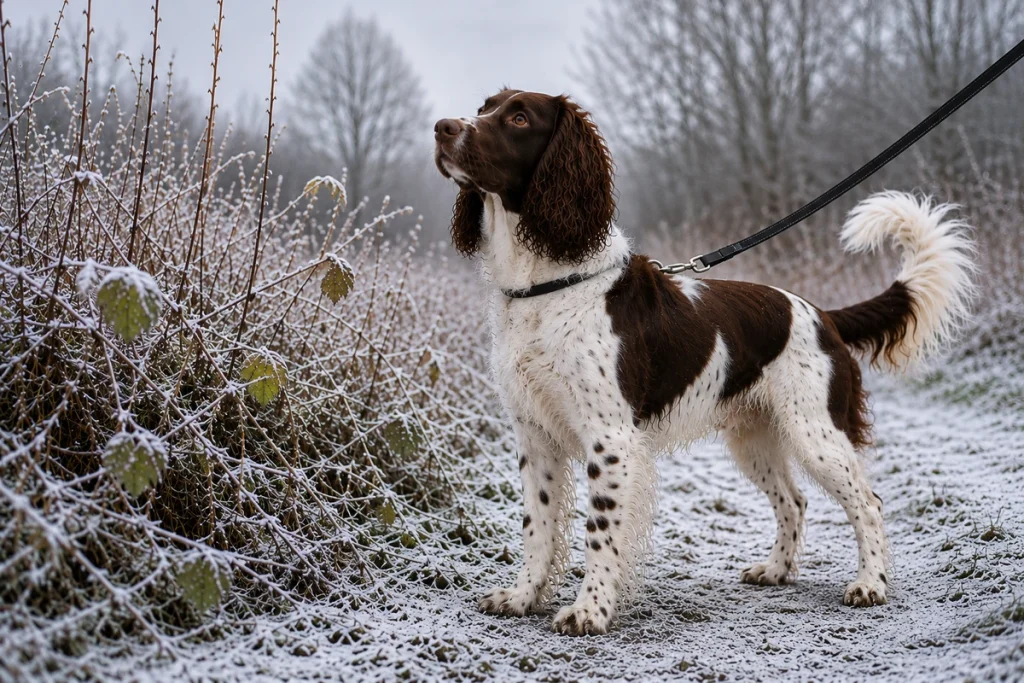
Detection dogs can be especially useful in winter because they are not relying only on visible plant growth.
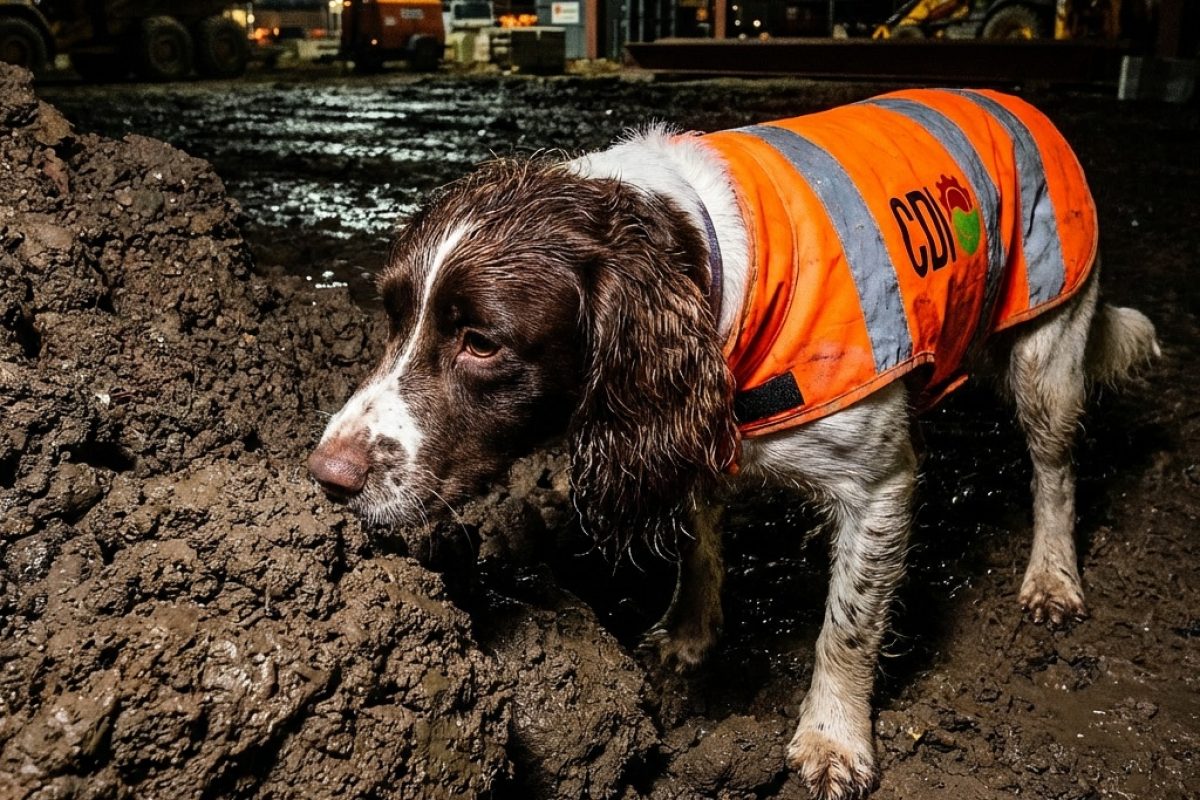
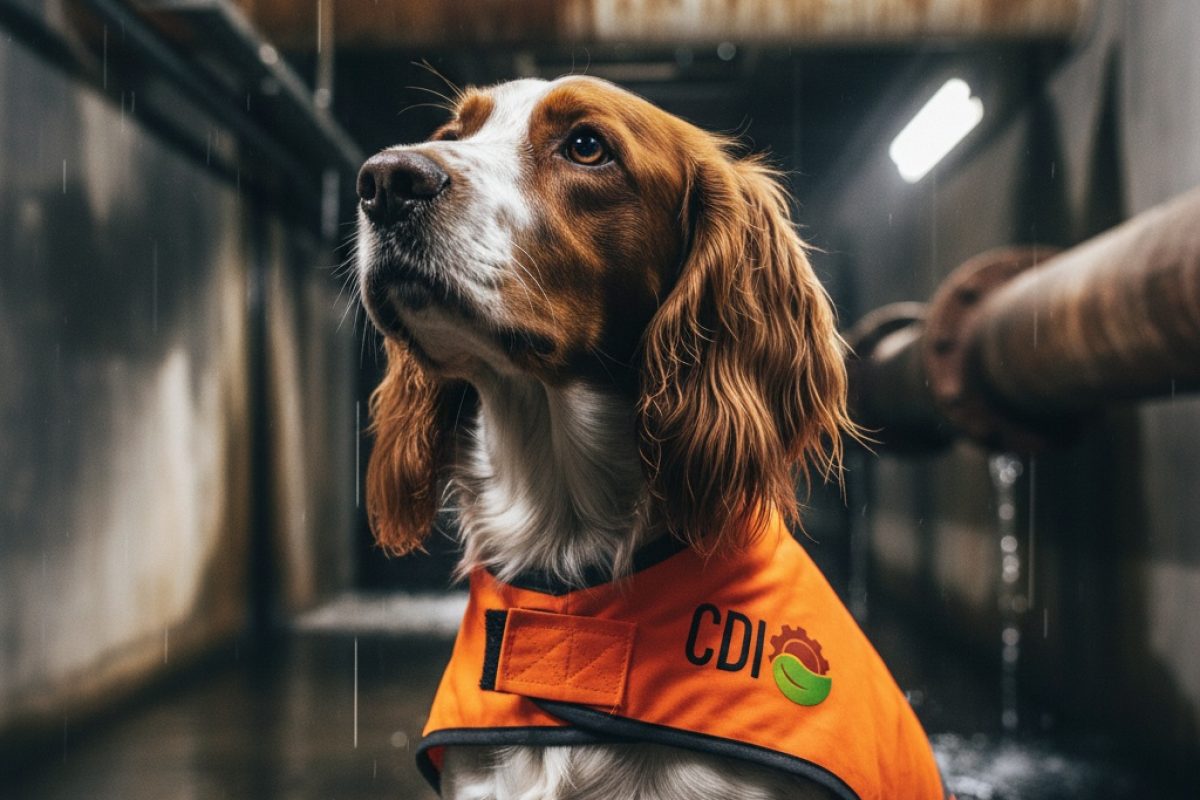
CDI’s Japanese knotweed detection dogs are trained to identify the scent of Japanese knotweed, including underground, dormant or concealed growth. This makes the service useful when visual inspection is limited by season, vegetation cover, recent clearance or restricted access.
For property owners, developers and contractors, this can provide an additional layer of confidence before important decisions are made. Instead of assuming a site is clear because the plant is not visible, a professional detection survey can help identify whether further investigation or management may be needed.
This is one of the reasons a winter survey can still be valuable, especially before purchase, sale, groundworks, excavation or site clearance.
When should you arrange a winter detection survey?
A winter detection survey is worth considering when there is any known or suspected Japanese knotweed risk on or near the site.
If Japanese knotweed was visible during the growing season but has now died back, winter is not a reason to ignore it. The underground system may still be present. A Japanese knotweed survey can help clarify the risk before the next stage of work begins.
A winter survey may also be useful when a site is being prepared for development, when a commercial land purchase is being reviewed, when boundary vegetation has been cleared, or when soil movement is planned. These are situations where hidden rhizome material can create serious delays if it is discovered late.
It can also be helpful where a previous survey was inconclusive, where access was limited, or where neighbouring land has a known Japanese knotweed issue.
The earlier the risk is checked, the easier it is to make informed decisions.
Why winter detection matters before groundworks
Groundworks can turn a hidden Japanese knotweed issue into a much larger problem.
If rhizomes are disturbed during excavation, grading, trenching or soil movement, contaminated material may be spread across the site or moved into areas that were previously unaffected. This can increase management costs, delay works and create additional responsibility for the landowner, contractor or developer.
A winter site may appear quiet above ground, but that does not mean it is safe to excavate without further checks.
For development and construction teams, a professional detection survey can support better planning before machines arrive on site. It can help identify risk areas earlier, inform the next stage of investigation and reduce the chance of unexpected knotweed issues during the works programme.
This links closely with CDI’s wider work around construction site knotweed and contaminated soil movement.
Winter detection for property buyers and sellers
Japanese knotweed can affect property confidence, mortgage discussions, sale timelines and legal enquiries. If a property is being bought or sold in winter, the reduced visibility of the plant can make the process more uncertain.
A buyer may worry that an area has been cut back. A seller may need to clarify whether previous growth is still a concern. A surveyor may flag suspicious canes or neighbouring vegetation but may not be able to confirm the full extent through visual inspection alone.
In these cases, a detection survey can help provide clearer information before decisions are made.
This does not replace legal advice, valuation advice or a full remediation plan where one is needed. However, it can help establish whether Japanese knotweed detection should form part of the next step.
If the concern has been raised during a sale or purchase, CDI’s guidance on property survey issues may also be useful.
Winter detection for commercial and development land
Commercial land often carries a higher level of risk because decisions are tied to purchase value, planning, programme dates, funding, site access and future works.
If Japanese knotweed is missed before acquisition or development, the cost is rarely limited to the plant itself. The wider issue can include project delays, redesign, further surveys, treatment planning, soil handling, contractor disruption and potential reputational concerns.
This is why winter should not be treated as a quiet season for knotweed risk.
For developers, investors, utilities, infrastructure teams and commercial landowners, winter can be a useful time to arrange a detection survey before the main growing season returns or before site works begin.
What happens after Japanese knotweed is detected?
If Japanese knotweed is detected, the next step depends on the site, the level of risk, the intended use of the land and the stage of the project.
In some cases, further investigation may be needed to understand the extent of the issue. In other cases, the detection findings may help inform treatment planning, remediation advice or decisions around excavation and soil movement.
The important point is that detection comes before action.
Starting treatment, clearance or groundworks without understanding where the risk may be present can lead to poor decisions. A professional detection survey helps create a clearer starting point so that the correct next steps can be planned.
Final thoughts
Japanese knotweed may look inactive in winter, but that does not mean it has disappeared.
The visible plant can die back while the underground rhizome system remains present. For this reason, winter can be one of the most important times to think carefully before buying land, selling property, clearing vegetation or starting groundworks.
If there is a known or suspected Japanese knotweed risk, CDI can carry out a professional detection survey to help identify hidden, dormant or concealed growth before costly decisions are made.
To discuss a winter Japanese knotweed detection survey, contact CDI and speak to the team about your site.
FAQs
Can Japanese knotweed grow in winter?
Japanese knotweed usually dies back above ground during winter. The visible stems and leaves may disappear or become dry and brown, but the underground rhizome system can remain present below the surface.
Does Japanese knotweed die in winter?
The above-ground growth dies back, but the plant itself may not be dead. The rhizomes can remain underground and produce new growth again when conditions improve.
Can Japanese knotweed be detected without leaves?
Yes, it may still be possible to detect Japanese knotweed without leaves, especially where there are old stems, site history or underground rhizome risk. Detection dogs can also support surveys where visual signs are limited.
Is winter a good time for a Japanese knotweed survey?
Winter can be a useful time for a survey if there is known or suspected risk, especially before property transactions, development, site clearance or groundworks. The right survey method matters because visual signs may be limited.
Should I wait until spring to check for Japanese knotweed?
Not always. If a decision needs to be made before spring, such as buying land, preparing a site or starting works, it may be better to arrange a professional detection survey rather than waiting for visible growth to return.