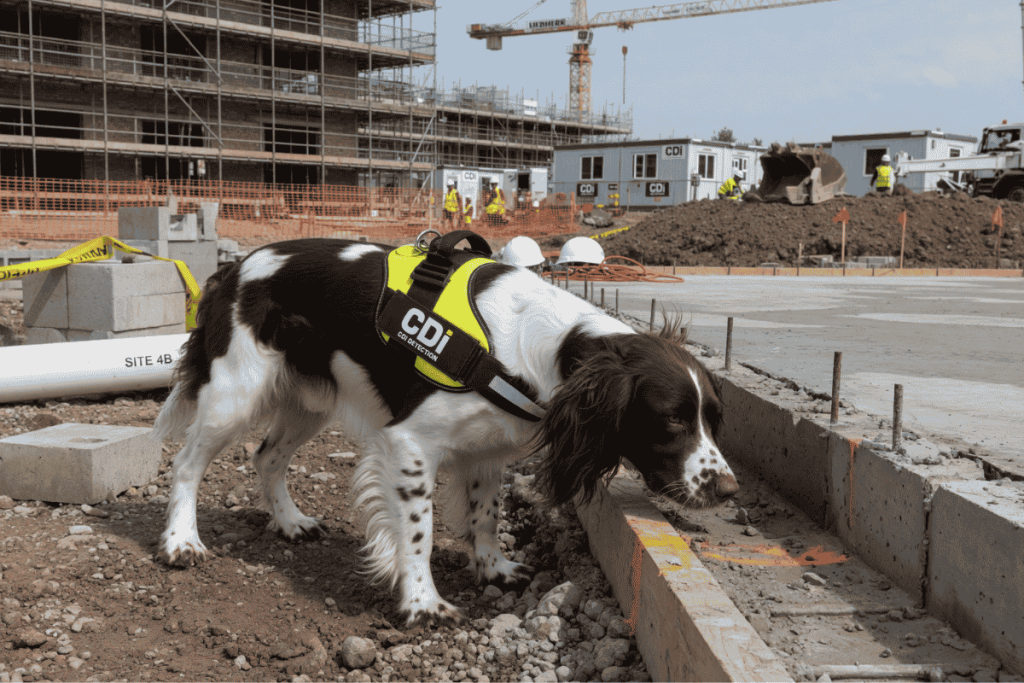
For developers and contractors working on sites across Ireland, Japanese knotweed represents one of the most costly and legally complicated environmental risks that can emerge during a project. The plant is deceptively easy to underestimate during the early stages of site assessment, and the consequences of missing it, or of disturbing it without a proper management plan in place, can be severe. Programme delays, funder concerns, planning complications, and six-figure remediation bills are all documented outcomes on Irish development sites where knotweed was not identified and managed correctly before groundworks began. Understanding what to check for, when to check for it, and what professional Japanese knotweed detection and survey services can offer a development project is therefore essential knowledge for any developer, project manager, or contractor operating in Ireland today.
Why construction sites in Ireland are particularly exposed to knotweed risk
Japanese knotweed spreads primarily through the movement of contaminated soil and the fragmentation of its underground rhizome network. Construction sites are among the highest-risk environments for both of these mechanisms. Earthworks, excavation, material importation, and the movement of machinery across a site can all disturb existing knotweed rhizomes and spread viable plant material to areas that were previously unaffected. A single fragment of rhizome as small as a few centimetres is capable of establishing a new infestation if conditions allow, meaning that groundworks carried out without prior assessment can rapidly turn a localised problem into a site-wide one.
Ireland’s legislative framework adds a further layer of risk. Japanese knotweed is classified as controlled waste under Irish waste management legislation, and excavated soil containing knotweed material cannot be moved, transported, or disposed of as ordinary spoil. Any contractor who moves contaminated material without complying with the relevant regulations is exposed to significant legal liability, regardless of whether the presence of knotweed was known at the time. This means that ignorance of the plant’s presence on a site is not a defence and does not reduce a developer’s exposure to enforcement action or civil claims.
How knotweed affects planning, funders, and project timelines
The impact of Japanese knotweed on a development project extends well beyond the physical challenge of managing the plant itself. Funders and financial institutions providing development finance are increasingly alert to the risk that knotweed poses to project viability and asset value. Many lenders now require confirmation that a knotweed survey has been carried out and that any infestation identified is subject to a professionally prepared management plan before they will release funds or proceed with drawdowns. A project that encounters knotweed mid-build without prior assessment in place can find itself in a difficult position with its funder, particularly if the discovery leads to programme delays that affect loan covenants or completion timelines.
Planning authorities in Ireland are also becoming more aware of knotweed as a site risk, and environmental conditions attached to planning permissions increasingly require developers to demonstrate that invasive species have been assessed and managed appropriately. Failing to identify knotweed before groundworks begin and then encountering it during construction can trigger a requirement to halt works while a remediation strategy is developed and approved, which carries significant cost implications for any programme-sensitive project. The CDI case studies section documents the kind of real-world impact this can have on a development site, including the scale of costs involved when knotweed management has to be addressed reactively rather than proactively.
What a pre-groundworks knotweed survey should cover
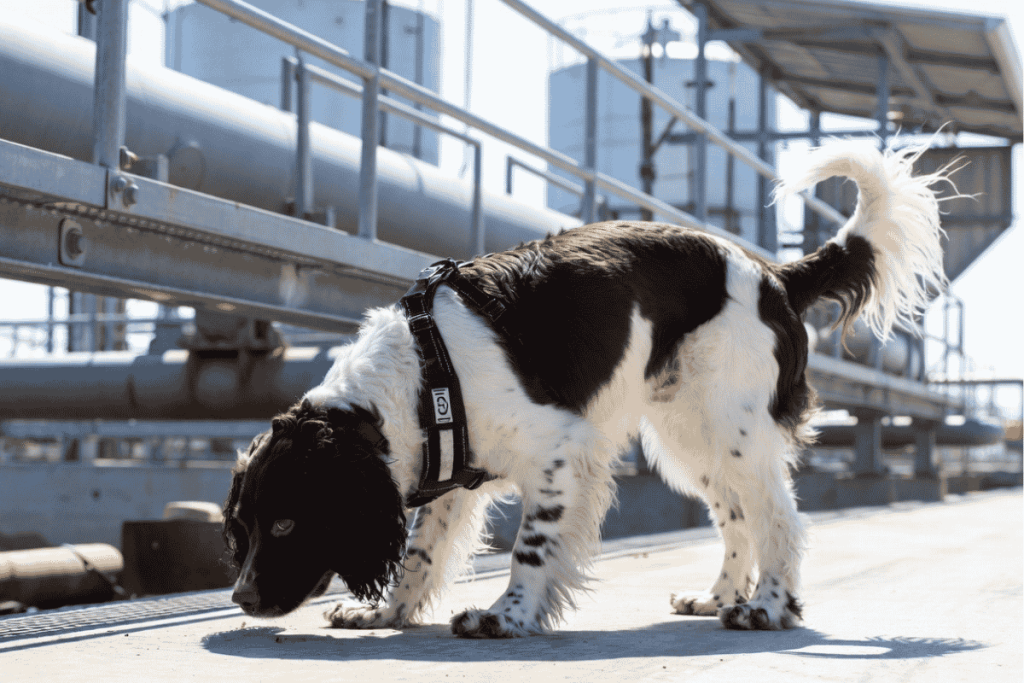
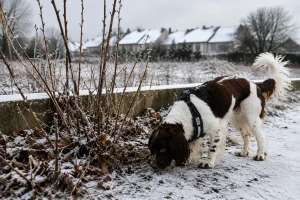
A thorough knotweed survey before groundworks should assess the entire site boundary and all areas of proposed excavation or soil disturbance, not just the areas where above-ground growth is visible. This is particularly important because Japanese knotweed is a seasonal plant and its above-ground growth dies back completely in winter. A visual inspection carried out during the dormant season can entirely miss an established infestation that would be clearly visible in summer, and the rhizome network below ground remains viable and capable of spreading throughout the year regardless of season.
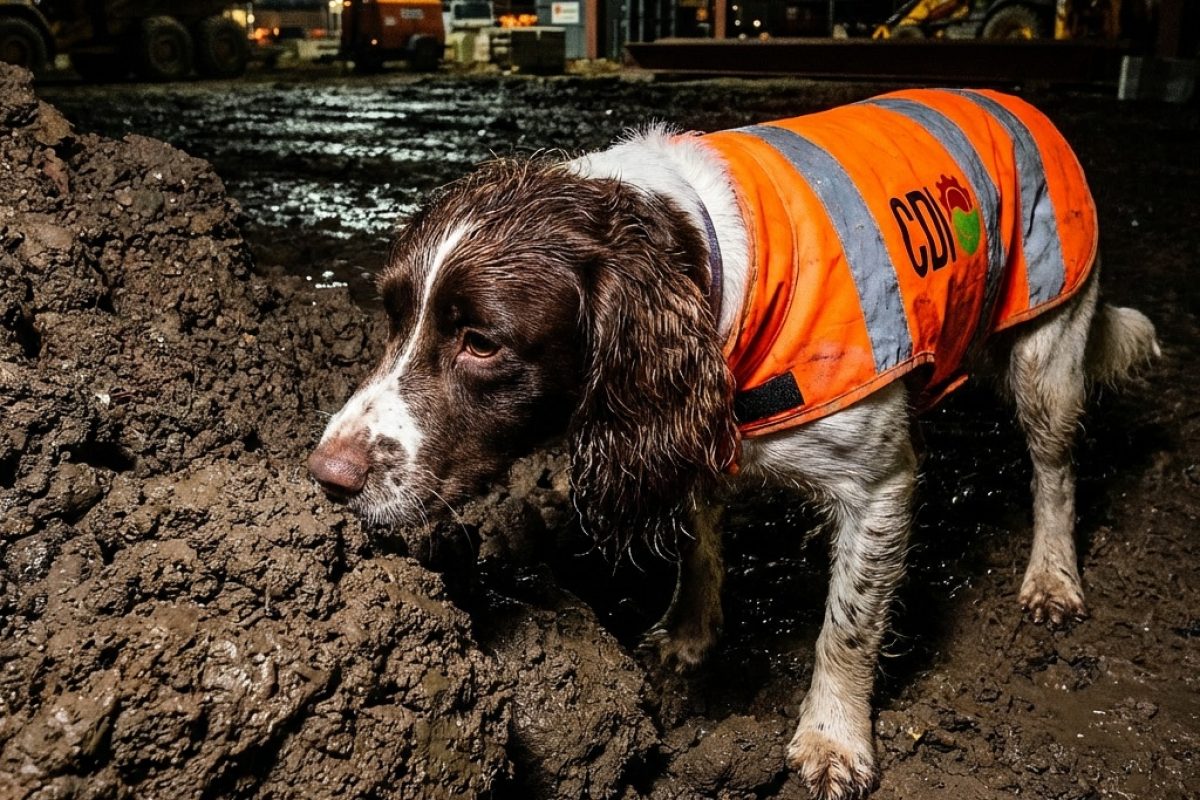
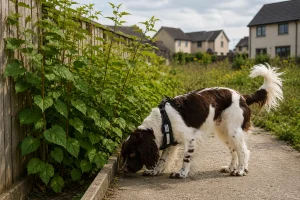
Detection dogs trained to identify Japanese knotweed rhizomes below the surface offer a significant advantage over visual inspection alone in this regard. Because the dogs identify the scent signature of living rhizome material rather than the visible above-ground plant, they can locate knotweed that is dormant, recently cut back, or present only at depth. This makes them particularly valuable for pre-groundworks surveys where a high level of confidence in the absence of knotweed is required before excavation begins. You can read more about how the Japanese knotweed detection dog survey process works and what it covers on the CDI service page.
The survey should also assess adjacent land, boundary features, and any areas where soil has been imported to the site historically. Knotweed frequently establishes along field margins, embankments, waterways, and boundary walls, and rhizomes from adjacent land can extend several metres beneath a boundary onto the development site itself without any above-ground growth being visible on the development land. A survey that is limited to the immediate footprint of proposed structures and ignores the wider site context is unlikely to provide the level of assurance that funders, planners, and contractors need.
The cost difference between early detection and reactive remediation
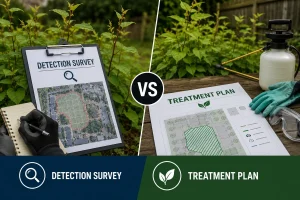
The financial argument for commissioning a thorough pre-groundworks survey is straightforward when set against the cost of dealing with knotweed reactively. Early identification before groundworks begin allows a developer to plan remediation as part of the project programme, budget for it accurately, and select the most appropriate treatment approach given the site’s timeline and constraints. Herbicide treatment over multiple growing seasons is the most cost-effective long-term solution but requires time that is rarely available once a build is under way.
When knotweed is discovered during excavation or construction, the options available become significantly more limited and more expensive. Excavation and disposal of contaminated soil can carry per-tonne costs that accumulate rapidly across a large site, and the requirement to use licensed waste carriers and approved disposal facilities adds further cost and logistical complexity. Programme delays resulting from an unplanned discovery can affect every trade on a construction schedule, and where a project is being delivered under a fixed-price contract, the financial exposure for the developer or main contractor can be substantial. Six-figure remediation costs are not unusual on medium to large Irish development sites where knotweed was not assessed in advance.
What contaminated soil management on a construction site involves
If knotweed is identified on a development site before groundworks, the developer has several management options depending on the scale of the infestation, the project timeline, and the site constraints. Where the programme allows, a multi-season herbicide treatment programme applied to the infestation before excavation begins is generally the most cost-effective approach. This reduces the volume of contaminated material that needs to be managed as controlled waste and can achieve long-term eradication of the rhizome network.
Where excavation cannot be deferred, contaminated soil must be excavated and managed strictly in accordance with waste management legislation. This involves using licensed waste carriers, obtaining the appropriate documentation for the movement and disposal of controlled waste, and ensuring that material is deposited at a facility licensed to receive invasive species waste. Containment on site using specialist root barrier membranes is also used in some cases, typically where the infestation is in an area that will be built over or covered permanently and where excavation is not the preferred option. Regardless of the approach taken, detailed documentation of the management strategy is essential for satisfying funder requirements and demonstrating regulatory compliance. To understand how these decisions have played out on actual Irish development sites, the CDI case studies showing knotweed management in development and groundworks contexts are worth reviewing before finalising your approach.
When to commission a survey in the project lifecycle
The most effective point to commission a Japanese knotweed survey is during the site acquisition or due diligence phase, before contracts are exchanged and before any financial commitments to a programme or budget are locked in. At this stage, the findings can inform the purchase price, the remediation budget, and the project timeline without any pressure from an existing construction programme. Developers who identify knotweed at acquisition stage are in a significantly stronger position than those who discover it after works have commenced. If a pre-acquisition survey was not carried out, the next most important opportunity is before any groundworks begin and ideally during the growing season when above-ground growth makes visual identification more reliable as a cross-check alongside dog detection. If you are at any stage of a development project and have not yet commissioned an assessment, contact the CDI team to discuss a Japanese knotweed survey for your site before groundworks begin.
How detection dogs provide the level of assurance developers and funders need
For developers who need to provide evidence to funders, planning authorities, or main contractors that a site has been assessed for Japanese knotweed to an appropriate professional standard, a detection dog survey provides a documented and independently verifiable record of that assessment. The survey findings can be presented as part of a site environmental report, included in planning submissions, or provided to a funder as part of due diligence documentation. Where no knotweed is detected, the report provides a clear negative result that supports the project’s compliance position. Where knotweed is found, the report forms the starting point for a professionally prepared management plan that satisfies the requirements of lenders and regulators. Understanding what a knotweed survey involves and what a confirmed detection means for a property transaction is also relevant background for developers who may be dealing with knotweed for the first time on a new acquisition.
Japanese knotweed on a construction site in Ireland is a manageable problem when it is identified early and addressed with the right professional support. It becomes a significantly more serious and expensive problem when it is missed, ignored, or disturbed without a plan in place. Commissioning a thorough pre-groundworks survey using trained detection dogs capable of locating Japanese knotweed rhizomes before they are disturbed by excavation is one of the most straightforward and cost-effective steps any developer can take to protect their project, their programme, and their relationship with funders and planners.