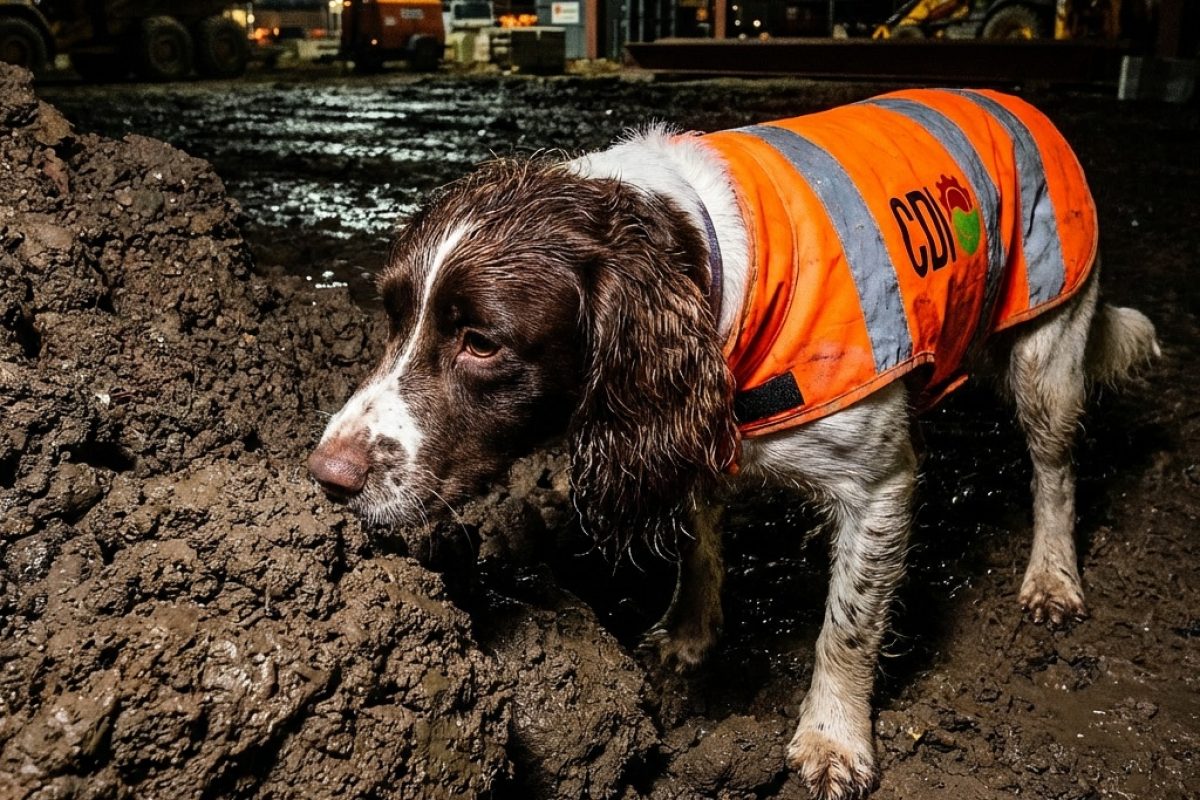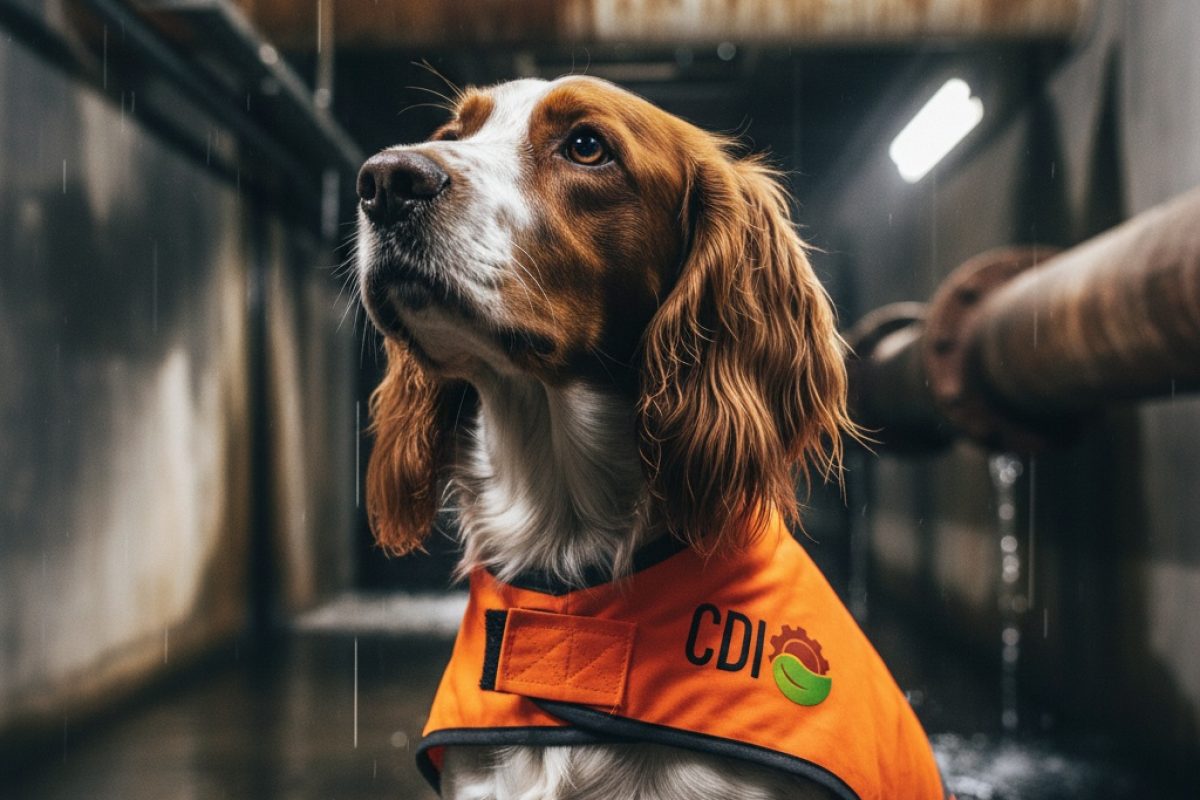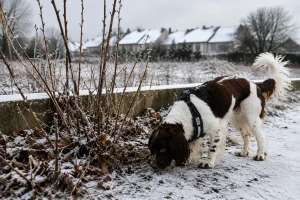
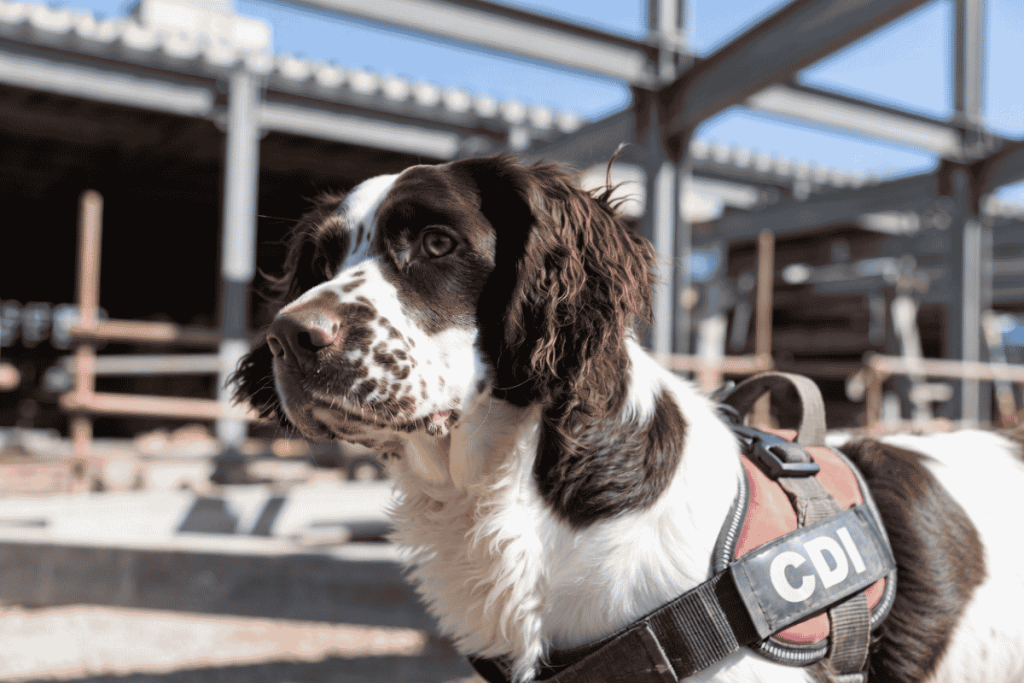
Corrosion under insulation, commonly referred to as CUI, is one of the most significant and expensive integrity challenges facing the oil and gas, petrochemical, power generation, and industrial processing sectors worldwide. It is also one of the least understood problems among those who have not encountered it directly, because its defining characteristic is that it develops entirely out of sight, beneath the insulation systems that are installed to protect pipework and equipment in the first place. By the time CUI becomes visible or detectable through conventional means, it has often already caused substantial material loss and created a serious risk of failure. Understanding what CUI is, why it develops, and why it is so difficult to detect in its early stages is the starting point for any effective strategy to manage it. The CDI early corrosion detection service uses trained dogs to identify CUI beneath insulation before it becomes visible or structurally significant, addressing the core problem that makes CUI so costly when it is managed reactively rather than proactively.
What corrosion under insulation actually is
Corrosion under insulation is external corrosion of pipework, vessels, and equipment that occurs beneath insulation systems. It develops when water penetrates the insulation jacket and becomes trapped against the metal surface underneath. Once water is present in this environment it is very difficult to remove naturally, because the insulation surrounds the metal and prevents the drying effect that would occur on an exposed surface. The result is a persistently wet microenvironment at the metal surface that promotes rapid and sustained corrosion.
The corrosion itself takes the same form as other types of external corrosion: oxidation of the metal surface leading to material loss, wall thinning, pitting, and in advanced cases through-wall penetration or structural weakening. What makes CUI distinct from surface corrosion is not the chemistry but the concealment. The insulation that is causing the problem is also hiding it entirely from view, and in many cases the outer cladding of the insulation system shows no indication whatsoever that severe corrosion is progressing beneath it. Operators and maintenance teams are therefore managing an active degradation process that they cannot see, cannot measure directly without removing the insulation, and cannot monitor through routine visual inspection.
Why insulation systems allow water ingress
Insulation systems on industrial pipework and equipment are designed to maintain process temperatures, reduce heat loss, provide personnel protection, and in some cases protect against freezing. They are not designed to be permanently watertight, and in practice maintaining a fully sealed insulation system over the lifetime of an asset in an industrial environment is extremely difficult. The cladding and jacketing that protects the insulation from the weather is subject to mechanical damage, joint failure, sealant degradation, and the effects of thermal cycling as the pipe expands and contracts with temperature changes.
Once water finds a route through the cladding, it can migrate through the insulation material and accumulate against the pipe surface. Mineral wool and other fibrous insulation materials absorb and retain water readily, and foam insulation can develop internal pathways that allow water to travel significant distances from the point of entry. In offshore and coastal environments, where salt-laden moisture accelerates the corrosion process, even small amounts of water ingress can produce aggressive corrosion conditions very quickly. Ireland’s coastal geography and persistent damp climate mean that CUI risk is particularly elevated for industrial assets across the country.
Which assets and environments are most at risk
CUI risk is highest on assets that operate within specific temperature ranges. Pipework and equipment operating between approximately minus five degrees Celsius and minus one hundred and seventy five degrees Celsius are at greatest risk, because these temperature ranges promote the condensation and retention of water at the metal surface. Pipework that cycles in and out of this temperature range is at particularly high risk because thermal cycling promotes the pumping of water into and out of the insulation system through expansion and contraction.
Specific asset types that carry elevated CUI risk include insulated process pipework, storage tank shells and roofs, heat exchangers, pressure vessels, and any equipment that operates in a wet or splash zone environment. Pipework running through areas where process fluids, cooling water, or firefighting water may be released is also at higher risk because these events introduce large volumes of water that can penetrate even intact insulation systems. In Ireland, this risk profile applies across oil terminals, chemical plants, pharmaceutical manufacturing facilities, power stations, and large industrial processing sites.
Why CUI is so difficult to detect through conventional inspection
The fundamental challenge with CUI detection is that the insulation system that conceals the corrosion must be physically removed before conventional inspection methods can be applied to the metal surface underneath. Ultrasonic thickness testing, visual examination, and most other standard corrosion inspection techniques require direct access to the pipe surface, which means stripping insulation before the inspection can take place. On a large industrial site with extensive insulated pipework, stripping insulation across all areas of potential concern to carry out a conventional inspection is an enormous undertaking in terms of cost, labour, and operational disruption.
The alternative, leaving insulation in place and inspecting only where there are visible external signs of a problem, consistently fails to identify CUI at an early stage. By the time the outer cladding shows signs of distress, water staining, or bulging, the corrosion beneath has usually progressed well beyond the early stage where treatment would be straightforward and inexpensive. Operators who rely on visual cues at the cladding surface are therefore always managing CUI reactively rather than proactively, and their maintenance programmes reflect the higher costs associated with that approach.
Some operators use radiographic testing or pulsed eddy current technology to inspect through insulation without removing it. These methods can be effective at specific locations but are time-consuming, require specialist equipment and trained operators, and are not practical for screening large areas of pipework efficiently. The challenge of achieving adequate coverage within a realistic inspection budget remains significant even with these tools available. How traditional corrosion inspection methods compare to detection dog surveys in terms of coverage, cost, and sensitivity is worth understanding before deciding on an inspection strategy for any CUI-affected asset.
The cost consequences of late CUI detection
The financial consequences of detecting CUI late rather than early are well documented across the industries most affected by the problem. Early-stage CUI, where wall thinning is present but within acceptable limits and no through-wall penetration has occurred, can typically be managed through targeted insulation removal, surface preparation, coating repair, and reinsulation of the affected section. The work is localised, the asset can often remain in service, and the cost is manageable.
Advanced CUI, where significant wall loss has occurred or through-wall corrosion is present, requires a fundamentally different response. Pipe sections or equipment components may need to be replaced entirely. The asset may need to be taken out of service during repair, with knock-on effects for the wider process. If the corrosion is discovered during a planned turnaround, it may extend the outage significantly. If it is discovered during operation through a leak or failure, the consequences extend to safety, environmental liability, and regulatory response in addition to the direct repair costs.
How detection dogs identify CUI without insulation removal
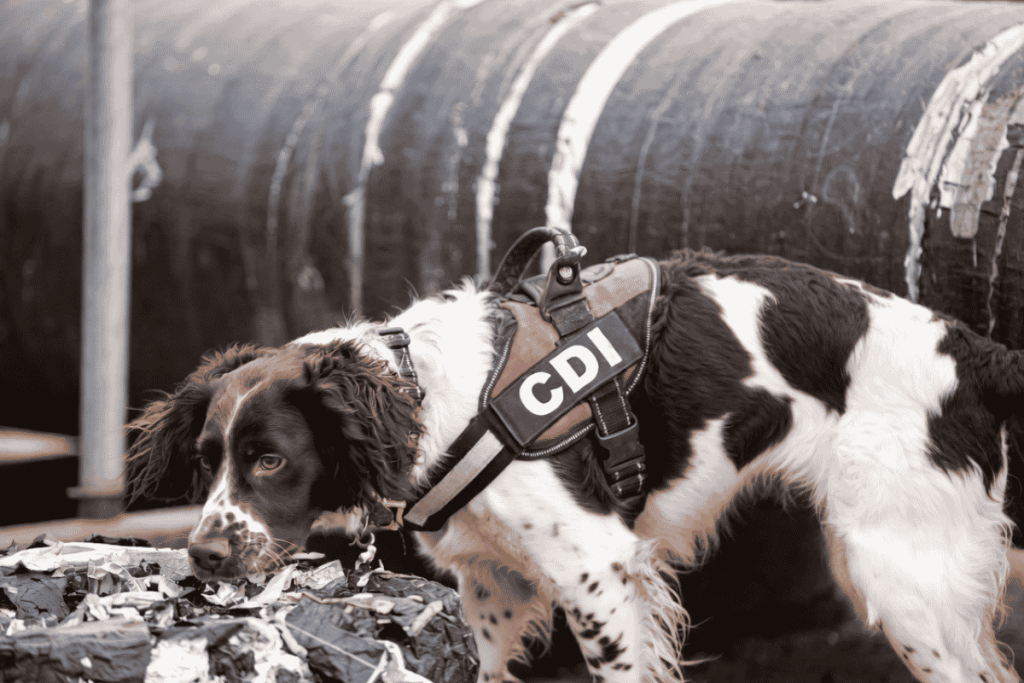
The core advantage of using trained detection dogs for CUI inspection is the ability to screen large areas of insulated pipework and equipment without removing the insulation. The dogs are trained to identify the specific volatile compounds associated with early-stage metal corrosion, and these compounds are present in the environment beneath the insulation even before any significant material loss has occurred. Scent can permeate through insulation materials and cladding to the outer surface where the dog can detect it, allowing the handler to identify specific locations where corrosion is active beneath the insulation without disturbing the system at all. The CDI corrosion detection dog service is specifically designed to provide this non-intrusive early-stage detection capability for insulated assets.
This approach allows operators to use detection dogs for wide-area screening, identifying priority locations where corrosion is detected, and then targeting insulation removal and detailed conventional inspection only at those specific points. The result is a dramatically reduced scope of intrusive inspection work, lower overall inspection costs, less operational disruption, and earlier identification of active corrosion than would be achievable through conventional methods alone. The CDI case studies show this targeted approach has allowed clients to avoid full insulation strip-out programmes while achieving a higher level of confidence in the integrity of their assets than a conventional inspection programme would have delivered.
Building CUI detection into a broader integrity management programme
For asset owners and integrity managers responsible for insulated pipework and equipment in Ireland, the most effective approach to CUI is one that combines the wide-area screening capability of detection dogs with the quantitative measurement capability of conventional inspection tools. Dogs identify where active corrosion is occurring; conventional tools measure how much material loss has taken place at those locations and inform decisions about timing and scope of repair. This layered approach is more cost-effective and more reliable than either method used independently. Understanding how detection dogs locate hidden corrosion before it becomes visible and what the survey process involves in practice provides useful background for integrity managers who are considering how detection dogs could fit within their existing inspection regime.
If you are responsible for insulated assets in Ireland and you want to understand whether CUI is actively developing on your pipework or equipment without committing to a costly full strip-out inspection, contact the CDI team to discuss a detection dog CUI screening survey for your site. Early identification is consistently the most cost-effective outcome in CUI management, and a detection dog survey is among the most practical tools available for achieving it.