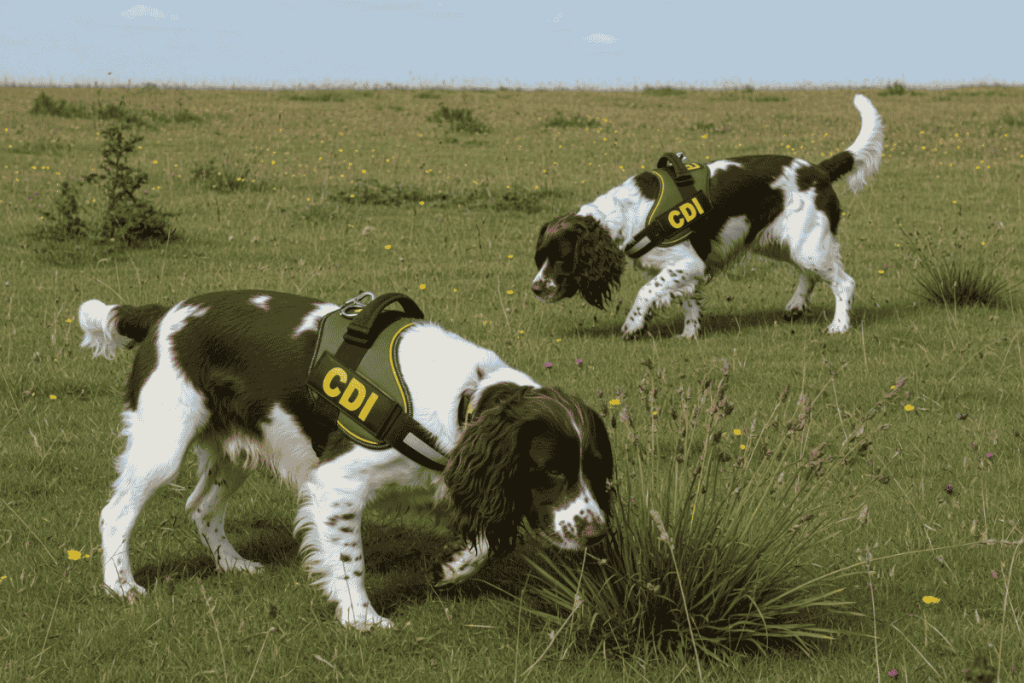
A Japanese knotweed survey is a formal professional assessment of a site, property, or parcel of land to determine whether Japanese knotweed is present, how extensive any infestation is, and what risks it poses to the land, structures, or proposed works. In Ireland, demand for knotweed surveys has grown significantly as awareness of the plant’s legal status, its structural consequences, and its impact on property transactions has increased. Surveys are now routinely required by mortgage lenders, requested as part of pre-purchase due diligence, commissioned by developers ahead of groundworks, and used by land managers to establish baseline conditions before treatment or land transfer. Understanding what a Japanese knotweed survey actually involves, what different types of survey are available, and when each one is appropriate is useful for anyone who owns, manages, buys, sells, or develops land in Ireland. The Japanese knotweed detection dog survey service offered by CDI addresses several limitations of conventional visual survey methods, which is particularly relevant for properties and sites where the plant may be dormant, buried, or present only as underground rhizome material.
What a Japanese knotweed survey involves
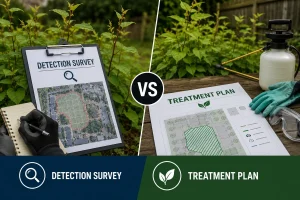
At its most basic, a Japanese knotweed survey involves a trained specialist examining a property or site and producing a written report setting out whether the plant is present, where it is located, how far it has spread both above and below ground, and what level of risk it poses. The report will typically include a site plan marking the location of any infestations, an assessment of the proximity of knotweed to structures and boundaries, photographs, and a recommendation for next steps whether that is a formal management plan, further investigation, or confirmation that no knotweed was detected.
The detail and scope of a survey will vary depending on the purpose it needs to serve. A survey carried out to satisfy a mortgage lender’s requirements before a residential purchase will typically follow a recognised professional standard and include specific information about infestation categories and proximity to the property. A survey carried out as part of pre-acquisition due diligence on a development site will generally need to cover a larger area, assess rhizome extent more thoroughly, and consider the implications for groundworks, planning, and programme. A survey commissioned to verify that a previous treatment has been effective will focus on confirming whether viable rhizome material remains in the ground rather than simply mapping above-ground growth.
Visual surveys and their limitations during dormancy
The most commonly used survey method is a visual inspection carried out by a trained botanist or invasive species specialist. During the growing season, from late spring through to early autumn, an experienced surveyor can identify Japanese knotweed above-ground growth with a high degree of confidence. The plant has distinctive characteristics at each stage of its growth cycle, and understanding how to identify Japanese knotweed in Ireland across different seasons is something a competent surveyor will be well practised in. However, visual survey has a fundamental limitation that is directly relevant to when and how surveys are commissioned: it cannot detect knotweed that is not visible.
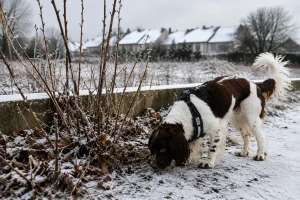
Between November and March, Japanese knotweed is entirely dormant above ground. The canes from the previous season may be present as dry, hollow stems, but in some cases these are cut back, removed, or have deteriorated to the point where they are no longer obvious. During dormancy a visual survey can produce a false negative result on a site that carries a well-established infestation, because the rhizome network that will produce vigorous growth in spring is invisible to any surface examination. This seasonal limitation is one of the most important reasons why visual survey alone is often insufficient, particularly when a transaction or programme decision depends on a reliable result at any time of year.
How detection dog surveys overcome the limitations of visual inspection

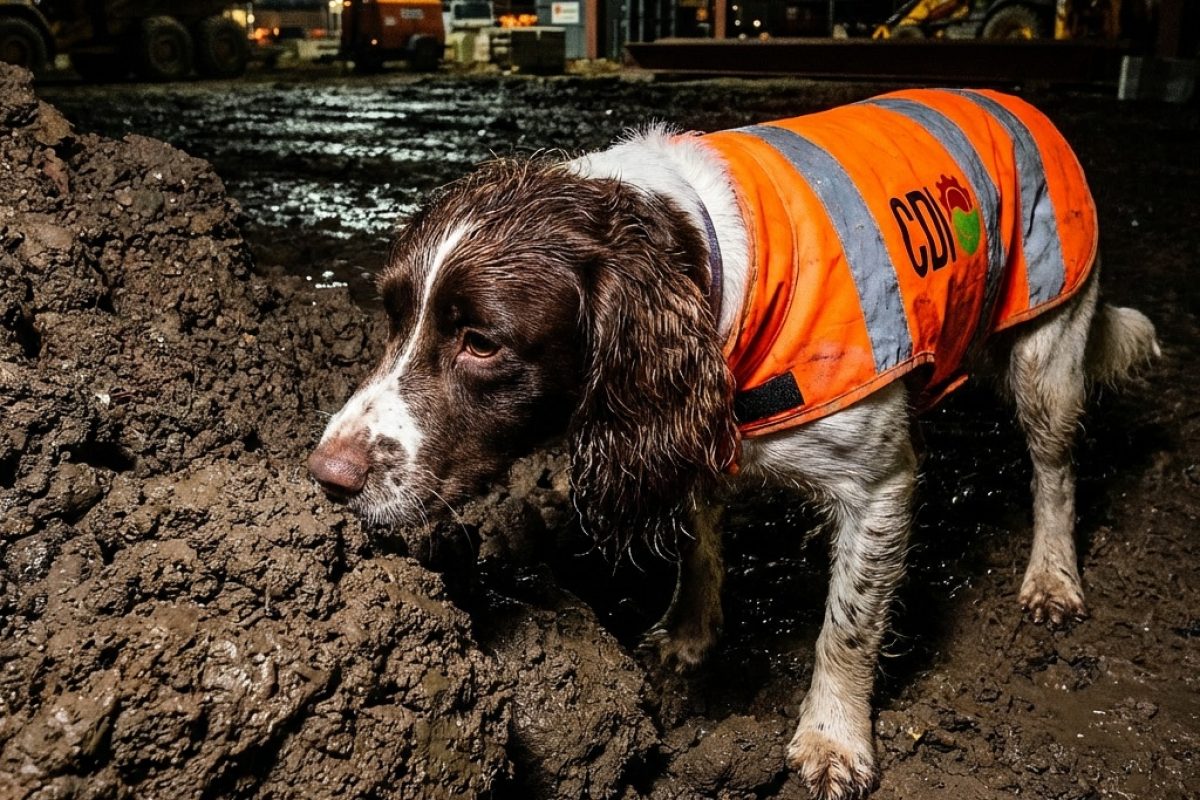
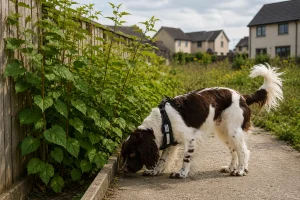
Detection dogs trained to identify the scent compounds produced by living Japanese knotweed rhizomes provide a survey capability that is not constrained by season, dormancy, or soil depth. Because the dogs detect the biochemical signature of the plant at rhizome level rather than its visible above-ground growth, they can locate knotweed that is dormant in winter, buried beneath imported material, or present only as fragments at depth below the surface. This makes detection dog surveys particularly well suited to situations where a reliable result is needed outside the growing season, where soil has been recently moved or disturbed, or where a brownfield site may carry historical rhizome contamination with no current above-ground growth. The CDI Japanese knotweed detection dog service is designed specifically to address these gaps in conventional survey coverage, and the dogs are capable of surveying large areas efficiently, making them practical for both residential properties and extensive development sites.
Detection dog surveys also provide a higher level of confidence in negative results than visual inspection alone. When a dog has systematically worked an area without indicating, the client and their advisers can have greater certainty that no viable rhizome material is present than they could from a visual inspection carried out during dormancy. This distinction matters significantly when the survey result needs to satisfy a mortgage lender, a development funder, or a planning authority that has required knotweed clearance as a condition of approval.
When buyers need a knotweed survey before purchase
Property buyers in Ireland should consider commissioning a knotweed survey whenever there is any reason to believe the plant may be present on or near the property being purchased. This includes properties with overgrown gardens, land adjacent to waterways, embankments or railway lines, brownfield sites, and properties in areas where knotweed is known to be established in the surrounding landscape. It also includes any property where a previous survey has not been carried out and where the vendor cannot confirm the site is clear. Many mortgage lenders in Ireland now require evidence of a knotweed survey as part of their conditions for approval, and a buyer who discovers knotweed after completion without any survey having been commissioned is in a significantly weaker legal and financial position than one who identified the issue before exchange. Understanding what happens when Japanese knotweed is found during a property survey in Ireland is relevant context for any buyer commissioning a survey for the first time.
When sellers benefit from commissioning a survey before listing
Sellers who commission a knotweed survey before putting a property on the market are in a stronger position than those who leave it to a buyer’s surveyor to raise the issue. If a survey confirms the property is clear, that result can be shared with prospective buyers and their lenders as part of the sales process, removing a potential source of delay or negotiation during conveyancing. If knotweed is found, the seller can arrange a management plan and begin treatment before any buyer is involved, which means the issue can be presented to the market as a managed and documented problem rather than an active uncertainty that puts buyers and their lenders on guard.
Proactive disclosure of a knotweed management plan, backed by a survey report and documented treatment history, consistently produces smoother transactions than discovery mid-sale. It also removes the risk of a buyer seeking a significant price reduction or withdrawing entirely when knotweed is identified during their own due diligence at a later stage of the process.
When developers and contractors need a survey before groundworks
For developers, contractors, and project managers working on sites across Ireland, a knotweed survey is an essential step before any groundworks, excavation, or soil movement takes place. Disturbing knotweed rhizomes without an assessment and management plan in place can cause an existing infestation to spread across a site, and moving contaminated soil without complying with controlled waste regulations exposes the contractor and developer to significant legal liability. The risks that Japanese knotweed poses to construction programmes, development funders, and planning timelines in Ireland are documented across multiple site types, and the cost of reactive remediation once groundworks are under way is consistently higher than the cost of assessment and planned management before work begins.
Surveys on development sites also need to account for the risk that knotweed rhizomes may be present in imported topsoil or in areas where previous soil movement has taken place. How Japanese knotweed spreads through contaminated topsoil and why buried rhizomes are routinely missed by visual inspection alone is directly relevant to any developer assessing a site that has a complex soil movement history or where topsoil has been brought in from elsewhere.
When lenders and surveyors require a formal survey
Mortgage lenders in Ireland increasingly request formal knotweed surveys as a condition of loan approval where there is any indication that the plant may be present on a security property. The specific trigger varies between lenders, but common requirements include a formal survey report produced by a qualified specialist, a categorisation of the infestation according to a recognised assessment framework, and in cases where knotweed is present, a professionally prepared management plan that is either already in place or being put in place before completion.
Professional surveyors carrying out structural or homebuyer surveys will flag any visible knotweed or suspected knotweed as a significant finding requiring specialist investigation, and their reports will typically recommend a specialist invasive species survey as the appropriate next step. Where a surveyor is working outside the growing season and cannot confirm the presence or absence of knotweed through visual means, recommending a detection dog survey to provide a year-round reliable result is increasingly recognised as best practice.
When land managers need a baseline survey before treatment or transfer
Land managers, local authorities, estate managers, and agricultural landowners may need a knotweed survey to establish baseline conditions before entering into a treatment programme, before transferring land, or before granting licences or tenancies where the presence of invasive species would affect the terms or value of the arrangement. A baseline survey provides a documented record of where knotweed is present at a given point in time, which is useful both for planning treatment and for demonstrating due diligence in the management of invasive species on the land.
Surveys carried out at the start of a treatment programme also provide a reference against which subsequent surveys can be compared, allowing the effectiveness of herbicide treatment to be monitored and documented over successive growing seasons. Confirmation surveys at the end of a treatment programme, using detection dogs to verify that no viable rhizome material remains below the surface, provide the highest available level of confidence that eradication has been achieved. To discuss what type of survey is appropriate for your specific situation and to arrange an assessment, contact the CDI team to commission a Japanese knotweed survey in Ireland at the right stage for your property, project, or land management programme.