If you think you have found Japanese knotweed in Ireland, reporting the sighting is a sensible first step. Recording invasive species helps improve information about where Japanese knotweed is present and can also help bring attention to infestations on publicly managed land. However, reporting Japanese knotweed and arranging a professional knotweed survey are not the same thing. Understanding that difference is particularly important when the sighting could affect a property transaction, development project, boundary issue or planned groundworks.
A Japanese knotweed sighting tells us that the plant appears to have been observed at a particular location. It does not establish how far the infestation extends, whether underground rhizomes are present beyond the visible growth, whether adjoining land is affected, or whether an area can safely be excavated or developed. Where those questions matter, a professional Japanese knotweed detection survey can provide site-specific information that a general sighting record cannot.
For homeowners, buyers, sellers, developers, contractors and commercial landowners, the key question is therefore not simply whether Japanese knotweed should be reported. It is whether reporting alone answers the question you need resolved. In many situations it will not, particularly where financial decisions or soil disturbance are involved.
How do you report Japanese knotweed in Ireland?
Japanese knotweed sightings in Ireland can be submitted through the National Biodiversity Data Centre’s recording system. When making a report, provide the location as accurately as possible and include clear photographs where available. Photographs of the overall stand, stems and leaves can be useful, while recording the date is also important because Japanese knotweed changes considerably in appearance throughout the year.
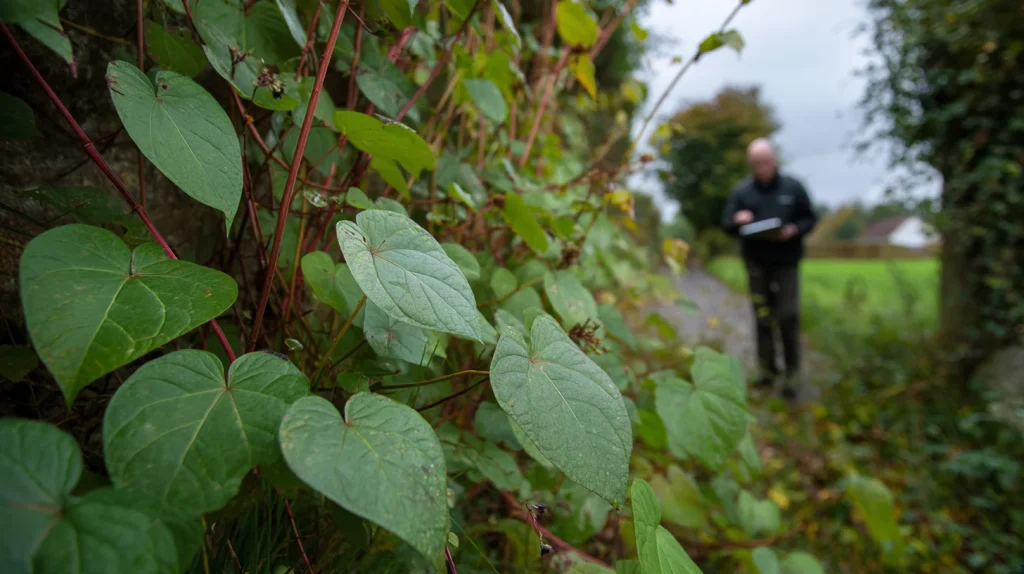
Before submitting a report, make sure the plant you have found is likely to be Japanese knotweed. Young shoots, mature stems, leaves, flowers and winter canes provide different identification clues depending on the season. If you are uncertain, CDI’s guide on how to identify Japanese knotweed explains the main characteristics to look for and some of the plants that can easily be confused with it.
It is also important not to disturb the suspected plant simply to identify or photograph it. Avoid pulling up roots, cutting stems or digging into the surrounding ground. Japanese knotweed can regenerate from viable plant and rhizome material, so unnecessary disturbance can complicate what might otherwise have been a contained problem.
Where should Japanese knotweed sightings in Ireland be reported?
For a general sighting, the National Biodiversity Data Centre provides Ireland’s main biodiversity recording route. Verified records can contribute to Biodiversity Maps and improve wider knowledge about the distribution of Japanese knotweed and other invasive species.
If Japanese knotweed is growing on public land, it is also sensible to notify the relevant City or County Council. This may apply where the infestation is beside a public road, on council-managed property, within a public space or on other land for which a local authority is responsible.
Where the plant is growing on private land, the situation can become more complicated if the infestation is close to another property. A visible stand on one side of a fence or hedge does not necessarily tell you what is happening underground. If the sighting involves an adjoining property, our guide to Japanese knotweed on neighbouring land explains what to consider before landscaping, excavation, fencing or other ground disturbance takes place.
What happens after you report Japanese knotweed?
Reporting a Japanese knotweed sighting creates a useful record, but it is important to understand what that record actually does. Once verified, the information can contribute to the national picture of where Japanese knotweed has been observed. That is valuable for biodiversity monitoring and invasive species awareness.
A sighting report does not, however, amount to a professional investigation of an individual property. It does not determine the underground extent of the infestation, confirm whether neighbouring land has been affected or tell a property owner whether concealed rhizomes are present in an area that appears clear above ground.
This distinction becomes particularly important when a sighting affects a purchase, sale or development decision. If Japanese knotweed has already been identified during a house purchase, for example, our guide explaining knotweed found during a property survey looks at the additional questions buyers and sellers may need to resolve before the transaction progresses.
Is Japanese knotweed regulated in Ireland?
Japanese knotweed is a regulated invasive species in Ireland, which makes its spread an important legal and environmental consideration. For property owners and contractors, one of the greatest practical risks arises when contaminated ground or viable plant material is disturbed without the extent of the infestation being understood beforehand.
Activities such as excavation, soil movement, landscaping, clearance, mowing or inappropriate disposal can create further problems if viable knotweed material is moved into previously unaffected areas. Suspected Japanese knotweed should therefore not simply be treated as ordinary vegetation and removed without considering the consequences.
If your aim is only to report a sighting, document the plant without disturbing it. If excavation, construction, clearance or another activity involving the ground needs to take place, a more detailed assessment of the site may be required first.
When is reporting Japanese knotweed not enough?
Reporting may be sufficient when your objective is simply to record that Japanese knotweed has been observed at a particular location. It becomes insufficient when you need an answer about a specific property or area of land before taking action.
For example, a sighting report cannot confirm whether a property being purchased contains additional knotweed that is not immediately visible. It cannot tell a developer whether underground rhizomes may be present within a proposed excavation zone, and it cannot establish whether Japanese knotweed growing beyond a boundary has extended beneath the surface into adjoining land.
A report also cannot prove that a site is free from Japanese knotweed simply because fresh growth cannot currently be seen. Previous cutting, clearance, treatment or seasonal dieback can make visual assessment more difficult. CDI’s overview of Japanese knotweed detection explains why hidden, dormant and underground growth can require a different approach from a straightforward visual inspection. Where important property, financial or construction decisions depend on establishing the actual risk, this is where a professional survey becomes more valuable.
When should you arrange a professional Japanese knotweed Survey?
A professional Japanese knotweed survey should be considered whenever uncertainty about the presence or extent of the plant could materially affect what happens next. This is particularly relevant during property transactions, commercial due diligence, development planning, excavation, site clearance or work close to an existing infestation.
The purpose of professional detection is not simply to confirm a sighting that someone has already made. It is to investigate the specific site and provide clearer information about where Japanese knotweed risk may exist, particularly where visible inspection alone does not provide enough certainty.
Buying or selling a property
Japanese knotweed can become an important issue during a residential property transaction, particularly if it is identified by a surveyor, disclosed by the seller or known to be growing nearby. A buyer may need to understand whether the property itself is affected, while a seller may need clearer evidence if questions are raised during the transaction.
In these situations, relying solely on a recorded sighting can leave important questions unanswered. A professional investigation can help clarify the potential risk and provide useful information for discussions involving the buyer, seller, surveyor, solicitor or other professionals. CDI’s article on Japanese knotweed during property surveys explains the issue in more detail. The objective is not to make every sighting into a major property problem. It is to replace uncertainty with better information before important decisions are made.
Before development or groundworks
Japanese knotweed becomes particularly important when soil is about to be disturbed. Construction projects may involve foundations, drainage, utilities, access roads, grading, landscaping, excavation and movement of substantial quantities of soil. If viable rhizome material is present within one of those areas and is disturbed unknowingly, the infestation can become considerably more difficult to manage.
For this reason, developers and contractors should not assume that an existing sighting record or a quick visual inspection provides enough information before machinery begins operating. A professional survey can help identify areas that may require further investigation or management before excavation begins.
The commercial importance of early detection can be seen in CDI’s major development site case study, where knotweed risk had to be investigated before the wider construction programme progressed. This type of early assessment can help prevent a relatively contained issue from becoming an unexpected programme, remediation or soil-management problem once work is underway.
During commercial land due diligence
Japanese knotweed records can provide useful background information during a commercial property investigation, but they should not be treated as evidence that an individual site is either affected or completely clear. Commercial sites may contain unmanaged boundaries, historic fill, disturbed ground, stockpiles and areas where previous uses or clearance have obscured what was originally present.
If Japanese knotweed is known or suspected in the area, investigating the issue before completing an acquisition can be far more useful than discovering it once demolition, enabling works or redevelopment have begun. Our detailed guide to Japanese knotweed commercial due diligence explains why the risk should be considered alongside other site investigations before a major land decision is finalised.
CDI has also dealt with this issue in practice. In our commercial redevelopment case study, knotweed risk was assessed during the acquisition due diligence stage so that the developer could obtain clearer information before contracts were signed and redevelopment works began.
When Japanese knotweed is growing on neighbouring land
Seeing Japanese knotweed on a neighbouring property often creates an immediate question: has it reached my land as well? Unfortunately, the visible plants alone may not provide a reliable answer. Property boundaries define ownership, but they do not tell us how underground plant material is distributed. The main visible stand may be located on one property while concerns remain about what is happening closer to, or beneath, the boundary.
This is why simply reporting a neighbouring infestation does not resolve the issue for the adjoining property owner. If the land is being bought, sold, landscaped, excavated or developed, the more useful question is whether there is evidence of Japanese knotweed risk on the site where those decisions will take place. The practical steps for these situations are covered in more detail in our article on neighbouring Japanese knotweed risk.
When the site has been cut back or cleared
Japanese knotweed can be significantly harder to assess visually after vegetation has been cut back or a site has been cleared. Removal of obvious above-ground growth may make an area appear straightforward even though questions remain about what may be present below the surface. This can be particularly important on development sites, derelict land and commercial property being prepared for sale. Historic ground disturbance can also complicate the picture because soil may previously have been moved around the site.
Where there is a known history of Japanese knotweed or credible evidence that it has previously been present, relying entirely on the site’s current appearance can create unnecessary uncertainty. A professional survey may help establish whether further investigation is required before excavation, redevelopment or treatment planning proceeds.
When you need a survey during winter
Japanese knotweed changes significantly throughout the year. During spring and summer, fresh stems and leaves can make the plant easier to recognise, while during winter the above-ground growth dies back and the site can look much less active.
The underground risk does not necessarily disappear when the leaves and fresh stems are gone. Property purchases, planning decisions and construction programmes also continue throughout the year, meaning it is not always practical to wait for obvious growth to return before making a decision.
Our guide to Japanese knotweed winter detection explains why specialist investigation can still be useful during the dormant season, particularly where a purchase, development or planned excavation cannot simply be postponed until spring.
Before treatment planning begins
When someone discovers Japanese knotweed, the immediate reaction is often to start looking for a treatment solution. However, treatment planning is much more useful when the location and extent of the suspected risk are properly understood first.
A visible patch may not necessarily show the full area requiring attention, particularly where vegetation has previously been cleared, rhizomes may be concealed or soil has been disturbed. Beginning with better detection information can help ensure that treatment planning is based on the actual site conditions rather than only the most obvious growth. Our guide comparing a knotweed treatment plan and detection survey explains why detection can be an important step before deciding how the infestation should ultimately be managed.
What can a professional knotweed survey tell you that a sighting report cannot?
A Japanese knotweed sighting report records an observation. A professional survey investigates a particular property or area of land to help answer a site-specific question. This distinction matters most when the visible evidence does not provide enough certainty. Japanese knotweed may have been cut back, treated previously, concealed by other vegetation or affected by site clearance. On development and commercial land, previous disturbance can make matters even more complicated because viable material may no longer be located exactly where the most obvious growth was originally seen.
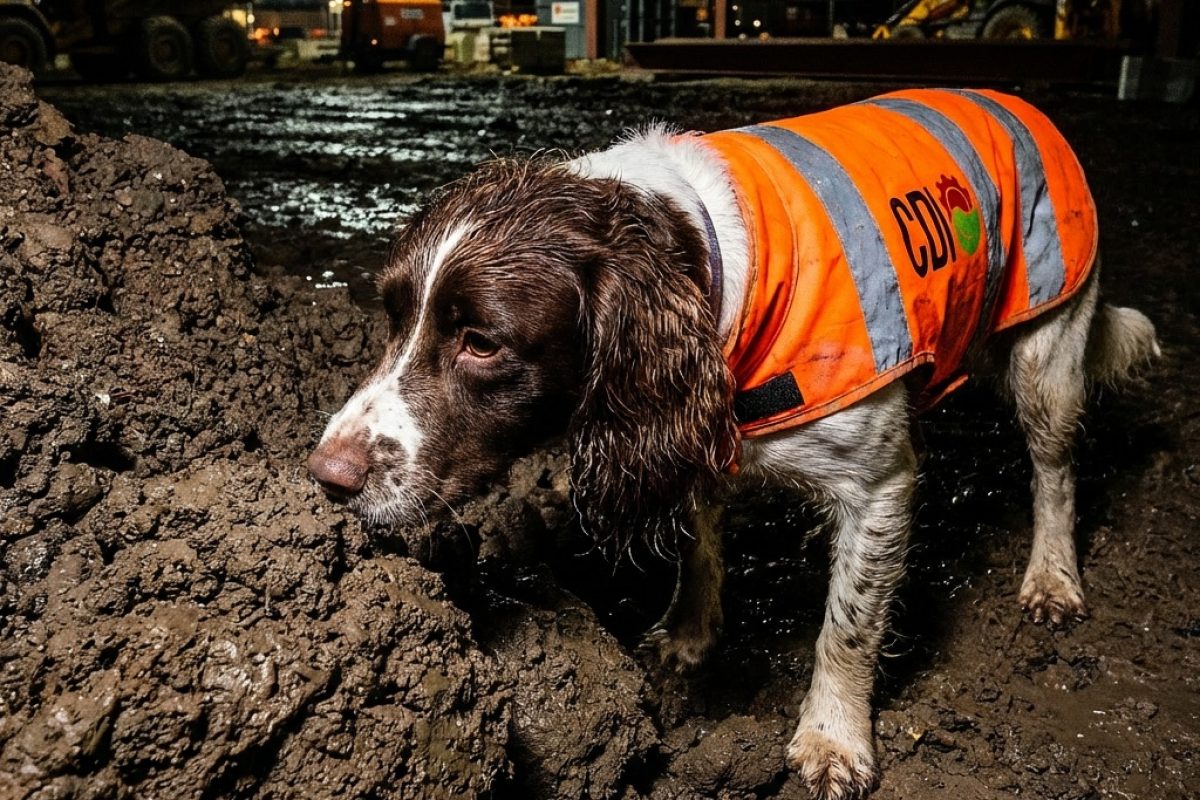
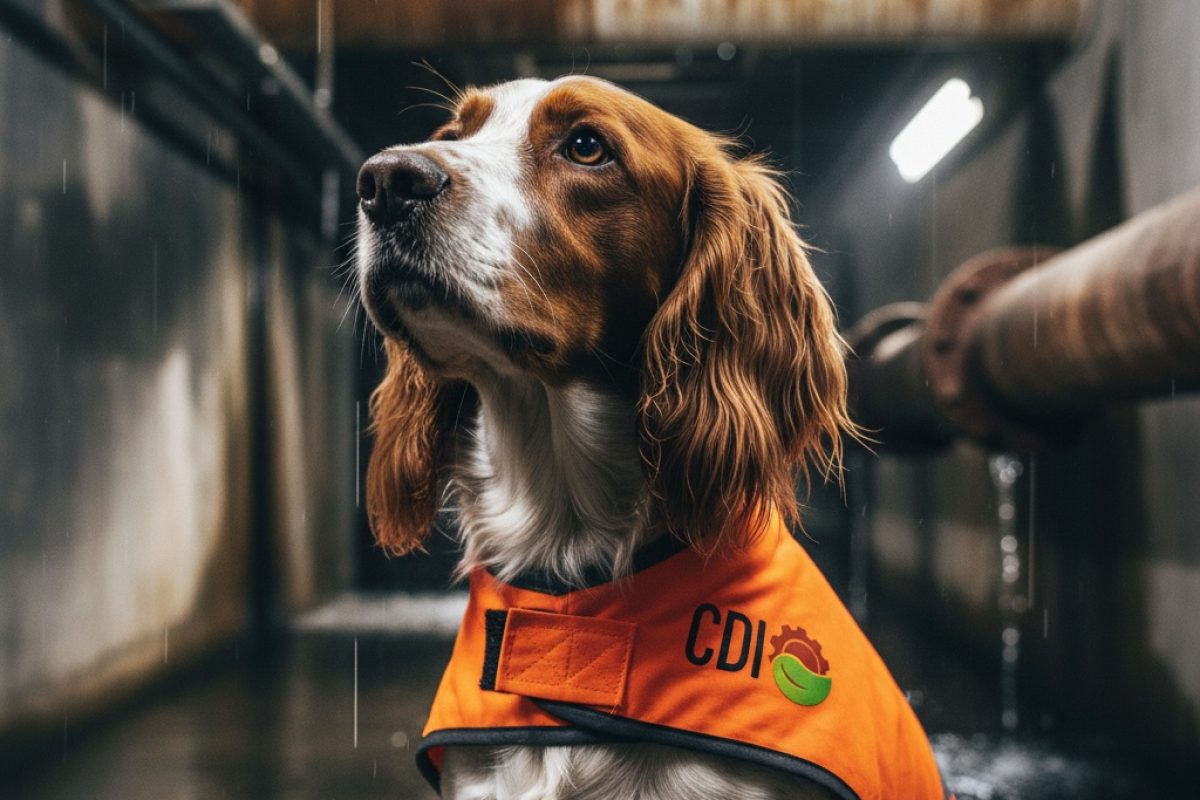
CDI uses specialist Japanese knotweed detection dogs to investigate sites where traditional visual assessment may leave uncertainty. The dogs are trained to detect the scent associated with Japanese knotweed, making them particularly useful when investigating underground, dormant or concealed growth. For property owners, developers, surveyors and land managers, the benefit is not simply confirmation that Japanese knotweed exists somewhere on a site. The more useful outcome is clearer information about where the risk may be present before decisions are made about excavation, development, acquisition or treatment.
Why this matters for larger infrastructure projects
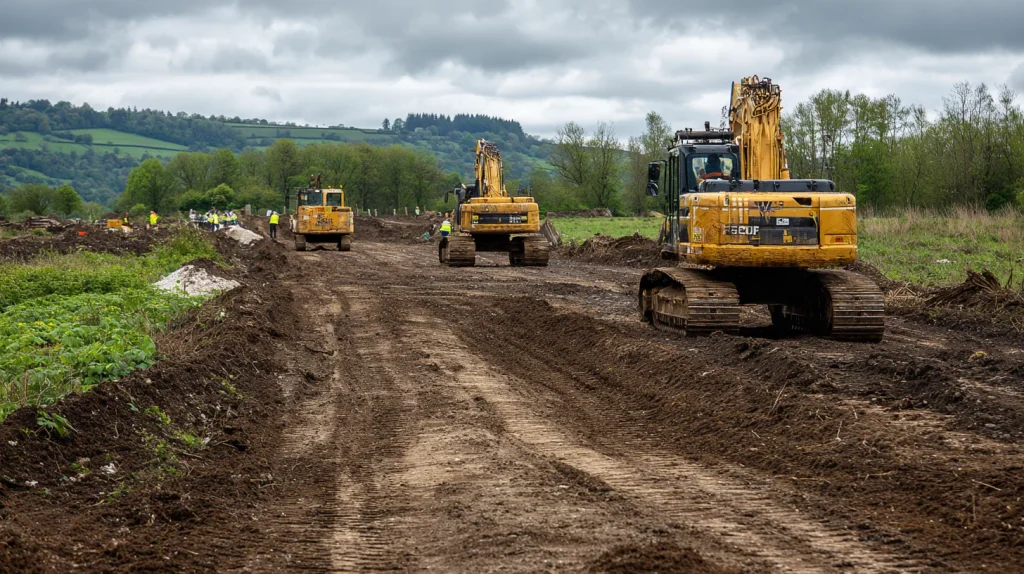
The distinction between reporting and professional detection becomes even more important on large or linear sites. Roads, utilities and infrastructure projects may cross numerous land parcels, disturbed areas, roadside verges and boundaries, making reliance on isolated sighting records particularly difficult.
A recorded sighting can highlight a potential risk area, but project teams still need to determine whether planned works will actually interact with Japanese knotweed. The investigation may therefore need to focus on areas of excavation, cut and fill, imported soil, access routes and adjoining land.
CDI’s national infrastructure project case study demonstrates how targeted investigation can be incorporated before earthworks so that project teams have more useful information about where knotweed risk is present and where planned work can proceed.
Reporting and professional surveys serve different purposes
Reporting Japanese knotweed and arranging a professional survey should not be viewed as alternative versions of the same process. They serve different purposes and can often work together. Reporting helps create a wider record of Japanese knotweed sightings in Ireland and can bring a public-land infestation to the attention of the relevant authority. A professional survey focuses on the individual site where someone needs to make a property, construction, investment or land-management decision.
For example, you may report Japanese knotweed growing beside a public road while also needing to determine whether an adjoining development site is affected. You may report an infestation on neighbouring land while separately checking whether your own property requires further investigation. Similarly, visible Japanese knotweed on commercial land can be recorded while a broader detection survey is arranged before acquisition or redevelopment. In simple terms, reporting records where Japanese knotweed has been observed. Professional detection helps answer questions about the land you actually need to make a decision about.
What should you do if you find suspected Japanese knotweed?
If you discover suspected Japanese knotweed, avoid disturbing it while you establish what you are dealing with. Take clear photographs, record the location and compare the plant with reliable identification guidance. If it appears to be Japanese knotweed, submit the sighting through the appropriate recording route and notify the relevant local authority where the plant is situated on public property.
Once the sighting has been recorded, consider whether you actually need more information. If your purpose was simply to report the plant, there may be no immediate reason to arrange a professional survey. Continue to avoid actions that could spread the plant and allow the responsible landowner or authority to consider the appropriate next steps.
If you own, manage, intend to purchase or plan to develop the land, however, your question is different. You may need to know whether suspected knotweed affects additional areas, whether concealed rhizomes could be present where excavation is planned, or whether growth close to a boundary creates uncertainty for your property. Those are the situations in which professional detection becomes much more valuable.
How CDI can help when a sighting creates uncertainty
CDI provides specialist Japanese knotweed detection surveys across Ireland using trained detection dogs. The service is designed for situations where simply seeing or reporting Japanese knotweed does not provide enough information to make a confident property, development or land-management decision.
Professional detection can be particularly valuable on cleared or disturbed sites, commercial land, construction projects, property boundaries and locations where Japanese knotweed may be dormant or concealed. Surveys can be undertaken before excavation, construction, purchase, site clearance or treatment planning so that uncertainty is investigated before major commitments are made.
For developers and commercial landowners, earlier detection can support better planning and reduce the likelihood of unexpected discoveries once contractors are on site. For buyers and sellers, it can provide additional clarity while important property decisions are still being made. For homeowners, it can help determine whether a nearby or previously reported infestation requires further investigation on their own land.
Final thoughts
If you want to report Japanese knotweed in Ireland, recording the location through the National Biodiversity Data Centre is an appropriate first step. Provide accurate location details and photographs where possible, and notify the relevant City or County Council when the plant is situated on public land. The important point is to recognise what a sighting report cannot establish. It does not determine the full extent of an infestation, confirm whether concealed rhizomes are present elsewhere on a property, or tell a developer whether planned excavation areas are clear of Japanese knotweed.
When those questions affect a purchase, development, boundary issue, treatment decision or planned groundworks, a professional survey provides a different level of information. CDI’s Japanese knotweed detection service is designed to help identify hidden, dormant and underground risk before those important decisions are made. Reporting tells us where Japanese knotweed has been seen. Professional detection helps determine what that sighting actually means for your site.
Frequently asked questions
Where do I report Japanese knotweed in Ireland?
Japanese knotweed sightings can be submitted to the National Biodiversity Data Centre through its species recording system. Include an accurate location and photographs where possible. If the plant is growing on public property, the relevant City or County Council should also be informed.
What happens after I report Japanese knotweed?
A verified sighting can contribute to Ireland’s biodiversity records and help improve information about the distribution of Japanese knotweed. Reporting does not provide a detailed investigation of the individual property or establish the underground extent of the infestation.
Should Japanese knotweed on private property be reported?
A sighting on private property can still be recorded through the National Biodiversity Data Centre. Where Japanese knotweed is growing close to another property, the affected landowner may also need to consider whether adjoining land could require further investigation.
Do I need a professional survey after reporting Japanese knotweed?
Not necessarily. If your objective is simply to record a sighting, reporting may be sufficient. A professional survey becomes more relevant when you need site-specific information before purchasing, selling, developing, excavating, clearing or moving soil on land where Japanese knotweed is known or suspected.
What if Japanese knotweed is growing on neighbouring land?
Reporting the neighbouring infestation does not establish whether your own property is affected. If the growth is close to your boundary and you intend to buy, sell, develop, excavate or landscape your land, a professional survey may help clarify the potential risk.
Can Japanese knotweed be surveyed in winter?
Yes. Japanese knotweed becomes less obvious above ground during winter, but underground material may remain present. Where an important property or construction decision cannot wait until the next growing season, specialist detection can be used to investigate suspected dormant or concealed growth.
Should I dig up Japanese knotweed after reporting it?
No. Avoid digging, mowing, strimming or casually removing suspected Japanese knotweed. Disturbing plant material or affected soil can increase the risk of spreading it into other areas. Appropriate professional advice should be sought before removal, excavation or significant ground disturbance.
Is reporting Japanese knotweed the same as arranging a knotweed survey?
No. Reporting records that Japanese knotweed has been observed at a location. A professional survey investigates a specific site and is intended to provide more useful information where decisions depend on understanding whether Japanese knotweed risk may be present.